



 Close Menu
 World
World
 Biography
 Health
 Education
 Business
 Lifestyle
 Sports
 Technology
 Animals
 History
 Food
Food
 Religious
 Startups
 Movies
 Politics
 Fashion
 Covid
Covid
 Diet
Diet
 Fitness
 Marketing
 Travel
 Science
 Reviews
 Social media
 Stories
 Facts
Facts
 Art
Art
 Entertainment
Vaishali Pant

Technology
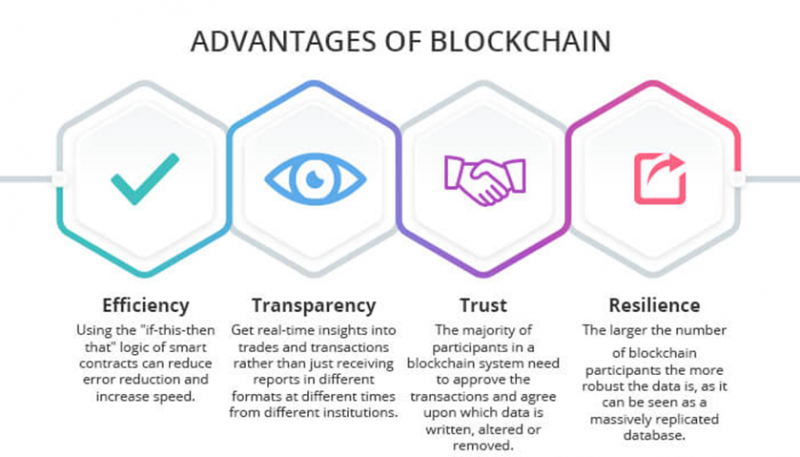
BENEFITS OF BLOCKCHAIN: The Advantages of Blockchains
 Vaishali Pant
Let us discuss Benefits of blockchain: The Advantages Of Blockchain
1. Transaction Accuracy on the Blockchain
A network of thousands of computers approves transactions on the blockchain network. This virtually eliminates human intervention in the verification process, resulting in lower human error and a more accurate record of data. Even if one of the computers on the network committed a computational error, it would only affect one copy of the blockchain. For that error to spread to the rest of the blockchain, at least 51 percent of the network's computers would have to make it—a near-impossibility for a big and rapidly developing network like Bitcoin's.
2. Reduced Costs
Consumers typically pay a bank to verify a transaction, a notary to sign a document or a preacher to marry them. The blockchain eliminates the need for third-party verification, as well as the fees that come with it. When a business accepts credit card payments, for example, it pays a tiny charge to the banks and payment-processing businesses to handle the transactions. Bitcoin, on the other hand, has no central authority and only has a small number of transaction fees.
3. Decentralization
Blockchain doesn't save any of its data in a single location. Instead, a network of computers copies and spreads the blockchain. Every computer on the network updates its blockchain to reflect the addition of a new block to the blockchain.
Blockchain makes it more difficult to tamper with data by disseminating it across a network rather than holding it in a single central database. If a hacker obtained a copy of the blockchain, just a single copy of the data would be compromised, rather than the entire network.
4. Transactions that are quick and easy
The settlement of transactions made through a central authority can take many days. For example, if you deposit a check on Friday evening, you may not see funds in your account until Monday morning. Blockchain operates 24 hours a day, seven days a week, and 365 days a year, unlike financial institutions, which function during business hours, which are normally five days a week.
5. Transactions in Confidentiality
Many blockchain networks function as public databases, allowing anybody with an Internet connection to access the network's transaction history. Although users have access to transaction details, they do not have access to identifying information about the people who are conducting the transactions. It's a frequent misconception that blockchain networks like bitcoin are anonymous, but they're not.When a user conducts a public transaction, their unique code—referred to as a public key—is published on the blockchain. Their personal information, on the other hand, isn't. If a person purchases Bitcoin on an exchange that demands identification, their identity is still tied to their blockchain address.
Source:
Click for the: Full Story
You might like







You Might Like this