Close Menu
 World
World
 Biography
 Health
 Education
 Business
 Lifestyle
 Sports
 Technology
 Animals
 History
 Food
Food
 Religious
 Startups
 Movies
 Politics
 Fashion
 Covid
Covid
 Diet
Diet
 Fitness
 Marketing
 Travel
 Science
 Reviews
 Social media
 Stories
 Facts
Facts
 Art
Art
 Entertainment
Yatin Samra

Technology
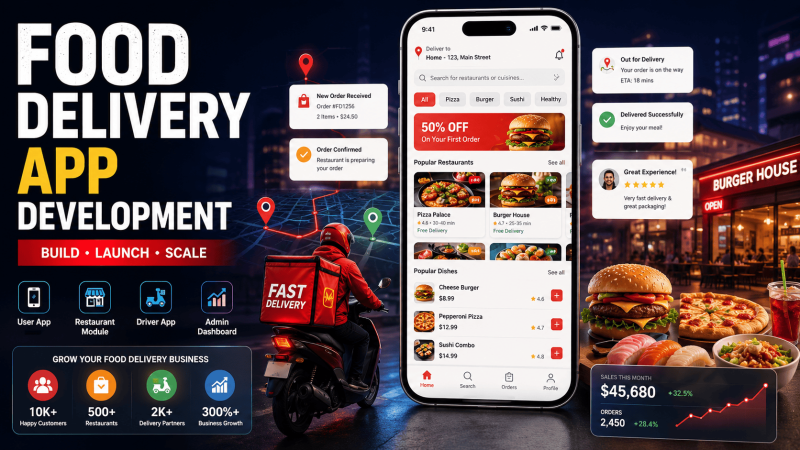
Food Delivery App Development for Restaurants: A Complete Guide
 Yatin Samra
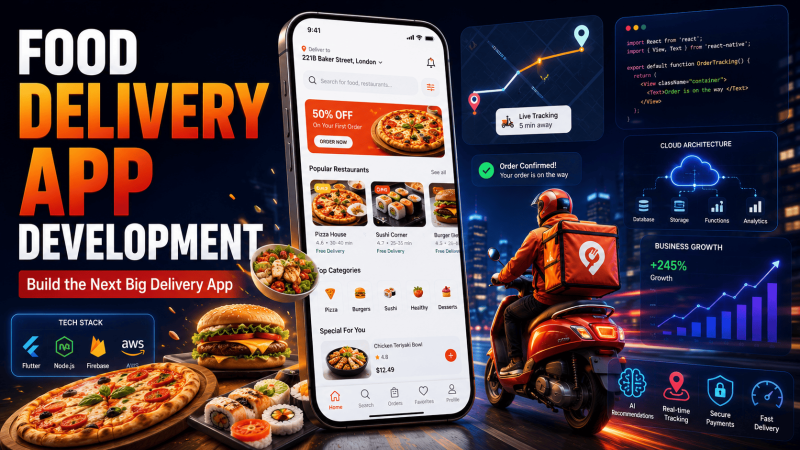
There have been many changes in the food delivery sector over the last few years. The consumers are now preferring to order their food through smartphones, whereas the restaurants wish to cut down on third parties and establish a direct connection with their clients.
As a result, many restaurant owners are investing in food delivery app development to create branded digital ordering experiences that improve profitability and customer loyalty.
This guide explains everything restaurants need to know about developing a food delivery app, from key features and benefits to development stages and business considerations.
Why Restaurants Are Building Their Own Food Delivery Apps
Third-party delivery platforms provide access to customers, but they often charge significant commission fees.
By launching a dedicated food delivery application, restaurants can:
- Increase profit margins
- Strengthen customer relationships
- Control the customer experience
- Build brand loyalty
- Access valuable customer data
For many businesses, investing in their own platform has become a strategic growth decision.
Benefits of Food Delivery App Development for Restaurants
Direct Customer Ownership
Restaurants can communicate directly with customers without relying on third-party marketplaces.
Reduced Commission Costs
A custom application helps restaurants avoid high commission fees charged by delivery aggregators.
Stronger Brand Identity
Branded apps create a unique customer experience that reinforces brand recognition.
Increased Customer Retention
Loyalty programs and personalized offers encourage repeat orders.
Better Business Insights
Restaurants gain access to valuable customer behavior and purchasing data.
These benefits make food delivery app development an attractive investment for restaurant businesses of all sizes.
Types of Food Delivery Apps Restaurants Can Build
Before development begins, restaurants should choose the model that best fits their business goals.
Single Restaurant App
Designed for one restaurant or a restaurant chain.
Features include:
- Online ordering
- Delivery management
- Loyalty programs
- Payment processing
Multi-Branch Restaurant App
Ideal for restaurant groups operating across multiple locations.
Additional features may include:
- Branch selection
- Location-based ordering
- Inventory synchronization
Cloud Kitchen Delivery App
Built specifically for delivery-only food businesses.
This model focuses heavily on order management and logistics efficiency.
Essential Features Every Restaurant Delivery App Needs
A successful food delivery app combines convenience, speed, and user-friendly functionality.
User Registration and Login
Allow customers to sign up using:
- Phone numbers
- Social media accounts
Menu Management
Restaurants should be able to update:
- Menu items
- Pricing
- Availability
- Promotions
Online Ordering System
Customers need a seamless ordering experience with minimal steps.
Secure Payment Integration
Popular payment methods include:
- Credit cards
- Debit cards
- Digital wallets
- Online banking
Real-Time Order Tracking
Customers appreciate visibility throughout the delivery process.
Push Notifications
Notifications can inform users about:
- Order status
- Promotions
- Loyalty rewards
Ratings and Reviews
Feedback helps restaurants improve service quality and build trust.
Advanced Features for Modern Food Delivery Apps
Restaurants seeking a competitive advantage may include advanced functionality.
AI-Based Recommendations
Suggest menu items based on customer preferences and order history.
Loyalty and Rewards Programs
Encourage repeat purchases through points and discounts.
Scheduled Deliveries
Allow customers to place orders in advance.
Multi-Language Support
Particularly useful for businesses operating in diverse regions such as the UAE.
Contactless Delivery Options
Provide additional convenience and safety.
These features can significantly improve customer engagement and retention.
For a detailed walkthrough of food delivery app architecture, feature planning, and launch strategies, explore the comprehensive video resource featured below.
https://youtu.be/RTe8AMc_19M?si=XRuMvFrbyUXK27d3
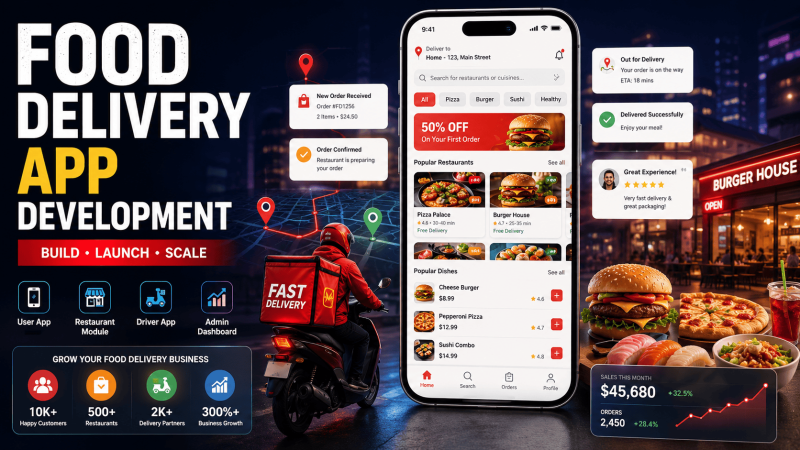
Key Panels in a Restaurant Food Delivery System
A complete food delivery solution typically consists of multiple interfaces.
Customer App
Used for:
- Browsing menus
- Ordering food
- Tracking deliveries
- Making payments
Restaurant Dashboard
Allows staff to:
- Manage orders
- Update menus
- Monitor performance
- Track sales
Delivery Partner App
Used by drivers to:
- Accept orders
- Navigate routes
- Update delivery status
Admin Panel
Provides overall platform management and analytics.
Development Process for Restaurant Food Delivery Apps
Step 1: Market Research
Identify:
- Customer preferences
- Competitor strengths
- Market opportunities
Step 2: Feature Planning
Define core and advanced functionality based on business goals.
Step 3: UI/UX Design
Create intuitive interfaces that simplify ordering.
Step 4: Backend Development
Build systems for:
- Order processing
- User management
- Payment handling
- Notifications
Step 5: Testing
Verify performance, security, and usability before launch.
Step 6: Deployment
Launch the application on relevant platforms.
Step 7: Ongoing Maintenance
Continuously improve performance and add new features.
How Much Does Food Delivery App Development Cost?
Development costs vary depending on complexity and feature requirements.
Basic Restaurant App
Features:
- Menu management
- Online ordering
- Payments
Estimated cost:
$15,000 – $40,000
Mid-Level Delivery App
Features:
- Order tracking
- Loyalty programs
- Delivery management
Estimated cost:
$40,000 – $80,000
Advanced Food Delivery Platform
Features:
- AI recommendations
- Analytics
- Multi-location support
- Advanced integrations
Estimated cost:
$80,000 – $200,000+
Actual costs depend on project scope and development requirements.
Food Delivery App Opportunities in the US and UAE
United States
Restaurants increasingly invest in branded delivery platforms to reduce reliance on third-party services and improve customer retention.
UAE
Rapid digital adoption and growing demand for delivery services have created strong opportunities for restaurant technology investments.
Many businesses in both regions now prioritize direct-to-consumer ordering solutions.
Common Challenges Restaurants Face
Customer Acquisition
Attracting users to a new app requires effective marketing.
Delivery Management
Restaurants must ensure timely and accurate deliveries.
User Retention
Maintaining customer engagement requires ongoing promotions and service improvements.
Technology Maintenance
Apps require regular updates, monitoring, and support.
Addressing these challenges early improves long-term success.
Future Trends in Food Delivery App Development
The industry continues to evolve with new technologies.
Emerging trends include:
- AI-powered personalization
- Voice ordering
- Predictive recommendations
- Drone deliveries
- Advanced loyalty ecosystems
Restaurants that embrace innovation can create stronger customer experiences and competitive advantages.
Why Restaurants Should Build Their Own Food Delivery App
A dedicated platform gives restaurants greater control over their operations and customer relationships.
Benefits include:
- Higher profitability
- Improved customer loyalty
- Better data ownership
- Stronger branding
- Greater operational flexibility
For businesses looking to build food delivery app solutions, the long-term advantages often outweigh the initial development investment.
Final Thoughts
Developing a food delivery app solution is one way of enhancing the customer experience, improving efficiency, and increasing profitability of the business. Although third party apps are still useful in attracting new customers, developing one’s own food delivery app gives more control in growing and engaging with customers.
Regardless of whether you have one restaurant, several outlets, or even a cloud kitchen, developing a custom app solution suited for your customers puts your business in a good position and helps generate a steady flow of income.
Source:
Click for the: Full Story
You might like