



 Close Menu
 World
World
 Biography
 Health
 Education
 Business
 Lifestyle
 Sports
 Technology
 Animals
 History
 Food
Food
 Religious
 Startups
 Movies
 Politics
 Fashion
 Covid
Covid
 Diet
Diet
 Fitness
 Marketing
 Travel
 Science
 Reviews
 Social media
 Stories
 Facts
Facts
 Art
Art
 Entertainment
shami codebrew

Technology
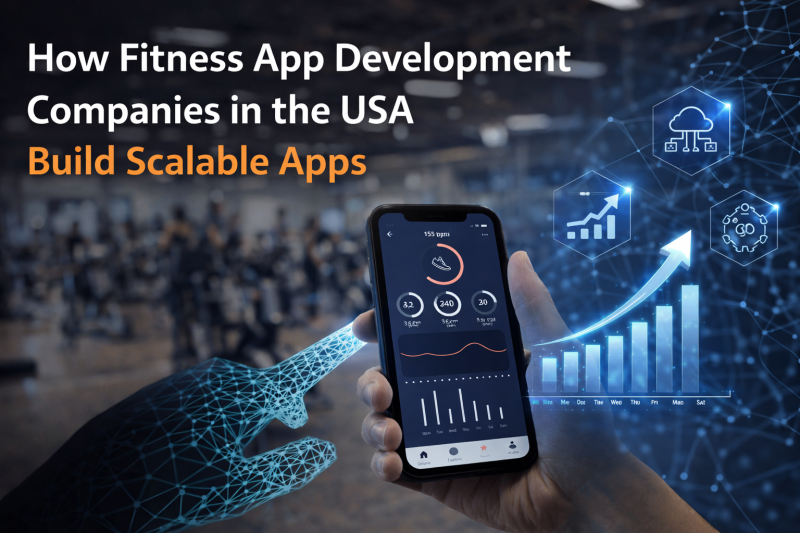
How Fitness App Development Companies in the USA Build Scalable Apps
 shami codebrew
Understanding Scalability in Fitness App Development
Scalability in fitness app development is the foundation of long-term success in today’s fast-growing digital health industry. A scalable fitness app is designed to handle increasing numbers of users, data loads, and feature expansions without affecting performance or user experience. In the USA, fitness app development companies focus on building systems that can evolve smoothly from startup-level applications to platforms serving millions of users. This requires careful planning of architecture, infrastructure, and user experience from the very beginning. Modern fitness apps are far more advanced than simple workout trackers—they include AI-based coaching, wearable integrations, social communities, and real-time analytics. All these elements demand a robust and flexible system. Without scalability, even the most innovative app can fail under pressure, leading to crashes, poor engagement, and loss of users. That’s why scalability is treated as a core principle rather than an afterthought in app development.
Cloud-Native Infrastructure as the Backbone of Scalability
Fitness app development companies in the USA rely heavily on cloud-native infrastructure to ensure seamless scalability. Cloud platforms like AWS, Microsoft Azure, and Google Cloud allow applications to dynamically adjust resources based on real-time demand. This means that when user traffic increases—such as during peak workout hours or seasonal fitness trends—the system automatically scales up to handle the load without performance issues. Cloud infrastructure also provides high availability, faster response times, secure data storage, and global accessibility. Developers no longer need to worry about physical servers or manual scaling, as cloud systems manage these complexities efficiently. This approach enables businesses to focus more on innovation and user experience while ensuring that their app remains stable and responsive regardless of user growth.
Microservices Architecture for Flexible Growth
To build scalable fitness apps, companies in the USA use a microservices architecture, which divides the application into smaller, independent services. Instead of relying on a single, large system, each function—such as user authentication, workout tracking, payments, or notifications—operates as a separate module. This allows each service to be scaled independently based on demand. For instance, if the workout tracking feature experiences heavy usage, only that component can be scaled without affecting other parts of the app. This flexibility not only improves performance but also simplifies updates and maintenance. Developers can add new features or make changes without disrupting the entire system. Microservices also enhance reliability, as issues in one service do not bring down the entire application. This architecture is particularly effective for fitness apps that continuously evolve with new features and integrations.
Role of AI and Personalization in Scalable Apps
Artificial intelligence plays a crucial role in making fitness apps both scalable and user-focused. Instead of manually creating workout plans for each user, AI algorithms analyze data such as user behavior, fitness levels, and preferences to deliver personalized recommendations. This automation allows apps to serve millions of users simultaneously while maintaining a high level of customization. AI also enables predictive insights, helping apps suggest workouts, track progress, and adjust plans in real time. This level of personalization increases user engagement and retention, which are essential for scaling an app successfully. By reducing the need for manual intervention and enabling intelligent automation, AI becomes a key driver of scalability in modern fitness applications.
Wearable Integration and Real-Time Data Handling
Fitness apps today are deeply connected with wearable devices like smartwatches and fitness trackers. These devices generate continuous streams of real-time data, including heart rate, steps, calories burned, and sleep patterns. Handling such large volumes of data requires a highly scalable backend system. US-based development companies use advanced data processing technologies to manage, store, and analyze this information efficiently. Real-time data processing allows apps to provide instant feedback and insights, enhancing the user experience. However, it also adds complexity, as the system must handle massive data inflows without delays or errors. Scalable architecture ensures that as more users connect their devices, the app continues to perform smoothly and reliably.
Cross-Platform Development for Faster Expansion
To reach a wider audience and scale quickly, fitness app development companies often use cross-platform development frameworks. These frameworks allow developers to create a single codebase that works across both Android and iOS devices. This approach reduces development time and costs while ensuring consistent performance and design across platforms. For businesses looking to grow rapidly, cross-platform development provides a significant advantage by enabling faster market entry and broader user reach. It also simplifies maintenance and updates, as changes can be applied universally rather than separately for each platform. This efficiency supports scalability by allowing apps to expand without unnecessary technical overhead.
Agile Development and Continuous Improvement
Scalability is not achieved in a single step; it is an ongoing process that requires continuous improvement. Fitness app development companies in the USA follow agile methodologies, which involve building apps in iterative cycles. Instead of launching a fully developed product, they start with a Minimum Viable Product (MVP) that includes core features. This allows businesses to test their ideas, gather user feedback, and make improvements before scaling further. Agile development ensures flexibility, enabling developers to adapt to changing user needs and market trends. Continuous integration and deployment practices also play a key role, allowing frequent updates without disrupting the user experience. This approach ensures that the app remains scalable and adaptable over time.
Performance Testing and Optimization Strategies
Before scaling an app, developers conduct thorough performance testing to identify and address potential issues. This includes load testing to simulate high traffic, stress testing to evaluate system limits, and security testing to protect user data. These tests help ensure that the app can handle increased usage without compromising performance. Optimization techniques such as caching, database management, and content delivery networks are also used to improve speed and efficiency. By focusing on performance from the early stages of development, companies can build apps that remain stable and responsive as they grow.
Essential Features of a Scalable Fitness App
A scalable fitness app includes features that support both user engagement and long-term growth. These features typically include personalized dashboards, AI-driven workout recommendations, progress tracking, social interaction tools, subscription management, and push notifications. Each feature must be designed to handle increasing usage without affecting performance. For example, social features like challenges and leaderboards should be capable of supporting thousands or even millions of interactions simultaneously. By combining strong functionality with scalable design, developers create apps that are both engaging and future-ready.
Top Fitness App Development Companies in the USA
Code Brew Labs
Code Brew Labs is widely recognized for delivering scalable and high-performance fitness applications. The company focuses on building advanced solutions using technologies like AI, cloud computing, and real-time analytics. Their approach emphasizes flexibility, ensuring that apps can grow alongside business needs without requiring major restructuring. From startups to large enterprises, Code Brew Labs provides end-to-end development services that support long-term scalability and success.
Royo Apps
Royo Apps is known for creating feature-rich fitness applications designed for gyms, trainers, and wellness businesses. Their development strategy focuses on building scalable platforms that enhance user engagement and retention. By integrating advanced features and ensuring smooth performance, Royo Apps helps businesses scale their applications efficiently as their user base grows.
Blocktech Brew
Blocktech Brew stands out for its innovative use of technologies like AI and cloud computing in fitness app development. The company builds secure and scalable applications capable of handling large volumes of data and user interactions. Their focus on performance, security, and future-ready solutions makes them a strong choice for businesses aiming to build scalable fitness platforms.
FitGenix Labs
FitGenix Labs is a newly emerging company focusing on building modern fitness applications with scalability at the core. The company emphasizes AI-driven personalization and cloud-based infrastructure to ensure apps can handle growing user demands. Their fresh approach to design and development makes them a promising player in the industry.
PulseStack Technologies
PulseStack Technologies is gaining attention for its innovative fitness app solutions tailored for startups and wellness brands. The company focuses on creating lightweight yet scalable applications that deliver high performance. Their expertise in real-time data handling and user-centric design supports long-term growth and engagement.
MotionEdge Digital
MotionEdge Digital represents a new wave of development companies that prioritize flexibility and scalability. They specialize in creating customized fitness platforms that adapt to evolving business needs. By leveraging modern technologies and scalable architecture, MotionEdge Digital ensures that their apps remain efficient and future-ready.
Challenges in Building Scalable Fitness Apps
Building scalable fitness apps comes with several challenges, including managing large volumes of real-time data, ensuring data security, maintaining performance during traffic spikes, and integrating multiple technologies. As apps grow, maintaining a consistent user experience becomes more complex. Development companies address these challenges by using robust architectures, implementing advanced security measures, and continuously monitoring system performance. Overcoming these obstacles is essential to ensure that the app remains reliable and efficient as it scales.
Future of Scalable Fitness Apps
The future of fitness apps is driven by advancements in technology such as AI-powered virtual trainers, augmented reality workouts, and predictive health analytics. As these innovations become more widespread, the need for scalable infrastructure will increase significantly. Fitness apps will evolve into comprehensive health platforms that offer highly personalized experiences and seamless integration with smart devices. Companies that prioritize scalability today will be better positioned to adapt to these changes and remain competitive in the future.
Conclusion
Fitness app development companies in the USA build scalable apps by combining cloud infrastructure, microservices architecture, AI-driven personalization, and agile development practices. These strategies ensure that applications can handle rapid growth while delivering high-quality user experiences. Companies like Code Brew Labs, Royo Apps, and Blocktech Brew continue to lead with innovative solutions, while new and emerging companies bring fresh ideas to the industry. For any business looking to build a fitness app, focusing on scalability is essential for achieving sustainable growth and long-term success.
Source:
Click for the: Full Story
You might like









You Might Like this