



 Close Menu
 World
World
 Biography
 Health
 Education
 Business
 Lifestyle
 Sports
 Technology
 Animals
 History
 Food
Food
 Religious
 Startups
 Movies
 Politics
 Fashion
 Covid
Covid
 Diet
Diet
 Fitness
 Marketing
 Travel
 Science
 Reviews
 Social media
 Stories
 Facts
Facts
 Art
Art
 Entertainment
Ahlawat Associates

Business
How International Employers Can Legally Hire Indian Employees
 Ahlawat Associates
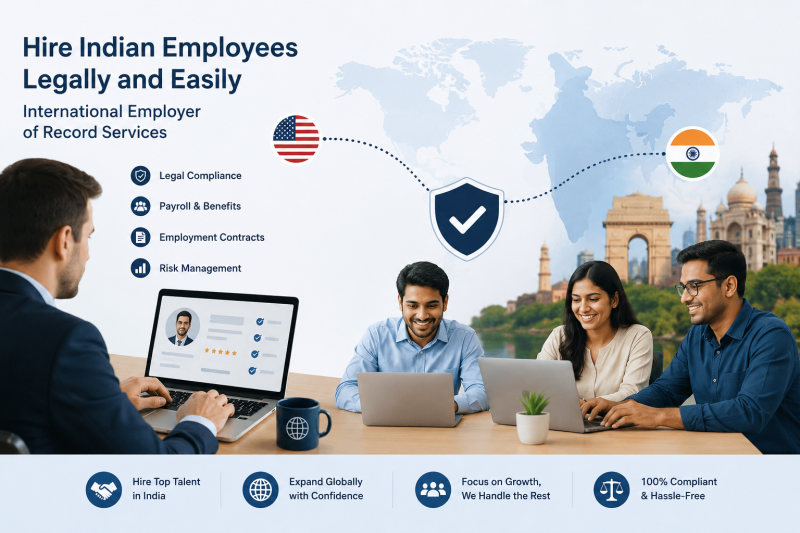
India has become an attractive destination for international businesses looking to access skilled and cost-effective talent. From technology and finance to consulting, healthcare, and customer support, companies across the world are increasingly expanding their teams in India.
However, hiring employees in another country involves more than simply finding the right candidate and issuing an offer letter. International employers must comply with Indian employment, payroll, tax, and statutory requirements. This is why businesses often turn to international employer of record services to simplify the hiring process and reduce compliance risks.
What Does It Mean to Hire Indian Employees Legally?
To hire Indian employees legally, an international company must ensure that the employment relationship complies with applicable Indian laws and regulations. This can involve employment contracts, payroll processing, tax deductions, social security contributions, employee benefits, leave requirements, and other statutory obligations.
For a company without an established legal entity in India, managing these requirements independently can be challenging. Setting up a subsidiary or other local entity may also involve significant time, administrative work, and ongoing compliance responsibilities.
An Employer of Record (EOR) provides an alternative solution.
What Is an Employer of Record?
An Employer of Record is a local organization that legally employs workers on behalf of a foreign company. The international business maintains control over the employee's day-to-day work, responsibilities, and performance, while the EOR manages the formal employment and administrative obligations.
For businesses entering the Indian market, international employer of record services can provide a streamlined way to build a local workforce without immediately establishing an Indian entity.
The EOR typically handles areas such as employment documentation, payroll, statutory deductions, employee benefits, and compliance administration.
Why Use International Employer of Record Services in India?
Using an EOR can help international businesses enter the Indian talent market more efficiently. Some of the key advantages include:
1. Simplified Legal Compliance
Indian employment regulations can be complex, particularly for companies unfamiliar with local requirements. An experienced EOR can help manage employment-related obligations and keep processes aligned with applicable laws.
This allows the foreign employer to focus on business operations while the EOR manages employment administration.
2. Faster Hiring
Establishing a local entity can take time and requires ongoing administration. With international employer of record services, businesses can often onboard employees through an existing local employment structure.
This can be especially useful when a company wants to test the Indian market, hire a small team, or quickly access specialized talent.
3. Payroll and Tax Administration
Employers need to ensure that employees are paid correctly and that applicable deductions and contributions are handled appropriately.
An EOR can manage payroll calculations, statutory deductions, salary payments, and employment-related reporting according to the agreed employment structure.
4. Employment Contracts and Documentation
A legally compliant employment relationship requires appropriate documentation. Employment agreements should clearly establish key terms such as compensation, responsibilities, working arrangements, leave, termination provisions, and other applicable conditions.
An EOR can assist with preparing and maintaining employment documentation that reflects local requirements.
5. Reduced Administrative Burden
Managing HR and payroll from another country can create unnecessary administrative complexity. An EOR provides local support for employment-related processes, making it easier for international companies to manage Indian employees.
Key Considerations Before Hiring in India
Before deciding how to hire Indian employees legally, an international company should assess several factors.
First, determine whether establishing an Indian entity is necessary or whether an EOR arrangement is more suitable for the business's current needs.
Second, understand the employment costs beyond the employee's basic salary. Depending on the employee and applicable laws, employers may need to consider statutory contributions, benefits, leave, payroll taxes, and other employment-related expenses.
Third, ensure that employment contracts and HR policies comply with applicable Indian requirements. Rules can vary depending on factors such as the employee's location, role, industry, and applicable legislation.
Finally, select an EOR provider with strong knowledge of Indian employment and payroll compliance. The provider should be transparent about its services, fees, responsibilities, and compliance processes.
When Should an International Business Use an EOR?
An EOR can be particularly useful when a company wants to hire its first employees in India without immediately creating a local corporate structure.
It may also be appropriate for businesses that want to expand gradually, hire remote employees, enter a new market, or evaluate the Indian market before making a larger investment.
For larger operations with a substantial long-term workforce, establishing a local entity may eventually provide greater control and flexibility. The right approach depends on the company's objectives, hiring plans, budget, and legal requirements.
Conclusion
India offers international businesses access to a large and diverse pool of skilled professionals. However, successful expansion requires careful attention to local employment and payroll compliance.
Businesses looking to hire Indian employees legally can consider Employer of Record solutions as a practical way to simplify employment administration and reduce the challenges associated with entering a new jurisdiction.
With international employer of record services, companies can access Indian talent while receiving local support for employment contracts, payroll, statutory compliance, and other HR requirements.
Before hiring, international employers should evaluate their business structure and seek appropriate professional advice to determine the most suitable and compliant hiring model for their specific circumstances.
Source:
Click for the: Full Story
You might like









You Might Like this