


 Close Menu
 World
World
 Biography
 Health
 Education
 Business
 Lifestyle
 Sports
 Technology
 Animals
 History
 Food
Food
 Religious
 Startups
 Movies
 Politics
 Fashion
 Covid
Covid
 Diet
Diet
 Fitness
 Marketing
 Travel
 Science
 Reviews
 Social media
 Stories
 Facts
Facts
 Art
Art
 Entertainment
Mohit Sharma

Technology
AI-Powered Healthcare App Development: Benefits and Features
 Mohit Sharma
Healthcare is one of the industries being reshaped most visibly by artificial intelligence. What used to be a purely reactive system — where patients visit a doctor only after symptoms appear — is slowly becoming predictive, personalized, and available around the clock through mobile apps. This shift is driving strong interest in AI-powered healthcare app development, as hospitals, clinics, startups, and independent practitioners look for ways to offer smarter, faster, and more accessible care.
This article breaks down why AI is becoming central to healthcare apps, what benefits it brings to both patients and providers, and which features actually matter when building one.
Why AI Is Becoming Central to Healthcare Apps
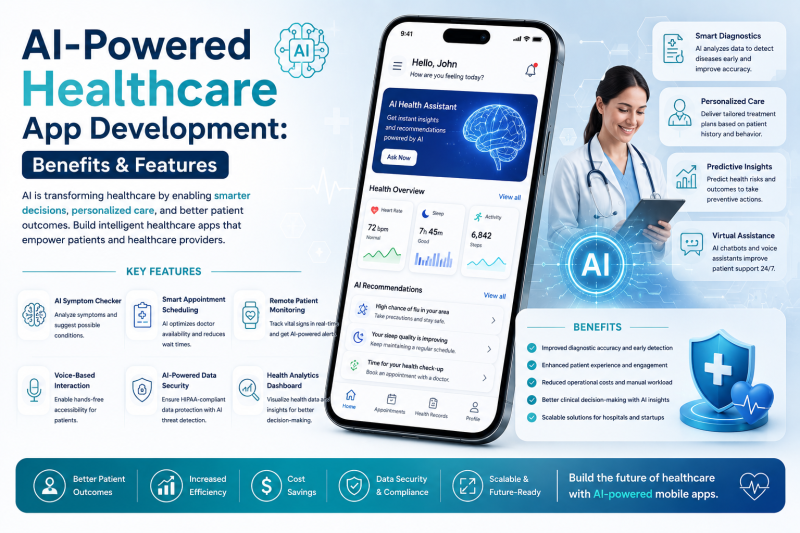
Traditional healthcare apps mostly digitized existing processes — booking appointments, storing records, or sending reminders. AI changes what an app can actually do. Instead of just storing information, an AI-powered app can interpret symptoms, flag risks, personalize recommendations, and even assist with diagnosis support. This is why AI healthcare app development has moved from being a niche innovation to something patients increasingly expect from modern health platforms.
Part of this shift is also driven by necessity. Healthcare systems worldwide are dealing with staff shortages, long wait times, and rising costs. AI-powered tools help address some of these pressures by automating routine tasks, triaging patients more efficiently, and giving doctors better information before a consultation even begins.
Key Benefits of AI-Powered Healthcare Apps
1. Faster and More Accurate Symptom Assessment
AI-driven symptom checkers can analyze a patient's inputs and cross-reference them against medical databases to suggest possible conditions and next steps. This doesn't replace a doctor's diagnosis, but it helps patients understand the urgency of their situation and guides them toward the right type of care.
2. Personalized Health Recommendations
Rather than offering generic health tips, AI-powered apps can analyze a user's history, habits, and reported symptoms to provide recommendations tailored to their specific situation — whether that's medication reminders, lifestyle suggestions, or follow-up care alerts.
3. Reduced Administrative Burden for Providers
AI can handle scheduling, automate documentation through voice-to-text transcription, and flag incomplete patient records, freeing up time for doctors and staff to focus on actual patient care instead of paperwork.
4. Early Detection and Risk Prediction
By analyzing patterns in patient data over time, AI models can identify early warning signs of conditions like diabetes, heart disease, or mental health decline — often before symptoms become severe enough for the patient to notice something is wrong.
5. 24/7 Accessibility Through Chatbots and Virtual Assistants
AI chatbots integrated into healthcare apps allow patients to ask health-related questions, get medication information, or receive guidance on whether they need urgent care, at any time of day, without waiting for a callback or appointment slot.
6. Better Resource Allocation
Hospitals and clinics using AI-powered healthcare app development solutions can better predict patient inflow, staffing needs, and equipment usage, which helps reduce bottlenecks, especially during high-demand periods.
Must-Have Features in an AI-Powered Healthcare App
When planning AI-powered healthcare app development, it's easy to get distracted by flashy features that don't actually improve patient outcomes. Here are the features that genuinely matter:
AI Symptom Checker
A well-designed symptom checker should ask relevant follow-up questions, avoid overwhelming users with medical jargon, and clearly indicate when a symptom pattern requires urgent attention rather than routine care.
Smart Appointment Scheduling
AI can match patients with the right specialist based on their symptoms and availability, reducing back-and-forth communication and minimizing scheduling conflicts.
Remote Patient Monitoring
Integration with wearable devices allows the app to track vitals like heart rate, blood pressure, or glucose levels in real time, alerting both patients and doctors if readings fall outside a healthy range.
Secure Electronic Health Records (EHR) Access
Patients should be able to view their medical history, test results, and prescriptions in one place, with AI helping to organize and highlight relevant information rather than presenting a wall of raw data.
Telemedicine Integration
Video consultations paired with AI-assisted pre-visit questionnaires help doctors prepare before the call even starts, making virtual visits more efficient for both sides.
Medication Management and Reminders
AI can track medication schedules, flag potential drug interactions, and send personalized reminders based on a patient's specific treatment plan.
Predictive Analytics Dashboard (for Providers)
On the provider side, dashboards that use AI to flag high-risk patients or predict readmission likelihood help medical teams prioritize care more effectively.
Natural Language Processing (NLP) for Voice Input
Allowing patients to describe symptoms in their own words, rather than selecting from rigid menus, makes the app more accessible, especially for older users or those less comfortable with technology.
Challenges to Keep in Mind
Building an AI-powered healthcare app isn't without its complexities, and it's worth being realistic about the challenges involved:
Data privacy and compliance are non-negotiable in healthcare. Any AI healthcare app development project needs to follow relevant regulations (such as HIPAA in the US or similar data protection laws elsewhere), which affects everything from data storage to third-party integrations.
Accuracy and liability matter more here than in almost any other app category. AI suggestions need clear disclaimers, and the app should always encourage users to consult a licensed medical professional rather than positioning itself as a replacement for one.
Training data quality directly affects how reliable the AI features are. Poorly trained models can produce misleading recommendations, so working with high-quality, diverse medical datasets is essential.
Integration with existing healthcare systems can be technically demanding, especially when connecting with hospital EHR systems, insurance platforms, or third-party lab services that weren't originally designed to work together.
Who Benefits Most from These Apps?
AI-powered healthcare apps aren't just useful for large hospital networks. They're increasingly valuable for:
- Independent clinics looking to offer smarter triage without hiring additional staff
- Telehealth startups wanting to differentiate themselves with more than just video calls
- Chronic disease management platforms that rely on continuous monitoring and personalized alerts
- Mental health apps using AI to detect mood patterns and flag when professional intervention may be needed
- Insurance and wellness companies aiming to offer preventive care tools rather than only reactive coverage
Final Thoughts
AI is no longer a futuristic add-on in healthcare — it's becoming a practical tool that improves how patients access care and how providers manage their time and resources. Thoughtful AI-powered healthcare app development focuses less on flashy automation and more on genuinely useful features: accurate symptom guidance, personalized monitoring, reduced administrative friction, and stronger data security. For businesses and healthcare providers exploring this space, the real opportunity lies in building tools that make healthcare feel more accessible, timely, and personal — without losing sight of the fact that AI should support medical professionals, not replace them.
Source:
Click for the: Full Story
You might like