


 Close Menu
 World
World
 Biography
 Health
 Education
 Business
 Lifestyle
 Sports
 Technology
 Animals
 History
 Food
Food
 Religious
 Startups
 Movies
 Politics
 Fashion
 Covid
Covid
 Diet
Diet
 Fitness
 Marketing
 Travel
 Science
 Reviews
 Social media
 Stories
 Facts
Facts
 Art
Art
 Entertainment
Charles Royer

Business
Unlocking New Dimensions in Vibration Analysis with Laser Doppler Vibrometers
 Charles Royer
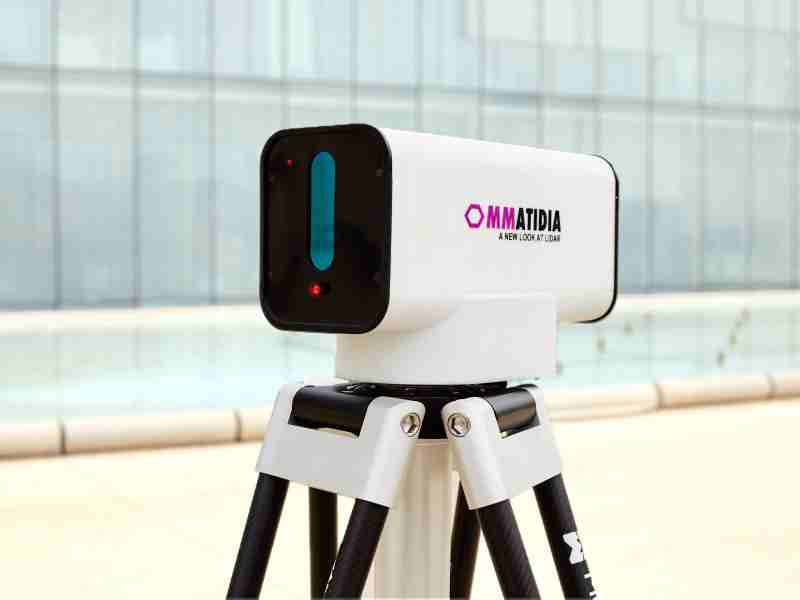
The landscape of measurement science has been dramatically enhanced by laser technology, offering unparalleled accuracy and novel capabilities. Central to this revolution is the laser Doppler vibrometer, an instrument that leverages laser light to measure vibrational velocity remotely and with exquisite precision. Paired with lidar scanners and laser trackers, it has become a cornerstone technology for advanced diagnostics, quality assurance, and structural evaluation.
Operating Principles and Advantages
Exploiting Laser Light for Vibration Measurement
The laser Doppler vibrometer utilizes the Doppler shift of coherent laser light reflecting from a moving surface to quantify velocity and displacement. This contactless approach removes mechanical constraints, preserves the integrity of delicate samples, and supports measurements in environments unsuitable for traditional sensors.
Enhanced Data Quality Through Modern Optics
Cutting-edge optical components and high-speed photodetectors maximize measurement accuracy. Combined with noise reduction algorithms, the vibrometer delivers clear, reliable data essential for detailed vibration analysis.
Diverse Applications and Industry Benefits
Structural Health Monitoring and Predictive Maintenance
By capturing subtle vibrational changes, laser Doppler vibrometers detect structural weaknesses before they escalate into failures. Their remote sensing capability is invaluable in monitoring large infrastructures like bridges, wind turbines, and aircraft components.
Comprehensive Measurement Solutions Through Laser Technology Fusion
Integration with lidar and laser trackers enables simultaneous acquisition of geometric and dynamic information. This comprehensive data supports complex modeling, enhances robotics precision, and facilitates innovative engineering solutions.
Conclusion
Laser Doppler vibrometers exemplify how laser-based measurement technologies have transformed vibration and distance analysis. Their non-contact precision and adaptability drive progress across numerous disciplines. As these technologies evolve, they will unlock new possibilities for research, diagnostics, and industrial excellence.
Source:
Click for the: Full Story
You might like