Close Menu
 World
World
 Biography
 Health
 Education
 Business
 Lifestyle
 Sports
 Technology
 Animals
 History
 Food
Food
 Religious
 Startups
 Movies
 Politics
 Fashion
 Covid
Covid
 Diet
Diet
 Fitness
 Marketing
 Travel
 Science
 Reviews
 Social media
 Stories
 Facts
Facts
 Art
Art
 Entertainment
Susan Armadale

Business
What Is Exterior Brick Staining and Why Homeowners Choose It
 Susan Armadale
If you've spent any time looking at older brick homes, you've probably noticed something. Some brick ages beautifully. Some doesn't. Colors fade, repairs leave mismatched patches, and sometimes the original brick color simply doesn't fit the look homeowners want anymore. That's where exterior brick staining comes in.
A lot of people assume painting is the only option when they want to change brick color. Not true. Brick stain works differently. Instead of sitting on top of the surface like paint, the stain penetrates into the masonry and becomes part of the brick itself. The texture remains visible. The natural character stays intact. That's a big reason homeowners, builders, and restoration professionals are moving toward staining rather than covering brick with heavy coatings.
Companies like Mineral Stains have helped property owners transform brick exteriors while preserving the authentic appearance that makes brick attractive in the first place. The result doesn't look artificial. It still looks like brick. Just better.
Understanding How Exterior Brick Staining Actually Works
One of the biggest misconceptions about brick staining is that it's basically paint with a different label. It isn't.
Paint creates a film over the surface. Brick stain penetrates the porous structure of the masonry. Because of that, stained brick continues to maintain its natural texture and visual depth. You can still see the individual characteristics of each brick. That's important because those subtle variations are often what make masonry appealing.
The process works especially well on absorbent brick surfaces. The stain bonds with the material rather than forming a layer that can peel or chip later. When applied correctly, the finish appears natural and consistent. Not fake. Not overly glossy. Just like the brick was manufactured that color from the beginning.
That's why architects often prefer staining for restoration projects. It respects the original material instead of hiding it.
Why Homeowners Are Choosing Brick Staining Over Paint
The debate between paint and stain comes up all the time. Honestly, it's not even close for many masonry projects.
Paint can trap moisture. Brick naturally absorbs and releases moisture depending on weather conditions. When a thick paint coating prevents that process, problems sometimes follow. Bubbling, peeling, cracking. Eventually expensive maintenance.
Exterior brick staining avoids many of those concerns because it allows the masonry to remain breathable. The stain becomes part of the brick instead of creating a barrier on top of it.
Homeowners also appreciate the longevity. While no exterior finish lasts forever, properly stained brick typically requires less maintenance than painted surfaces. There isn't a coating layer constantly fighting against weather, UV exposure, and moisture movement.
And maybe most importantly, stained brick simply looks more authentic. You don't lose the texture. You don't lose the character. The house still feels like brick.
Choosing the Right Brick Staining Colors for Your Property
Selecting brick staining colors is where the fun starts. It's also where many homeowners get stuck.
There are hundreds of possibilities. Warm earth tones remain popular because they complement natural landscapes and traditional architecture. Browns, reds, terracotta shades, and subtle charcoal blends continue to dominate residential projects.
At the same time, modern homes are pushing toward cooler color palettes. Deep grays, muted taupes, soft black accents, and sophisticated neutral tones are becoming increasingly common. These shades create a cleaner contemporary appearance without sacrificing the texture of brick.
The best color choice depends on several factors. Roof color matters. Landscaping matters. Window trim matters. Even neighboring homes can influence the decision. A stain color that looks amazing on one property might feel completely out of place on another.
That is why many professionals recommend testing samples before committing to a full exterior application. Seeing the color on actual brick under natural sunlight makes a huge difference.
How Brick Staining Colors Affect Curb Appeal
Color changes perception more than most people realize.
A faded orange brick home can suddenly feel updated with a rich brown stain. A patchwork wall containing multiple brick repairs can become visually consistent again. Older commercial buildings often gain a fresh, modern appearance simply through strategic color adjustments.
The impact on curb appeal can be dramatic. Not because the building becomes flashy. Because it becomes cohesive.
Many homeowners are not trying to completely reinvent their property. They just want everything to work together. The brick, trim, roof, and landscaping should feel connected. Properly selected brick staining colors create that connection.
Real estate professionals frequently point out that exterior appearance creates the first impression buyers experience. While staining alone doesn't guarantee higher property values, improved visual appeal certainly doesn't hurt.
Sometimes the difference is immediate. You pull into the driveway and think, finally, that's how the house was supposed to look.
The Advantages of Mineral-Based Brick Staining Solutions
Not all stains are created equal.
Mineral-based products have become increasingly popular because they work with masonry rather than against it. These formulations penetrate deeply into porous surfaces while maintaining breathability. That's important for long-term durability.
Mineral Stains specializes in masonry coloring systems designed specifically for brick, stone, concrete, and other mineral surfaces. Instead of creating an artificial coating, mineral-based technology interacts with the substrate itself.
The practical benefits are significant. Better color permanence. Reduced risk of peeling. More natural appearance. Improved compatibility with historic masonry structures.
For homeowners investing in exterior improvements, longevity matters. Nobody wants to repeat a major project every few years. High-quality mineral staining systems help minimize that concern while delivering a finish that looks authentic.
And honestly, authenticity is becoming harder to find in modern exterior finishes.
Common Situations Where Exterior Brick Staining Makes Sense
Not every brick building needs staining. But certain situations make it especially valuable.
Mismatched brick repairs are probably one of the most common examples. After renovations, additions, or damage repairs, new bricks rarely match older masonry perfectly. The color difference can be obvious from the street.
Exterior brick staining allows professionals to blend those areas together. Suddenly the repair disappears into the overall structure.
Color correction is another major reason. Sometimes homeowners inherit a brick color they simply dislike. Maybe it's too orange. Too pink. Too faded. Rather than replacing the brick entirely, staining offers a practical alternative.
Commercial buildings use staining as well. Retail centers, office buildings, and restaurants often update exterior appearances without the cost of complete reconstruction. The transformation can be substantial while remaining cost-effective compared to replacement.
What Homeowners Should Expect During the Staining Process
The actual staining process involves more preparation than many people expect.
Surface cleaning comes first. Dirt, mildew, old residue, and contaminants need removal before stain application begins. Clean brick absorbs stain more consistently.
After cleaning, test samples are usually applied. This step helps verify color selection and confirms how the stain reacts with the existing masonry. Every brick absorbs differently. Skipping testing can create surprises nobody wants.
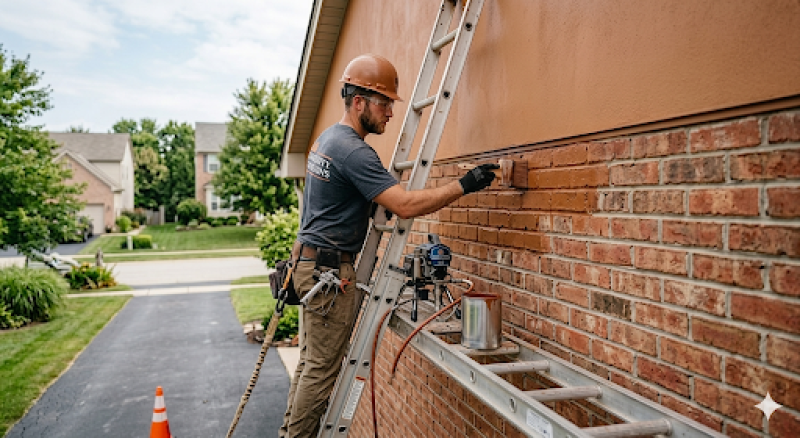
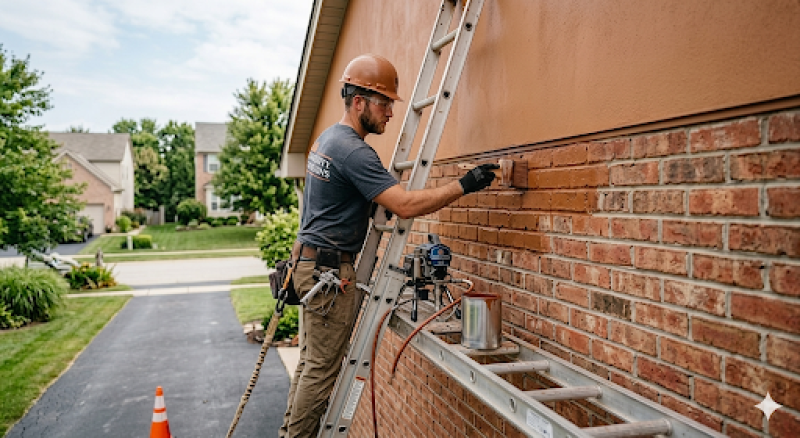
Once approved, the stain is applied carefully across the surface. Depending on the project goals, multiple applications may be required to achieve the desired color depth. Professional installers work methodically to maintain consistency while preserving the natural variation that makes brick attractive.
Weather conditions also matter. Temperature, humidity, and moisture levels influence performance. Experienced contractors understand how these factors affect results and schedule applications accordingly.
Good preparation isn't exciting. But it usually determines whether a project succeeds or disappoints.
Long-Term Maintenance and Durability of Stained Brick
One reason exterior brick staining continues gaining popularity is maintenance. There simply isn't much of it.
Unlike painted brick, stained surfaces generally do not require frequent scraping, repainting, or extensive touch-ups. Because the color penetrates into the masonry, normal weathering affects it differently than surface coatings.
Routine inspections remain smart. Dirt buildup should be cleaned periodically. Any masonry damage should be repaired promptly. But most homeowners discover stained brick requires significantly less ongoing attention compared to painted alternatives.
Durability depends on product quality, application methods, environmental conditions, and substrate condition. However, premium mineral-based staining systems are designed to withstand years of exposure while maintaining appearance.
That's a major selling point. People want improvements that last.
Not forever. Just long enough to feel worthwhile.
Conclusion: Why Exterior Brick Staining Continues Growing in Popularity
Exterior brick doesn't need to be replaced to look better. That's really the biggest takeaway.
Through professional exterior brick staining, homeowners can update color, correct mismatched repairs, improve curb appeal, and preserve the natural beauty of masonry without covering it up. The brick remains visible. The texture remains authentic. The character stays intact.
Choosing the right brick staining colors allows properties to feel refreshed while maintaining architectural integrity. Whether the goal is restoration, modernization, or simple color correction, staining provides a practical solution that balances appearance and performance.
For property owners looking for a durable and natural-looking masonry coloring system, Mineral Stains offers specialized solutions designed specifically for brick and other masonry surfaces. When done correctly, brick staining doesn't make a home look painted. It makes it look like it was always meant to look that way.
Frequently Asked Questions About Exterior Brick Staining
Is exterior brick staining better than painting?
For many masonry applications, yes. Exterior brick staining penetrates the brick rather than forming a surface coating. This helps preserve breathability, texture, and a more natural appearance.
How long does brick staining last?
The lifespan depends on climate, product quality, and application methods. High-quality mineral-based stains can provide long-lasting color performance with minimal maintenance.
Can brick staining colors be customized?
Yes. Many staining systems offer extensive color options and custom color matching capabilities to achieve specific design goals.
Does brick stain peel or chip?
Because stain penetrates into the masonry rather than sitting on the surface, it is much less likely to peel or chip compared to paint.
Can stained brick be used on older homes?
Absolutely. Exterior brick staining is commonly used on historic and older properties because it preserves the natural appearance and character of masonry.
Is exterior brick staining expensive compared to replacement?
In most cases, staining is significantly more cost-effective than removing and replacing existing brick while still providing a dramatic visual improvement.
Source:
Click for the: Full Story
You might like