


 Close Menu
 World
 Biography
 Health
 Education
 Business
 Lifestyle
 Sports
 Technology
 Animals
 History
 Food
 Religious
 Startups
 Movies
 Politics
 Fashion
 Covid
 Diet
 Fitness
 Marketing
 Travel
 Science
 Reviews
 Social media
 Stories
 Facts
 Art
 Entertainment
samiksha
Business
How Logistics Software Development Services Are Transforming Supply Chain Management?
 samiksha
Supply chain management has become more complex than ever. Businesses must coordinate suppliers, warehouses, transportation networks, inventory, and customer deliveries while managing rising operational costs and increasing customer expectations. Traditional logistics processes often struggle to keep up with these demands, especially when information is scattered across different systems and teams.
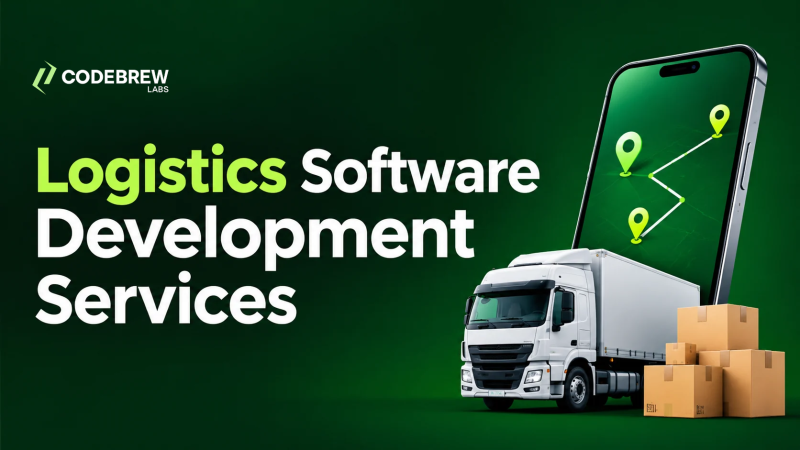
This is where logistics software development services are making a significant difference. By introducing digital tools, automation, real-time tracking, and data-driven insights, businesses can manage logistics operations more efficiently and respond quickly to changing market conditions.
From inventory management and fleet tracking to warehouse automation and delivery optimization, modern logistics software helps organizations build connected, transparent, and scalable supply chains. In this blog, we explore how logistics software development is transforming supply chain management and helping businesses prepare for the future.
1. Improving Supply Chain Visibility With Real-Time Tracking
One of the biggest challenges in supply chain management is knowing where shipments, vehicles, and inventory are at any given moment. Limited visibility can lead to delivery delays, communication gaps, and poor planning.
Logistics software solutions integrate GPS tracking, IoT devices, and centralized dashboards to provide real-time information about shipments and transportation activities. Businesses can monitor vehicle locations, track delivery progress, and receive updates when unexpected situations occur.
This level of visibility helps logistics managers:
- Monitor shipments throughout the delivery journey.
- Identify delays and transportation issues earlier.
- Share accurate delivery updates with customers.
- Improve coordination between suppliers, warehouses, and carriers.
- Make faster decisions using real-time operational information.
With better visibility, businesses can reduce uncertainty and create a more reliable supply chain experience.
2. Automating Inventory and Warehouse Management
Manual inventory management can create errors, inaccurate stock records, and unnecessary operational expenses. When businesses cannot accurately track inventory, they may experience stock shortages, overstocking, and delayed order fulfillment.
Custom logistics software can simplify these processes through warehouse management systems (WMS) and inventory management platforms. These solutions help businesses monitor stock levels, manage product movement, track incoming shipments, and organize warehouse operations.
Features such as barcode scanning, RFID integration, automated stock alerts, and inventory synchronization can reduce manual work and improve accuracy.
Warehouse management software also helps organizations optimize storage space, organize picking and packing activities, and process orders more efficiently. As a result, businesses can improve warehouse productivity while maintaining better control over inventory.
3. Optimizing Transportation and Delivery Operations
Transportation is a major component of logistics expenses. Inefficient routes, underutilized vehicles, traffic congestion, and poor scheduling can increase fuel consumption and delay deliveries.
Transportation management systems (TMS) help businesses plan, manage, and monitor transportation activities from a centralized platform. These systems can support route planning, carrier management, shipment scheduling, freight tracking, and delivery performance monitoring.
Advanced route optimization features can consider factors such as distance, traffic conditions, delivery locations, vehicle capacity, and delivery priorities. This helps logistics teams select more efficient routes and allocate resources effectively.
By improving transportation planning, businesses can reduce avoidable costs, improve delivery timelines, and increase fleet utilization.
4. Enabling Better Decision-Making Through Data Analytics
Supply chain decisions are only as effective as the information behind them. Without reliable operational data, businesses may struggle to identify performance issues, forecast demand, or understand where resources are being wasted.
Logistics software development services can incorporate analytics and reporting dashboards that convert operational data into actionable insights.
Businesses can use these tools to monitor important performance indicators, including:
- On-time delivery rates.
- Transportation and fuel expenses.
- Inventory turnover.
- Order fulfillment times.
- Warehouse productivity.
- Fleet utilization.
- Shipment delays and exceptions.
With access to historical and real-time data, managers can identify patterns, evaluate operational performance, and make more informed decisions. Predictive analytics can also help organizations anticipate demand fluctuations and prepare their resources accordingly.
5. Strengthening Communication Across Supply Chain Partners
A supply chain involves multiple stakeholders, including manufacturers, suppliers, distributors, carriers, warehouse teams, and customers. When these participants use disconnected systems, important information can become delayed or inconsistent.
Modern logistics platforms create a shared digital environment where relevant stakeholders can access updated information according to their roles and permissions.
Features such as automated notifications, shipment status updates, document management, and integrated communication tools help teams coordinate activities more effectively.
For example, suppliers can receive updated purchase information, warehouse teams can prepare incoming stock, and customers can check delivery progress without repeatedly contacting support teams.
Better communication reduces confusion, minimizes manual follow-ups, and supports smoother collaboration across the supply chain.
6. Improving Customer Experience With Faster and More Reliable Deliveries
Customer expectations around delivery speed, transparency, and convenience continue to grow. Businesses that can't deliver reliably may struggle to maintain customer satisfaction and loyalty.
Logistics software helps organizations improve the customer journey through shipment tracking, delivery notifications, estimated arrival times, and digital proof of delivery.
Customer-facing portals and mobile applications can also allow users to place orders, monitor shipments, access invoices, and communicate with support teams.
These capabilities make the delivery process more transparent and convenient. Customers receive better visibility into their orders, while businesses can manage delivery-related queries more efficiently.
7. Integrating Logistics Systems for Connected Operations
Many businesses rely on separate platforms for accounting, inventory, customer management, order processing, and transportation. When these systems do not communicate effectively, teams often need to enter the same information multiple times.
Custom logistics software can integrate with enterprise resource planning (ERP), customer relationship management (CRM), eCommerce platforms, warehouse systems, and third-party logistics providers.
These integrations help create a connected operational ecosystem. For example, when a customer places an order through an eCommerce platform, the information can automatically move into the inventory and warehouse systems. Once the shipment is dispatched, tracking details can be shared with the customer.
This reduces repetitive tasks, improves data consistency, and helps businesses manage their operations from a more unified environment.
8. Supporting Scalability and Business Expansion
As businesses grow, their logistics requirements also become more demanding. They may need to manage additional warehouses, expand delivery networks, handle higher shipment volumes, or coordinate operations across multiple regions.
A scalable logistics software solution can be designed to support these changing requirements. Cloud-based infrastructure, modular architecture, and flexible integrations allow businesses to expand system capabilities as their operations evolve.
Instead of depending on disconnected tools, organizations can build a technology foundation that supports future growth.
Custom software can also accommodate specific business workflows, industry requirements, and regional operational needs. This flexibility makes it easier to adapt logistics processes without completely replacing existing systems.
9. Enhancing Security and Operational Reliability
Logistics platforms handle important business information, including customer details, shipment records, supplier data, financial transactions, and operational documents. Protecting this information is essential for maintaining trust and business continuity.
Professional logistics software development can include role-based access controls, secure authentication, data encryption, activity monitoring, and regular security updates.
Reliable backup processes and system monitoring can further help businesses protect critical information and reduce the impact of technical disruptions.
Security should be considered throughout the software development lifecycle rather than added as an afterthought. A well-designed platform can help organizations manage sensitive information while maintaining dependable logistics operations.
The Role of Code Brew Labs in Logistics Software Development
Choosing the right technology partner is an important step toward building an efficient digital supply chain. Businesses need software that addresses their operational challenges, integrates with existing systems, and supports long-term growth.
Code Brew Labs helps businesses explore custom digital solutions designed around their specific requirements. From application development and intuitive user experiences to scalable software architecture and system integrations, the right development approach can help organizations modernize their logistics operations.
Whether a business needs a transportation management platform, a warehouse management system, a fleet tracking application, or a comprehensive logistics solution, a tailored development strategy can support better visibility, operational efficiency, and business flexibility.
Conclusion
Logistics software development services are transforming supply chain management by connecting people, processes, and technology through intelligent digital platforms. Real-time tracking, automated inventory management, route optimization, data analytics, and system integration are helping businesses overcome traditional operational challenges.
As supply chains become increasingly connected and customer expectations continue to evolve, investing in the right logistics technology is becoming an important part of business growth. Organizations that adopt scalable, secure, and customized software solutions can improve efficiency, strengthen collaboration, and build more resilient supply chains.
Ultimately, modern logistics software is not simply about managing deliveries. It is about creating a smarter, more transparent, and more adaptable supply chain that can support businesses today and in the years ahead.
Source:
Click for the: Full Story
You might like









You Might Like this