Close Menu
 World
World
 Biography
 Health
 Education
 Business
 Lifestyle
 Sports
 Technology
 Animals
 History
 Food
Food
 Religious
 Startups
 Movies
 Politics
 Fashion
 Covid
Covid
 Diet
Diet
 Fitness
 Marketing
 Travel
 Science
 Reviews
 Social media
 Stories
 Facts
Facts
 Art
Art
 Entertainment
Yatin Samra

Technology
18 Web3 eCommerce Development Trends to Watch in 2026
 Yatin Samra
It’s time for the eCommerce business to go through a revolutionary phase, which will bring in decentralization, blockchain technologies, and ownership of the web into the picture of the interaction between businesses and their customers.
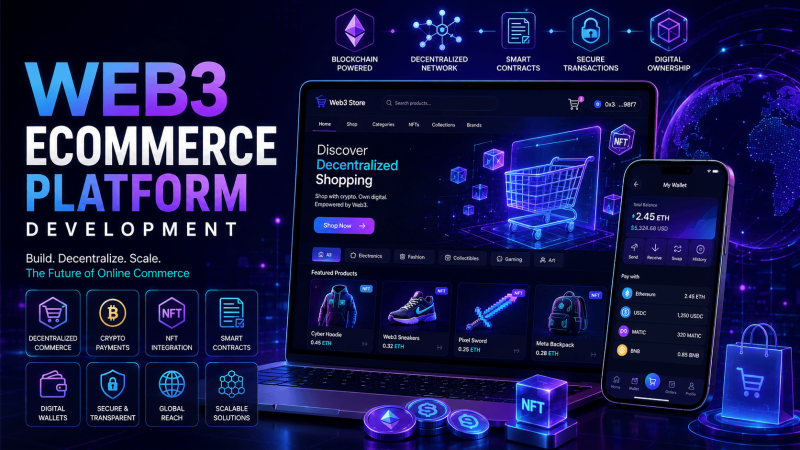
Those companies that choose to develop ecommerce websites must be aware of new tendencies in Web3, as they become necessary for the development of the right future-oriented ecommerce platform. This list consists of 18 tendencies of Web3 ecommerce development to follow in 2026.
1. Blockchain-Powered Payment Systems
Blockchain-based payments are becoming more popular due to their speed, transparency, and lower transaction costs. Businesses are increasingly integrating decentralized payment options alongside traditional methods to offer customers greater flexibility.
2. Cryptocurrency Checkout Options
More online retailers are enabling customers to pay using cryptocurrencies such as Bitcoin, Ethereum, and stablecoins. Supporting digital assets expands payment choices and appeals to a growing global audience.
3. Decentralized Digital Identity
Web3 allows users to manage their digital identities without relying on centralized platforms. Decentralized identity solutions simplify customer verification while improving privacy and reducing the risk of identity theft.
4. Smart Contract Automation
Smart contracts automate transactions, refunds, loyalty rewards, and supplier agreements without requiring manual intervention. This improves operational efficiency while minimizing errors and disputes.
5. NFT-Based Customer Loyalty Programs
Non-fungible tokens (NFTs) are evolving beyond collectibles. Businesses are using NFTs as loyalty rewards, exclusive memberships, and digital collectibles that provide customers with long-term value and unique shopping experiences.
6. Tokenized Rewards and Incentives
Traditional reward points are gradually being replaced by blockchain-based tokens that customers can redeem, exchange, or use across participating digital marketplaces.
For businesses focused on ecommerce platform development, tokenized loyalty programs offer greater flexibility and customer engagement.
7. Decentralized Marketplaces
Web3 marketplaces reduce dependence on centralized intermediaries, allowing buyers and sellers to transact directly while maintaining greater transparency and ownership over digital assets.
8. AI and Web3 Integration
Artificial intelligence is increasingly being combined with blockchain technology to deliver personalized product recommendations, predictive analytics, and intelligent customer support while preserving user privacy.
9. Enhanced Data Privacy
Consumers are becoming more concerned about how their personal information is collected and used. Web3 gives users greater control over their data, allowing businesses to build stronger customer trust through transparent data practices.
10. Cross-Chain Commerce
As blockchain ecosystems continue to expand, cross-chain technology enables seamless transactions between multiple blockchain networks, improving interoperability and enhancing the overall shopping experience.
11. Digital Wallet Integration
Modern online stores are integrating decentralized wallets that allow users to securely manage cryptocurrencies, NFTs, and digital identities without relying on third-party payment providers.
12. Supply Chain Transparency
Blockchain technology enables businesses to provide complete visibility into product sourcing, manufacturing, and shipping processes. Customers can verify product authenticity and track purchases from origin to delivery.
13. Decentralized Customer Reviews
Blockchain-based review systems reduce fake reviews by ensuring that only verified buyers can submit feedback. This creates greater transparency and helps shoppers make informed purchasing decisions.
14. Virtual Shopping Experiences
Immersive shopping environments within virtual worlds are becoming increasingly popular. Customers can explore digital storefronts, interact with products, and make purchases in highly engaging virtual environments.
15. Subscription Services Through Smart Contracts
Subscription management is becoming more efficient with smart contracts that automatically process recurring payments, renew memberships, and execute predefined service agreements.
16. Sustainable Blockchain Solutions
As environmental concerns grow, businesses are adopting energy-efficient blockchain networks that reduce carbon emissions while maintaining high levels of security and transaction speed.
17. Multi-Channel Web3 Commerce
Customers increasingly expect consistent shopping experiences across websites, mobile applications, social commerce platforms, and virtual environments. Web3 technologies enable seamless interactions across multiple digital channels.
18. Regulatory Compliance and Security Enhancements
As decentralized commerce grows, businesses are investing in stronger compliance frameworks, secure blockchain infrastructure, and advanced cybersecurity measures to protect customers and meet evolving legal requirements.
Organizations engaged in ecommerce platform development should prioritize compliance and security to build trustworthy digital commerce solutions.
Why Web3 Matters for eCommerce
Web3 technologies are transforming online retail by giving customers greater control over their data, enabling secure digital transactions, and creating new opportunities for engagement through decentralized technologies. Businesses that embrace these innovations can improve operational efficiency, strengthen customer relationships, and gain a competitive advantage in the evolving digital marketplace.
Conclusion
The future of online retail is influenced by the use of blockchain, decentralization technologies, smart contracts, and digital ownership. Some of the trends shaping the online world include cryptocurrency transactions, NFT loyalty programs, decentralized marketplaces, AI technology integration, and transparency in the supply chain.
It will be crucial for businesses that develop eCommerce platforms to keep up with these Web3 innovations in order to design safe and efficient shopping experiences.
To learn more about this subject matter, please click on the video link provided below. The video gives some insights into these new Web3 trends and shows how they can benefit businesses to create next-generation eCommerce platforms.
Source:
Click for the: Full Story
You might like