Close Menu
 World
World
 Biography
 Health
 Education
 Business
 Lifestyle
 Sports
 Technology
 Animals
 History
 Food
Food
 Religious
 Startups
 Movies
 Politics
 Fashion
 Covid
Covid
 Diet
Diet
 Fitness
 Marketing
 Travel
 Science
 Reviews
 Social media
 Stories
 Facts
Facts
 Art
Art
 Entertainment
Yatin Samra

Technology
9 Fleet Management Features Logistics Companies Actually Need
 Yatin Samra
Logistics and transportation are gradually evolving into more technologically oriented areas as companies seek to increase efficiency, minimize costs, and control their fleets through advanced means. Logistics will no longer depend on traditional approaches or old technologies in 2026. They will use smart technological platforms based on artificial intelligence, cloud computing, GPS tracking, and analytics.
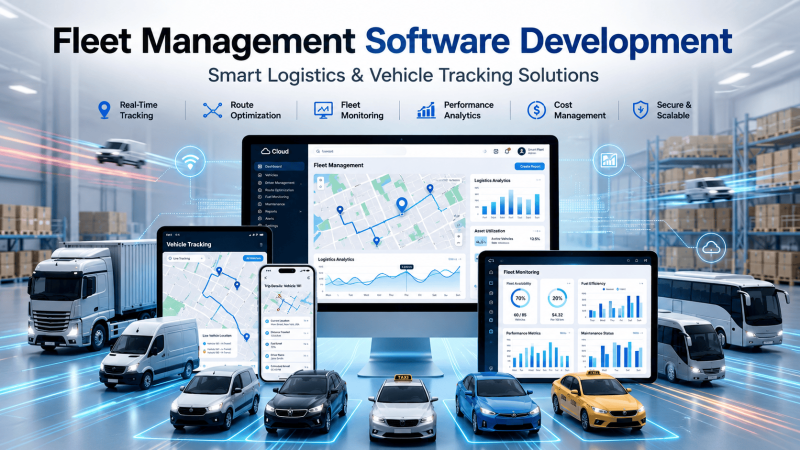
From supply chain companies in the US to expanding transportation businesses in the UAE, organizations are prioritizing fleet management software development to improve visibility, automate operations, and optimize vehicle performance.
However, many businesses still struggle to identify which features truly matter in a modern fleet management system.
This article explores the 9 fleet management features logistics companies actually need in 2026.
1. Real-Time GPS Fleet Tracking
Real-time tracking remains the foundation of every successful fleet management system.
Logistics companies need live vehicle visibility to:
- Track deliveries
- Monitor driver routes
- Reduce delays
- Improve dispatch efficiency
- Enhance customer communication
Modern GPS systems provide accurate location updates while helping businesses improve operational transparency.
Companies involved in fleet management software development increasingly prioritize real-time synchronization because it directly impacts efficiency and customer satisfaction.
2. AI-Powered Route Optimization
Fuel costs and delivery delays continue to challenge logistics businesses globally.
AI-powered route optimization helps companies:
- Reduce fuel consumption
- Avoid traffic congestion
- Improve delivery timing
- Increase fleet productivity
- Optimize driver allocation
Artificial intelligence is becoming one of the biggest competitive advantages in modern fleet operations.
3. Predictive Vehicle Maintenance
Unexpected vehicle breakdowns can disrupt entire logistics operations.
Predictive maintenance systems use AI and telematics data to monitor:
- Engine health
- Tire conditions
- Fuel system performance
- Battery status
- Service schedules
This helps logistics companies reduce downtime and avoid costly emergency repairs.
Modern fleet management system solutions increasingly rely on predictive analytics to improve long-term vehicle performance.
4. Driver Behavior Monitoring
Driver performance has a direct impact on fuel efficiency, safety, and vehicle lifespan.
Modern fleet platforms monitor:
- Harsh braking
- Overspeeding
- Rapid acceleration
- Idle time
- Route compliance
These insights help businesses improve driver safety while reducing operational costs.
5. Fuel Management & Analytics
Fuel expenses are one of the largest operational costs in logistics businesses.
Fuel monitoring systems help track:
- Fuel consumption
- Fuel theft
- Idle time
- Route efficiency
- Vehicle performance
AI-powered analytics help businesses identify inefficiencies and optimize fuel usage across the fleet.
6. Smart Dispatch & Delivery Management
Modern logistics operations require intelligent dispatch systems capable of handling large delivery networks.
Smart dispatch features help:
- Assign drivers automatically
- Prioritize urgent deliveries
- Improve route coordination
- Reduce manual workload
Automation significantly improves operational efficiency for growing logistics companies.
To better understand the complete fleet management workflow and advanced logistics platform architecture, you can explore the detailed video shared below.
https://youtu.be/U1B2Obr83EY?si=Rcv_8vt1cCf7c27R
7. Real-Time Notifications & Alerts
Fleet managers need instant operational visibility.
Modern systems provide alerts for:
- Route deviations
- Maintenance issues
- Delayed deliveries
- Driver behavior violations
- Geofence breaches
Real-time alerts help businesses respond quickly to operational issues before they escalate.
8. Cloud-Based Dashboard & Analytics
Modern logistics businesses require centralized operational visibility.
Cloud dashboards help businesses:
- Monitor fleet activity
- Track operational KPIs
- Analyze delivery performance
- Generate reports
- Manage driver operations
Cloud-native architecture also improves scalability and remote accessibility.
Most businesses involved in fleet management software development rely on:
- AWS
- Google Cloud
- Microsoft Azure
for scalable infrastructure and data management.
9. Geofencing & Security Monitoring
Security is becoming increasingly important in logistics operations.
Geofencing systems allow businesses to:
- Create virtual operational boundaries
- Monitor unauthorized movement
- Improve asset protection
- Enhance route compliance
Advanced security systems also help reduce theft and unauthorized vehicle usage.
Why AI Is Reshaping Fleet Management
Artificial intelligence is transforming nearly every aspect of modern fleet operations.
AI systems help improve:
- Route planning
- Fleet utilization
- Fuel efficiency
- Maintenance prediction
- Driver safety
- Logistics automation
Businesses investing in advanced fleet management system platforms are increasingly prioritizing AI integration because it improves both efficiency and profitability.
Scalability Matters for Modern Logistics Companies
As logistics businesses grow, fleet platforms must support:
- Multi-city operations
- Large vehicle fleets
- Real-time synchronization
- High data processing
- Cloud scalability
Scalable infrastructure is becoming essential for long-term operational growth.
Future Trends in Fleet Management Systems
The future of fleet technology is becoming increasingly intelligent and automated.
Emerging trends include:
- AI-powered logistics automation
- IoT-enabled fleet monitoring
- Electric vehicle fleet integration
- Autonomous fleet systems
- Smart supply chain analytics
- Advanced telematics platforms
Businesses adopting these technologies early are positioning themselves ahead of traditional logistics operations.
Final Thoughts
The modern logistics providers need much more than just fleet tracking applications. The 2026 fleet management system platform includes artificial intelligence, cloud computing, analytics, and visibility, all rolled up into one smart logistics ecosystem.
Those who plan to develop their own fleet management software solutions for business need to concentrate on scalability, automation, data security, and efficiency rather than old-fashioned fleet tracking systems.
In light of the evolution of transportation and logistics sectors in the US, the UAE, and all around the world, those logistics companies that choose advanced fleet management platforms will have an advantage in the future.
Source:
Click for the: Full Story
You might like