Close Menu
 World
World
 Biography
 Health
 Education
 Business
 Lifestyle
 Sports
 Technology
 Animals
 History
 Food
Food
 Religious
 Startups
 Movies
 Politics
 Fashion
 Covid
Covid
 Diet
Diet
 Fitness
 Marketing
 Travel
 Science
 Reviews
 Social media
 Stories
 Facts
Facts
 Art
Art
 Entertainment
Harish Kumar

Technology
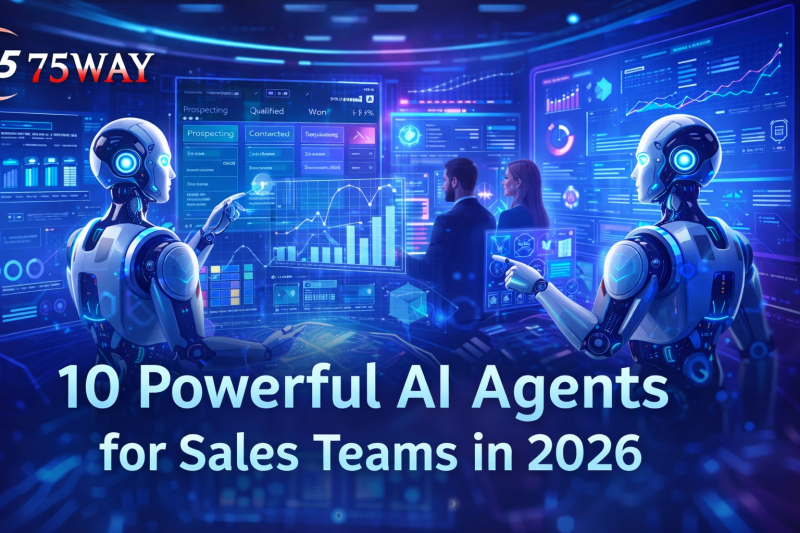
AI Agents for Sales: Automate Prospecting, Outreach, and Follow-Ups
 Harish Kumar
Understanding AI Agents in Sales
Sales teams are drowning in repetitive tasks. AI agents for sales represent autonomous software systems that handle prospecting, outreach, and follow-ups without constant human oversight—a fundamental shift from traditional automation. Unlike simple chatbots or rules-based tools, these agents make decisions, learn from interactions, and adapt their approach based on prospect behaviour.
Research from Futurum Group indicates that AI agents now process vast datasets to identify high-potential leads, craft personalised messages at scale, and determine optimal contact timing. They operate across email, social platforms, and CRM systems simultaneously—orchestrating multi-channel sequences that would require teams of human SDRs.
The distinction matters: whilst marketing automation follows preset workflows, AI agents assess each prospect's engagement patterns and adjust tactics accordingly. They recognize when a lead has gone cold, identify buying signals in conversation threads, and escalate promising opportunities to human salespeople. This creates a hybrid model where AI agents handle volume and pattern recognition, whilst sales professionals focus on strategic relationship building and deal closure.
Key Capabilities of AI Agents
Sales automation agents transform how teams operate through three core capabilities that directly impact pipeline velocity.
Lead qualification and scoring happens instantaneously. Modern AI agents analyse firmographic data, website behaviour, and engagement signals to identify prospects matching your ideal customer profile. Research shows that 57% of companies have already adopted AI-driven predictive analytics to prioritize high-value opportunities, whilst traditional manual scoring creates bottlenecks.
Conversational outreach scales personalization beyond human capacity. These agents craft contextually relevant messages based on prospect industry, role, and recent company developments. They adapt tone and timing according to response patterns, maintaining natural dialogue across email, LinkedIn, and SMS channels. For businesses looking to automate operations across multiple channels, AI agents handle thousands of simultaneous conversations.
Intelligent follow-up management ensures no opportunity slips through cracks. Agents track engagement signals, schedule touchpoints based on prospect behaviour, and escalate hot leads to human reps at optimal moments. However, the technology still requires human oversight—particularly when deals involve complex stakeholder dynamics or custom requirements that demand creative problem-solving beyond pattern recognition.
Top AI Tools for Sales Automation
The market for AI sales prospecting tools has expanded rapidly, with platforms now addressing specific automation challenges across the sales cycle.
Conversational AI platforms lead pipeline generation efforts. Tools like Drift and Intercom deploy chatbots that qualify website visitors in real-time, capturing intent signals before prospects leave. These systems route high-value conversations to human representatives whilst handling routine queries autonomously, increasing conversion rates by up to 40%.
Email automation specialists transform outreach efficiency. Apollo.io and Outreach sequence thousands of personalized messages daily, adjusting timing based on engagement patterns. Their natural language processing adapts copy to recipient behavior, with A/B testing built into every campaign iteration.
Multi-channel orchestration tools coordinate touchpoints across email, LinkedIn, and phone. SalesLoft and HubSpot Sales Hub ensure consistent messaging whilst tracking prospect interactions across platforms—a critical capability as advanced automation workflows become standard practice.
The distinction lies not in feature lists but operational impact: top-tier platforms reduce manual prospecting hours by 60% whilst maintaining personalization at scale.
Evaluating AI Tools: Criteria for Decision Making
Selecting the right platform for automated sales outreach requires evaluating several technical and operational factors that directly impact adoption success. With 83% of businesses planning to increase their AI investments, the decision framework must balance immediate capabilities against long-term scalability.
Cost structure tops the evaluation list. Pricing models range from per-seat monthly subscriptions (£50-£300) to usage-based billing that scales with contact volume. Teams should calculate total cost of ownership, including onboarding time and training requirements. A platform that costs less upfront but demands significant configuration may prove more expensive than a higher-priced, ready-to-deploy solution.
Integration depth determines how seamlessly an AI tool connects with existing CRM systems, marketing platforms, and communication channels. Native integrations with Salesforce, HubSpot, or Microsoft Dynamics eliminate data silos, whilst API flexibility supports custom workflows. Platforms that require manual data exports or CSV uploads introduce friction that undermines automation benefits.
Scalability considerations extend beyond user count. As deal volume grows, the system must handle increased data processing, maintain response accuracy, and support multiple campaign variations simultaneously. Teams should verify how platforms perform under load and whether growing automation needs can be accommodated without architectural changes.
Performance benchmarks matter. Look for platforms that provide clear metrics on delivery rates, response accuracy, and conversion lift. Transparency around model training data and ongoing refinement signals a vendor committed to sustained improvement.
Criteria 1–3: Cost, Integration, and Scalability
Evaluating platforms for AI-powered lead qualification begins with three fundamental considerations that shape both immediate implementation and long-term viability.
Cost structures vary significantly across providers. Some charge per user per month, whilst others bill based on conversation volume or credits consumed. Research indicates that 86% of executives cite cost savings as a primary benefit of AI agent adoption, yet pricing transparency remains inconsistent. Examine whether platforms include hidden fees for API calls, data storage, or premium features that become essential at scale.
Integration capabilities determine how seamlessly AI agents connect with existing tech stacks. CRM compatibility, particularly with Salesforce, HubSpot, and Pipedrive, proves non-negotiable for most sales operations. Platforms offering native webhooks and RESTful APIs enable custom workflows that adapt to unique business requirements.
Scalability addresses whether systems handle growth without performance degradation. Can the platform process 10,000 leads as efficiently as 1,000? Does pricing structure accommodate rapid expansion? Solutions built on cloud-native architectures typically scale more gracefully, supporting fluctuating workloads without manual intervention. Testing platforms under projected future loads reveals bottlenecks before they impact revenue.
These three criteria form the practical foundation upon which operational success depends.
Criteria 4–6: Ease of Use, Support, and Customization
Beyond technical capabilities, the practical experience of implementing and operating sales workflow automation platforms shapes long-term success. Three factors determine whether teams actually adopt and maintain these systems effectively.
Ease of use directly correlates with adoption rates. Platforms requiring extensive training create friction, whilst intuitive interfaces enable rapid deployment. According to Blue Prism research, organisations prioritising user-friendly AI tools report 40% faster time-to-value. Look for drag-and-drop workflow builders, pre-built templates, and clear documentation that reduces the technical burden on sales staff.
Support structures become critical during implementation and scaling phases. Vendor offerings range from basic email assistance to dedicated account managers and technical consultants. Platforms with active user communities, comprehensive knowledge bases, and responsive troubleshooting channels minimise downtime. Consider whether 24/7 support aligns with your operational hours, particularly for distributed teams.
Customisation capabilities determine whether the platform adapts to unique business scaling requirements or forces compromise. Standard features suit general use cases, but custom fields, conditional logic, and API access enable tailored workflows. Balance flexibility against complexity—overly customisable systems often demand ongoing technical resources to maintain effectively.
Unique Challenges in AI Sales Automation
Whilst AI sales automation offers transformative potential, implementation reveals distinct obstacles that demand strategic consideration. One persistent challenge centres on data quality and integration—AI agents require clean, structured datasets to generate accurate insights, yet 43% of organisations report data quality issues as a primary barrier to AI adoption. Fragmented CRM records, inconsistent field formats, and legacy system incompatibilities undermine the efficacy of lead scoring automation and predictive analytics.
Human-AI collaboration presents another friction point. Sales professionals often resist automation perceived as threatening their autonomy or commission structures. In practice, successful deployments require transparent communication about AI's supporting role—augmenting judgement rather than replacing relationship-building expertise. Teams accustomed to intuitive workflows may struggle with initial productivity dips whilst adapting to new interfaces.
Regulatory compliance adds complexity, particularly for businesses handling sensitive prospect data. Organisations implementing AI agents must navigate GDPR, CCPA, and industry-specific regulations whilst maintaining audit trails for automated outreach decisions. Balancing personalisation depth with privacy thresholds remains an ongoing calibration challenge across evolving legal frameworks.
Alternatives to AI Agents
Whilst autonomous AI agents represent the cutting edge, several established alternatives deliver sales automation without full agent-level autonomy. Traditional CRM automation platforms like Salesforce and HubSpot offer robust workflow engines that trigger actions based on predefined rules—sending follow-up emails after meetings, updating deal stages automatically, or assigning leads based on territory. These systems excel at structured, repeatable processes where conditions are clear and exceptions manageable.
Marketing automation suites such as Marketo and Pardot provide sophisticated lead nurturing capabilities, scoring prospects based on engagement patterns and delivering personalised content sequences. Recent research indicates 77% of organisations now use AI-powered marketing tools, though many lack true agentic reasoning.
For teams seeking middle ground, revenue intelligence solutions combine conversational analytics with guided automation—analysing sales calls whilst suggesting next steps rather than autonomously executing them. This human-in-the-loop approach suits organisations prioritising control over velocity, particularly in regulated industries where autonomous outreach requires careful oversight before implementation.
Limitations and Considerations
Despite their transformative potential, AI sales agents introduce constraints that merit careful evaluation. Data quality remains paramount—systems trained on incomplete or biased historical data reproduce these flaws at scale, potentially damaging prospect relationships. A common pattern is organisations expecting instant ROI, yet research indicates most implementations require 3-6 months of refinement before achieving optimal performance.
Human oversight remains essential. Whilst an intelligent sales copilot can draft personalised outreach at volume, nuanced negotiations and complex objection handling still demand human judgement. Over-automation risks eroding the personal touch that differentiates premium B2B relationships—prospects often detect templated interactions, regardless of AI sophistication.
Budget considerations extend beyond software costs. Implementation typically requires dedicated integration resources, ongoing training data curation, and periodic model retuning. Smaller sales teams may find traditional CRM automation paired with selective AI-enhanced workflows more cost-effective than full agent deployment. Regulatory compliance adds another layer—industries handling sensitive data must ensure AI systems align with GDPR, CCPA, and sector-specific regulations governing automated decision-making.
Key AI Agents For Sales Takeaways
AI sales agents transform traditional prospecting and outreach through continuous, intelligent automation. These systems operate across lead qualification, personalised messaging, and autonomous follow-up sequences, delivering consistency that manual processes cannot match. Organisations implementing agent-based workflows report significant reductions in response times and improved conversion rates through data-driven engagement.
Predictive sales forecasting emerges as a critical differentiator, enabling teams to anticipate pipeline changes and allocate resources strategically. Research indicates that forecasting accuracy improvements directly correlate with revenue performance, particularly when agents analyse historical patterns and real-time market signals.
However, implementation demands careful consideration of data privacy, integration complexity, and the ongoing need for human oversight in complex negotiations. Success requires robust data governance, strategic tool selection, and continuous optimisation to ensure agents complement rather than replace human sales expertise. The most effective deployments balance automation efficiency with authentic relationship-building, positioning teams to capitalise on agent capabilities whilst maintaining customer trust and strategic control over critical sales decisions.
Is it Best AI for Automating Sales Follow-Ups?
No single AI solution universally excels at follow-up automation, but platforms combining adaptive sequencing and contextual awareness consistently outperform basic drip campaigns. The most effective systems analyse response patterns to adjust timing and messaging dynamically rather than following predetermined schedules.
Modern automated email outreach tools typically segment into three categories: standalone sequencers (prioritising volume), CRM-integrated platforms (emphasising context continuity), and AI-native agents (focusing on conversation intelligence). According to research on AI agent adoption, organisations implementing context-aware follow-up systems achieve 40% higher engagement rates than those using template-based approaches.
The key differentiator lies in trigger intelligence—systems that initiate follow-ups based on behavioural signals (link clicks, document views, competitor research) rather than calendar intervals. Platforms analysing intent data can identify the precise moment a prospect re-engages with content, enabling timely intervention that feels responsive rather than mechanical. However, this sophistication requires robust integration with tracking infrastructure and clean data pipelines to function reliably.
Organisations requiring multi-channel coordination (email, LinkedIn, SMS) benefit most from platforms offering unified sequencing logic. The challenge becomes maintaining consistent messaging whilst adapting tone to each channel's conventions—an area where specialised tools for particular workflows often outperform all-in-one solutions.
What are the Best AI Tools for Sales Prospecting?
Leading prospecting tools prioritise data enrichment and intent signal detection over basic automation. Platforms like Clay excel at aggregating information from 50+ data sources, whilst Apollo.io combines database access with pattern recognition to identify buying signals. These systems differ fundamentally from generic CRMs by continuously scoring prospect fit based on technographic data, funding announcements, and digital behaviour patterns.
The most effective solutions integrate directly with sales pipeline management workflows, automatically prioritising leads that exhibit multiple readiness indicators. AI Agents Take Center Stage research demonstrates that context-aware prospecting reduces qualification time by 40-60% compared to manual methods. ZoomInfo's intelligence layer, for instance, triggers alerts when prospects visit pricing pages or download competitor comparison guides.
What distinguishes top-tier tools is their ability to validate contact accuracy in real-time whilst maintaining compliance with data protection regulations. The next consideration involves understanding how different agent architectures—from reactive to autonomous—shape these prospecting capabilities.
What are the 5 Types of AI Agents?
AI agents in sales typically fall into five distinct categories, each serving specific automation needs. Simple reflex agents respond to predefined triggers, handling basic tasks like scheduling follow-ups or routing leads. Model-based reflex agents maintain internal states, tracking conversation history to adjust messaging accordingly.
Goal-based agents work towards specific outcomes—generating qualified meetings or advancing deals through pipeline stages. Utility-based agents optimise for multiple objectives simultaneously, balancing response speed with personalisation quality. However, learning agents represent the most sophisticated category, continuously improving through experience. These autonomous systems power deal forecasting AI and adaptive outreach sequences that refine themselves based on engagement patterns.
Research indicates 68% of professionals have used AI tools in their workflow, with learning agents driving the highest adoption in predictive sales functions. A common pattern is combining multiple agent types within workflows—reflex agents handle initial contact whilst learning agents optimise timing and messaging strategy based on accumulated performance data.
Anyone Automate a Prospecting with a VA or AI Agents?
Both virtual assistants and AI agents handle prospecting automation, though their capabilities differ significantly. Virtual assistants typically execute predefined workflows—managing list imports, scheduling emails, and tracking responses—whilst requiring ongoing human oversight for complex decisions. They excel at consistent execution but lack adaptive intelligence.
AI agents, by contrast, operate with greater autonomy. Research indicates that 84% of businesses plan to increase investment in AI agents specifically for automating repetitive tasks like prospecting. These systems analyse engagement patterns, adjust messaging based on prospect behaviour, and prioritise leads without constant supervision.
A common pattern is businesses starting with VAs for basic CRM hygiene and data entry, then layering AI agents for intent detection and personalisation. This hybrid approach provides cost-effective scale whilst maintaining quality control. However, AI agents demonstrate superior performance in dynamic scenarios—adapting outreach timing based on prospect activity patterns or automatically qualifying leads through multi-step research workflows.
The decisive factor becomes complexity: simple, repetitive tasks suit VAs, whilst adaptive prospecting requiring real-time decision-making favours AI agents. Most organizations now deploy both strategically rather than viewing them as alternatives.
How are they prospecting with AI? Are they still using cold …
Cold calling hasn't disappeared, but it's evolved considerably with AI integration. Sales teams now combine traditional outreach methods with intelligent automation to maximise efficiency. AI agents handle the time-intensive research and initial targeting, whilst human representatives focus on meaningful conversations with qualified prospects.
A typical modern workflow starts with AI agents analysing thousands of potential leads across multiple data sources. These systems identify prospects showing buying signals—recent funding rounds, job postings, or technology changes—that indicate sales readiness. According to Master of Code, AI agents can process vast datasets to surface high-intent opportunities human teams might miss.
Cold outreach itself has transformed. Rather than manual dialling through lists, AI agents orchestrate multi-channel sequences combining email, LinkedIn messages, and phone calls. The timing and messaging adapt based on prospect behaviour—if someone opens an email but doesn't respond, the AI triggers a follow-up through a different channel. This orchestrated approach maintains consistency whilst allowing personalisation at scale.
What hasn't changed is the need for human touch at critical moments. Successful teams use AI to eliminate prospecting busywork, not replace relationship building. The most effective workflows have AI agents qualifying leads and booking meetings, then human sales professionals taking over once genuine interest emerges. This hybrid model addresses both efficiency and the personal connection required to close complex deals.
What AI Prospecting Tools Do You Like?
The techsales community consistently recommends platforms that balance automation with personalization. LinkedIn Sales Navigator remains a foundation tool, particularly when paired with AI-powered enrichment services that validate contact data and signal buying intent. Apollo.io frequently appears in discussions for its database coverage and integrated sequencing capabilities.
Sales professionals increasingly favour Clay for its flexible workflow automation that connects multiple data sources. The platform enables sophisticated prospect research without constant manual intervention. Meanwhile, tools like Instantly and Lemlist handle email sequencing with AI-driven send time optimization and engagement prediction.
What typically happens is that successful teams combine three to four specialized tools rather than relying on a single platform. A common pattern includes one tool for data enrichment, another for email automation, and a third for LinkedIn outreach—all orchestrated through a central CRM. According to Blue Prism, the shift toward agentic AI systems means these tools will increasingly communicate with each other autonomously, reducing the manual switching between platforms.
However, tool effectiveness depends heavily on implementation quality. The same platform producing exceptional results for one team might underperform for another based on prompt engineering, workflow design, and integration architecture. This reality has made LinkedIn automation tools and workflow builders particularly popular as teams seek customizable solutions
What are some tools to automate LinkedIn prospecting
LinkedIn automation requires a careful balance between efficiency and platform compliance. LinkedIn Sales Navigator remains the foundational tool, offering advanced search filters and lead recommendations powered by LinkedIn's native AI algorithms. When paired with compliant automation platforms like Expandi or Dripify, sales teams can schedule connection requests and follow-up sequences whilst maintaining personalisation at scale.
However, the most effective approach combines multiple tools rather than relying on a single solution. CRM platforms like HubSpot and Salesforce now integrate directly with LinkedIn, automatically logging interactions and suggesting next steps. AI-powered tools such as Clay or Instantly enhance this workflow by enriching prospect data from multiple sources, enabling more contextual outreach.
One practical pattern involves using Chrome extensions like Phantombuster or Waalaxy to extract prospect lists based on specific criteria, then feeding this data into AI writing tools for personalised message generation. The critical factor is maintaining authentic engagement—automation should handle repetitive tasks whilst preserving the human touch in actual conversations. Sales teams achieving the best results typically automate list building and initial research, but personalise every message based on prospect-specific insights gathered through these tools.
What Are Some Examples of AI Agents Finding Success in Sales?
Real-world implementations demonstrate the tangible impact of AI agents across industries. Manufacturing sales teams using AI-powered prospecting report 30% faster lead qualification cycles, allowing representatives to focus on high-value negotiations rather than initial outreach. According to The Future of AI in Manufacturing Sales: 2026 Trends & Predictions, companies implementing these systems see measurable improvements in pipeline velocity.
Financial services firms have achieved 45% higher response rates by deploying AI agents that personalize outreach based on client portfolio data and market conditions. These systems automatically adjust messaging tone and timing according to individual prospect behaviour patterns.
However, the most successful implementations share common characteristics: they augment rather than replace human decision-making, maintain transparent operations, and continuously learn from actual sales outcomes. A technology distribution company reduced manual follow-up time by 60% whilst maintaining personal touchpoints at critical moments.
Key takeaway:
The organisations experiencing measurable success treat AI agents as collaborative tools that handle repetitive prospecting tasks whilst preserving the strategic thinking and relationship-building that human sales professionals provide. As AI Agents Take Center Stage for Sales Teams in 2026 notes, winning teams balance automation with authentic human engagement.
Source:
Click for the: Full Story
You might like