Close Menu
 World
World
 Biography
 Health
 Education
 Business
 Lifestyle
 Sports
 Technology
 Animals
 History
 Food
Food
 Religious
 Startups
 Movies
 Politics
 Fashion
 Covid
Covid
 Diet
Diet
 Fitness
 Marketing
 Travel
 Science
 Reviews
 Social media
 Stories
 Facts
Facts
 Art
Art
 Entertainment
Maheen Fatima

Business
Are Construction Project Controls Services Worth the Investment?
 Maheen Fatima
If you've ever watched a construction project run over budget or miss its deadline, you already understand the problem that project controls services are designed to solve. But what exactly do these services include, and how do they add value to a project?
This post breaks it down clearly — no jargon, just practical information.
What Are Construction Project Controls Services?
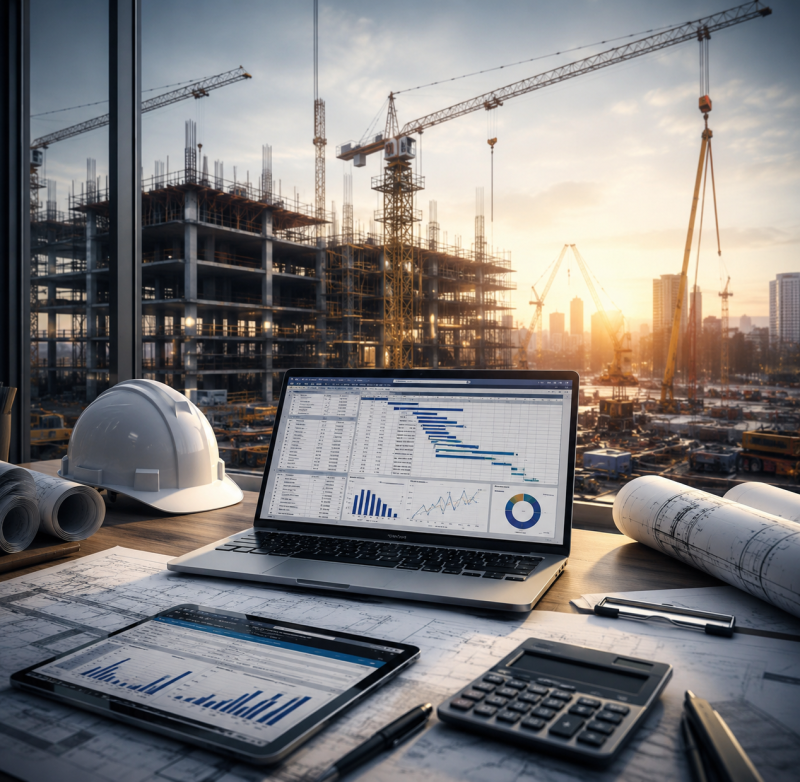
Construction project controls services refer to a set of management functions that monitor, measure, and help manage a project's cost, schedule, and scope throughout its lifecycle — from planning through completion.
These services typically include:
- Cost estimating and budgeting — setting realistic financial baselines
- Schedule development and monitoring — tracking milestones and timelines
- Risk identification and management — spotting potential issues before they escalate
- Change management — documenting and evaluating scope changes
- Progress reporting — providing stakeholders with accurate, timely updates
- Earned value analysis — comparing actual progress against planned performance
Together, these functions give project teams a clear, data-driven picture of where a project stands at any given moment.
Why Project Controls Matter on Construction Projects
Construction projects are complex. Multiple contractors, shifting material costs, regulatory requirements, weather delays, and design changes can all affect the outcome. Without a structured controls framework, teams often react to problems rather than anticipate them.
Here's where construction project controls services make a measurable difference:
Early Warning on Cost Overruns
One of the most common reasons projects go over budget is that cost variances are identified too late. A project controls team tracks expenditures against the approved budget on a regular basis, flagging issues while there's still time to course-correct.
Keeping Schedules Realistic
Schedules on large builds can involve hundreds of interdependent tasks. Project controls professionals use tools like critical path analysis to identify which delays will actually affect the project finish date — and which ones won't. This helps teams prioritize their attention and resources effectively.
Better Decision-Making for Owners and Stakeholders
Owners and investors need reliable data to make decisions. Construction project controls services provide structured reporting that translates raw project data into clear metrics — so decision-makers aren't relying on guesswork or outdated information.
Who Typically Uses These Services?
Construction project controls services are used across a wide range of project types and industries, including:
- Infrastructure projects — highways, bridges, transit systems
- Industrial facilities — refineries, manufacturing plants, power generation
- Commercial construction — office buildings, retail developments
- Healthcare and education — hospitals, universities
- Oil and gas — upstream and downstream capital projects
They're especially valuable on projects with large budgets, long timelines, or high levels of complexity — where the cost of a missed signal is significant.
In-House vs. Outsourced Project Controls
Some organizations build internal project controls teams. Others bring in specialized firms on a project-by-project basis. Both approaches have their place.
In-house teams work well when an organization consistently runs multiple large projects and can justify the overhead of a permanent group.
Outsourced project controls services are useful when:
- A project is one-time or infrequent
- The internal team lacks specific expertise (e.g., forensic scheduling or claims support)
- An independent, third-party perspective is required for auditing or dispute resolution
Many owners use a hybrid model — maintaining a small internal oversight function while bringing in specialists for specific phases or technical needs.
Common Misconceptions About Project Controls
"It's just scheduling." Scheduling is one component, but project controls also covers cost management, risk analysis, document control, and performance reporting. It's an integrated discipline, not a single task.
"It's only for mega-projects." While project controls are essential on large builds, the principles scale down effectively. Even mid-sized projects benefit from structured cost tracking and schedule monitoring.
"It adds cost without adding value." This is perhaps the most common misconception. When project controls are implemented properly, they reduce costly surprises, support better contract management, and help avoid the kind of scope creep that derails timelines and budgets.
Key Questions to Ask When Evaluating Project Controls Services
If you're considering bringing in external project controls support, here are a few questions worth asking:
- What project management software and reporting tools do they use?
- How do they integrate with existing project teams and workflows?
- What experience do they have with projects of similar size and type?
- How are deliverables and reporting frequencies structured?
- Can they provide references from previous clients?
The answers will help you assess whether a firm's approach aligns with your project's needs.
Conclusion
Construction project controls services are a structured way to stay informed and in control throughout a project's lifecycle. They connect cost, schedule, and scope into a single, coherent picture — and that clarity has real value.
Whether a project is straightforward or highly complex, having the right controls in place means fewer surprises, more informed decisions, and a greater chance of delivering within the approved parameters.
For any project where budget and schedule performance matter, project controls aren't an overhead cost — they're an investment in predictability.
Source:
Click for the: Full Story
You might like