Close Menu
 World
World
 Biography
 Health
 Education
 Business
 Lifestyle
 Sports
 Technology
 Animals
 History
 Food
Food
 Religious
 Startups
 Movies
 Politics
 Fashion
 Covid
Covid
 Diet
Diet
 Fitness
 Marketing
 Travel
 Science
 Reviews
 Social media
 Stories
 Facts
Facts
 Art
Art
 Entertainment
Yatin Samra

Technology
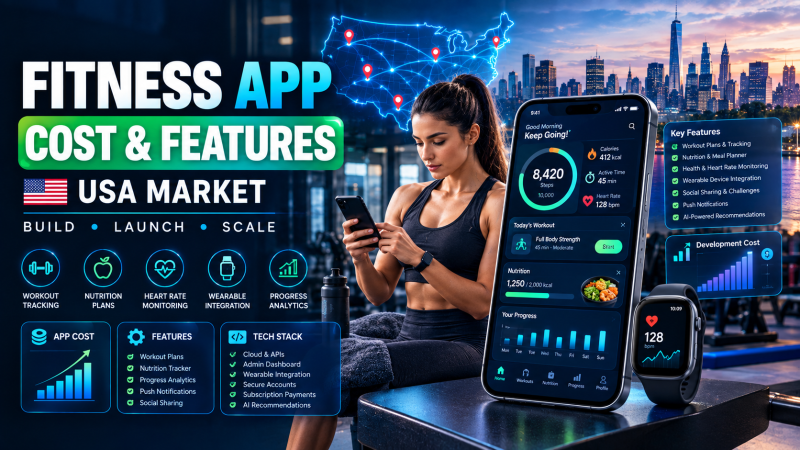
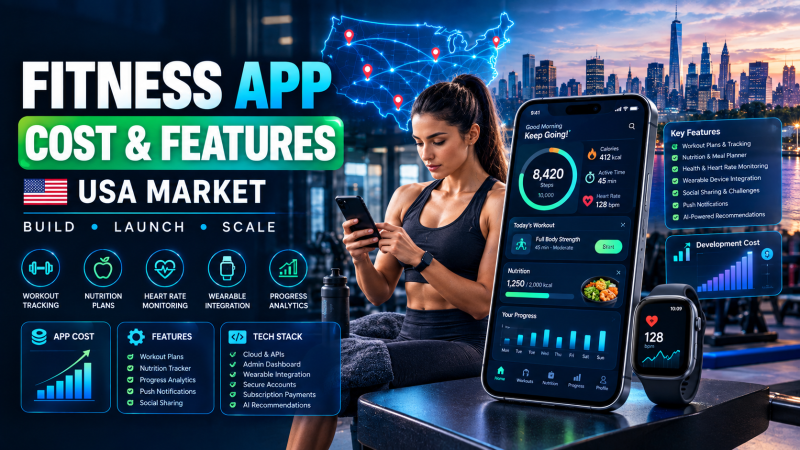
Build a Fitness App for the USA Market: 18 Essential Areas to Plan Before Development
 Yatin Samra
The USA fitness market is one of the best places to launch fitness apps focused on physical exercises, personal training, dieting, wellbeing, and connected fitness. However, making a platform that would be able to compete in the market requires thorough preparation in several fields.
These 18 questions can be helpful in deciding what product should be developed and how it should be done.
1. Define the Core User Problem
Every fitness application should begin with a specific problem.
Your product might help users:
- Follow structured workouts
- Stay consistent with exercise
- Track fitness progress
- Find personal trainers
- Manage nutrition
- Reach specific fitness goals
- Access personalized coaching
A clearly defined problem helps prevent unnecessary features from increasing the initial development budget.
2. Decide Which Users the Platform Serves
A fitness platform can have multiple user roles.
The primary roles may include:
Fitness Users: Discover workouts, track progress, manage goals, and subscribe to plans.
Trainers: Create programs, communicate with clients, and monitor performance.
Administrators: Manage content, users, payments, subscriptions, and platform operations.
Defining these roles early helps determine the required screens, permissions, and backend architecture.
3. Map the Complete User Journey
Before designing individual screens, map the journey from installation to long-term usage.
A typical flow could be:
Download → Registration → Fitness Assessment → Goal Selection → Personalized Plan → Workout → Progress Tracking → Subscription → Continued Engagement
Each stage should have a clear purpose and minimal friction.
4. Build a Strong Fitness Assessment
The assessment process can help personalize the user's initial experience.
Questions may cover:
- Fitness goals
- Experience level
- Preferred training type
- Workout frequency
- Available equipment
- Workout duration
- Activity preferences
The information can later support recommendation engines and customized programs.
5. Organize Workouts Into Structured Programs
A large exercise library alone may not provide enough value. Users also need ways to follow structured routines.
Programs can be organized around:
- Beginner training
- Strength
- Cardio
- Mobility
- Flexibility
- Endurance
- Home workouts
- Gym workouts
Workout plans can contain exercises, repetitions, sets, rest periods, duration, and instructional content.
6. Make Progress Measurable
Progress functionality should turn activity into useful insights.
Depending on the app, users can track:
- Workout completion
- Training frequency
- Exercise performance
- Weight changes
- Distance
- Calories
- Personal records
- Goal milestones
Visual summaries can make long-term progress easier to understand.
7. Create a Personalized Recommendation Layer
Personalization can become a major part of the user experience.
The platform can use profile information and activity history to recommend:
- Workouts
- Training programs
- Fitness content
- Challenges
- Recovery activities
- Goal-based routines
Businesses planning to develop AI product capabilities can gradually add machine-learning or AI-powered personalization as the platform matures.
8. Add an AI Fitness Assistant Carefully
An AI assistant can provide an interactive layer for users who want quick guidance.
Potential functionality includes:
- Answering fitness-related questions
- Explaining exercises
- Suggesting workouts
- Helping users navigate the app
- Summarizing activity
- Recommending relevant content
AI-generated guidance should be designed with appropriate limitations, particularly where users may interpret fitness information as medical advice.
9. Connect With Wearable Ecosystems
Connected devices can provide valuable activity information without requiring users to manually enter everything.
Depending on supported platforms and permissions, integrations can include:
- Steps
- Heart rate
- Exercise sessions
- Calories
- Distance
- Sleep
- Active time
Wearable integrations can also create opportunities for more personalized experiences.
10. Design the Subscription Experience
A fitness app's revenue model should be reflected throughout the user journey.
Possible subscription functionality includes:
- Free and premium plans
- Monthly billing
- Annual billing
- Free trials
- Premium programs
- Plan upgrades
- Subscription cancellation
- Payment history
The subscription experience should clearly communicate what users receive at each pricing level.
11. Introduce Engagement Mechanics
Fitness is often a long-term activity, so engagement features can help maintain user interest.
Options include:
- Streaks
- Badges
- Challenges
- Milestones
- Achievement notifications
- Weekly goals
- Community participation
These mechanisms should support genuine product engagement rather than create unnecessary complexity.
12. Consider Trainer and Coaching Services
If the business wants to include professional trainers, additional functionality may be required.
Trainer features could include:
- Client profiles
- Workout assignment
- Training plans
- Progress reports
- Messaging
- Scheduling
- Coaching notes
This can create an additional revenue channel while expanding the platform beyond self-guided workouts.
13. Build the Platform Around Data Security
Security should be part of the architecture from the beginning.
Important areas include:
- Authentication
- Authorization
- Encryption
- Secure APIs
- Data storage
- Access permissions
- Payment security
- Activity monitoring
For the USA market, businesses should assess applicable privacy and regulatory requirements according to the specific information their platform collects and processes.
14. Plan the Technology Architecture
A scalable architecture can make future feature additions easier.
A typical architecture may include:
Mobile Applications: Flutter, React Native, Swift, or Kotlin
Backend Services: Node.js, Python, Java, or another suitable framework
Database: PostgreSQL, MySQL, MongoDB, or equivalent
Cloud Infrastructure: AWS, Microsoft Azure, or Google Cloud
AI Layer: AI APIs, recommendation systems, or custom machine-learning components
Integration Layer: Wearables, payment services, analytics, notifications, and other third-party APIs
The final stack should be selected according to product requirements, team expertise, scalability, and maintenance needs.
15. Separate MVP Features From Future Features
A common challenge is trying to build the complete platform immediately.
MVP
- Registration
- User profile
- Fitness assessment
- Workout library
- Basic workout plans
- Progress tracking
- Notifications
- Subscription management
- Admin dashboard
Future Expansion
- AI coaching
- Advanced recommendations
- Wearable integrations
- Trainer marketplace
- Social communities
- Advanced analytics
- Nutrition intelligence
This approach allows the business to validate the core product before making larger investments.
16. Break Down the Development Cost
Fitness app development costs are influenced by both visible features and technical complexity.
Major cost factors include:
- UX/UI design
- Mobile development
- Backend development
- Admin panel
- Payment integration
- Wearable connectivity
- AI functionality
- Third-party APIs
- Security
- Testing
- Cloud infrastructure
- Maintenance
A broad estimate can be structured as follows:
Platform Scope Approximate Development Cost
Basic MVP $30,000–$60,000
Standard Platform $60,000–$120,000
Advanced Platform $120,000–$250,000+
AI + Wearable Platform $200,000–$350,000+
These are general planning ranges. Actual costs depend on the final specifications and development approach.
17. Prepare for USA Market Requirements
Launching in the USA means considering more than app functionality.
Businesses should plan for:
- Local payment expectations
- Privacy requirements
- App-store policies
- Data permissions
- Customer support
- Subscription management
- Scalable cloud infrastructure
- Market-specific content and positioning
If the app handles health-related information or connects to health platforms, additional legal and technical review may be appropriate.
18. Establish a Post-Launch Improvement Cycle
The first release should be treated as the beginning of product development rather than the end.
After launch, track metrics such as:
- User retention
- Workout completion
- Subscription conversion
- Churn
- Feature adoption
- Session frequency
- Customer feedback
These insights can help determine which features should be improved, removed, or introduced in future releases.
How to Structure a Fitness Platform for Growth
A practical fitness product can be viewed as five connected layers:
- Experience Layer — onboarding, workouts, dashboards, and navigation
- Content Layer — exercises, programs, videos, nutrition, and educational content
- Intelligence Layer — personalization, recommendations, and AI
- Business Layer — subscriptions, payments, trainers, and administration
- Infrastructure Layer — APIs, databases, cloud services, security, and analytics
This structure makes it easier to expand the application without redesigning the entire platform every time a new capability is introduced.
Final Thoughts
Developing the fitness application for the USA requires a lot of things to be considered, such as user requirements, business goals, technological aspects, personalization, security, and development cost. A specific strategy will help businesses to start with the essential features and then proceed with additional features like AI, wearable devices, coaching, nutrition, and data analytics.
The best development strategy does not imply creating the maximum number of features. It implies creating an experience, a technical base, and the way to continue growing the product.
Source:
Click for the: Full Story
You might like