



 Close Menu
 World
World
 Biography
 Health
 Education
 Business
 Lifestyle
 Sports
 Technology
 Animals
 History
 Food
Food
 Religious
 Startups
 Movies
 Politics
 Fashion
 Covid
Covid
 Diet
Diet
 Fitness
 Marketing
 Travel
 Science
 Reviews
 Social media
 Stories
 Facts
Facts
 Art
Art
 Entertainment
Hemant Code brew

Business
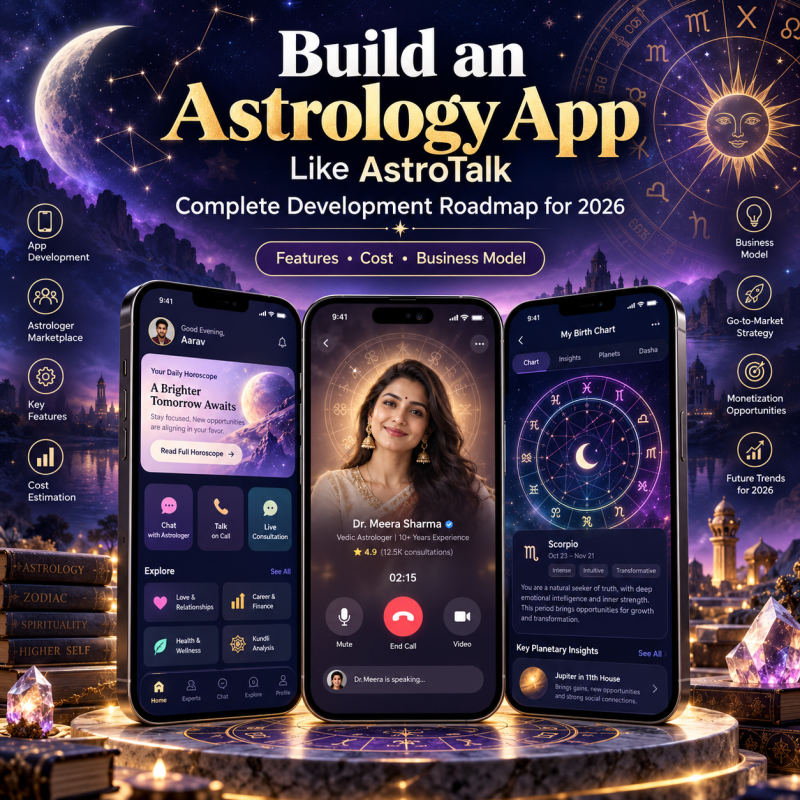
Build an Astrology App Like AstroTalk: Complete Development Roadmap for 2026
 Hemant Code brew
Astrology has moved far beyond newspaper horoscopes and traditional face-to-face consultations. Today, people want instant access to astrologers, personalized birth chart readings, daily predictions, compatibility reports, and spiritual guidance directly from their phones.
That shift has created a strong opportunity for startups and businesses interested in Astrology App development.
Platforms such as AstroTalk have shown that astrology can work successfully as a digital service when expert consultations, easy payments, personalized recommendations, and a smooth user experience are brought together in one place.
If you are wondering how to make astrology app platforms that can attract users, retain them, and generate revenue, this guide walks through the major decisions you should make before development begins.
Why Astrology Apps Are Becoming Popular
People have always been interested in understanding their future, relationships, career decisions, finances, and personal life. What has changed is how they access that information.
Instead of booking an appointment and traveling to meet an astrologer, users can now open an app, select an expert, and begin a chat or call within minutes.
This convenience is one of the biggest reasons astrology apps are growing.
A well-designed platform can also offer services around the clock. Users may want a quick horoscope in the morning, a compatibility check before making a relationship decision, or a private consultation late at night.
For businesses, this means an astrology platform can serve customers far beyond one city or region.
Start With the Right Astrology App Business Model
Before development starts, you need to decide what kind of astrology platform you want to build.
Some apps focus mainly on live consultations with astrologers. Others combine consultations with automated horoscope reports, kundli generation, tarot readings, numerology, compatibility analysis, and personalized content.
You could also build a marketplace model where multiple astrologers register on your platform and users choose who they want to consult.
In this model, the platform usually earns a commission from each chat, call, or consultation.
Another option is a subscription-based app. Users pay monthly or annually to access premium predictions, personalized reports, daily insights, or exclusive consultations.
The right model depends on your target audience and the kind of experience you want to provide.
Essential Features for an Astrology App
A strong astrology platform normally has separate experiences for users, astrologers, and administrators.
For users, the app should feel simple even if the technology behind it is complex.
Some of the most important features include:
- User registration and profile creation
- Birth date, birth time, and location details
- Astrologer profiles with expertise, ratings, experience, and pricing
- Live chat and audio or video consultations
- Call scheduling
- Daily, weekly, and monthly horoscopes
- Kundli or birth chart generation
- Zodiac compatibility reports
- Tarot and numerology services
- Multiple payment options
- Digital wallet
- Consultation history
- Ratings and reviews
- Push notifications
- Personalized recommendations
The goal should not be to add every possible feature on day one. Start with the services users are most likely to pay for and expand once you understand their behavior.
Astrologer Profiles Matter More Than You Think
Trust is extremely important in an astrology marketplace.
Before paying for a consultation, users want to understand who they are speaking with.
Each astrologer profile should clearly display their experience, areas of expertise, consultation languages, ratings, number of consultations, pricing, and availability.
You can also include a short introduction or video profile.
A strong verification system is equally important.
If users feel that anyone can register as an astrologer without proper screening, trust in the entire platform can decline quickly.
Creating a structured onboarding and verification process helps improve the quality of the marketplace.
Chat, Voice and Video Consultations
Live consultations are often the core revenue-generating feature of an astrology app.
Users should be able to see whether an astrologer is online and start a consultation without unnecessary steps.
Chat consultations can be billed by time, fixed session price, or service package.
The same approach can be used for audio and video calls.
The application should also track consultation duration accurately because pricing may depend on how long the conversation lasts.
For users, the entire process should feel transparent. They should know the astrologer's rate and wallet balance before starting the consultation.
Astrology App Development and Personalization
Personalization can make the app more useful and encourage users to return regularly.
When someone provides their birth information, the app can use that data to show relevant horoscopes, zodiac insights, planetary movements, and personalized recommendations.
For example, instead of showing the same horoscope to every user with the same zodiac sign, a more advanced platform could provide insights based on a detailed birth chart.
This is where modern Astrology App development can go beyond a simple content application.
Artificial intelligence can also help organize content, recommend astrologers, summarize reports, answer basic questions, and improve the overall user journey.
However, AI-generated insights should not be presented as a replacement for expert consultation when the platform is primarily built around professional astrologers.
How to Make Astrology App Experiences Easy for Users
When businesses research how to make astrology app platforms, they often focus heavily on features.
User experience is just as important.
Someone opening an astrology app may not understand complex terminology such as houses, planetary aspects, nakshatras, or chart combinations.
The app should explain information in a simple, approachable way.
For example, instead of overwhelming users with a complex astrology chart immediately, the home screen can highlight a few useful insights such as:
Today's energy: Good day for communication and important conversations.
Career: Avoid making rushed decisions.
Relationships: A good time to clear misunderstandings.
Users who want deeper information can then explore their full chart or speak with an astrologer.
This layered approach keeps the app useful for both beginners and experienced astrology users.
Payment and Wallet System
A smooth payment experience is essential if your app offers paid consultations.
Many astrology platforms use an in-app wallet.
Users add money to the wallet and then spend it on consultations, reports, or other services.
This makes repeat transactions faster because customers do not need to enter their payment details every time.
You can also provide recharge offers, promotional credits, referral bonuses, and first-consultation discounts to encourage users to try the platform.
The payment system should clearly show how much a consultation costs and how much money remains in the wallet.
Hidden charges can quickly damage user trust.
How an Astrology App Can Make Money
There are several ways to monetize an astrology application.
The most common model is charging commission on consultations between users and astrologers.
You can also earn revenue from premium subscriptions, paid horoscope reports, kundli reports, tarot readings, numerology services, compatibility reports, and personalized predictions.
Some platforms also offer premium placement to astrologers who want additional visibility.
Another approach is to provide the first few minutes of a consultation at a discounted rate and charge the normal price afterward.
The most effective monetization strategy usually combines multiple revenue streams rather than depending on just one.
Build an MVP Before a Large-Scale Platform
You do not need to build an AstroTalk-sized ecosystem in your first release.
Starting with an MVP can be much more practical.
Your first version might include user registration, astrologer profiles, chat consultation, calling, payments, ratings, and a basic horoscope section.
Launch it with a smaller group of verified astrologers and real users.
Their behavior will tell you what matters most.
You may discover that users prefer chat over calls, that certain astrology categories receive significantly more consultations, or that wallet offers increase repeat purchases.
Those insights should guide the next development phase.
How Much Does It Cost to Build an Astrology App?
The development cost depends on the size and complexity of the application.
A simple astrology app with horoscopes and basic reports will naturally cost less than a marketplace with hundreds of astrologers, live chat, video calls, automated kundli generation, multiple languages, AI recommendations, wallet functionality, and advanced analytics.
The cost is influenced by factors such as the number of platforms, UI/UX complexity, communication features, payment integrations, astrology APIs, backend infrastructure, admin tools, security requirements, and ongoing maintenance.
Instead of choosing features simply because competitors have them, determine which features directly support your initial business model.
This can keep the first development phase focused and manageable.
Don't Forget the Astrologer App or Dashboard
Many businesses concentrate entirely on the customer application.
But astrologers also need a smooth experience.
They should be able to manage their profiles, update availability, accept or reject consultations, communicate with users, view earnings, track consultation history, and receive payout information.
A frustrating astrologer experience can lead good experts to leave the platform.
Your marketplace only works when both sides of the platform are satisfied.
Admin Panel and Platform Management
The admin dashboard is where the business manages the overall ecosystem.
It should provide visibility into users, astrologers, consultations, transactions, commissions, payouts, ratings, reports, and platform performance.
Admins should also be able to approve astrologer registrations, manage disputes, create promotions, block suspicious accounts, and monitor activity.
Analytics are particularly valuable.
Understanding which astrologers receive the most consultations, which services generate the highest revenue, and where users abandon the platform can help you make smarter business decisions.
Marketing Your Astrology App
Building the app is only one part of the journey.
You also need a plan to attract users.
Astrology works particularly well with content marketing because there are always topics people actively search for, from zodiac compatibility and career predictions to numerology and daily horoscopes.
Short-form videos, YouTube content, social media predictions, influencer collaborations, referral programs, SEO articles, and free horoscope tools can all bring users into your ecosystem.
You can then encourage them to move from free content toward personalized consultations or premium services.
The strongest strategy is to offer genuine value before asking users to pay.
Focus on Retention, Not Just Downloads
App downloads look good in reports, but repeat users are much more important.
An astrology platform naturally has several opportunities to encourage users to return.
Daily horoscopes, personalized notifications, upcoming astrological events, new reports, wallet offers, favorite astrologer availability, and follow-up consultations can all improve engagement.
But notifications should feel useful rather than excessive.
The goal is to become a trusted source users want to revisit, not an app they eventually silence.
Final Thoughts
Building an astrology platform in 2026 is not simply about copying the features of AstroTalk.
The real opportunity is creating a reliable digital experience that connects users with useful astrology services in a convenient and trustworthy way.
Start with a clear business model. Decide whether consultations, subscriptions, reports, or a combination of services will drive your revenue. Build a focused MVP, onboard credible astrologers, make payments simple, and improve the product using real customer feedback.
If you are planning an Astrology App development project and want a clearer understanding of how to make astrology app platforms like AstroTalk, watch our complete YouTube video:
Build an Astrology App Like AstroTalk: Complete Development Roadmap for 2026
In the video, we break down the development approach, important features, business model, technology requirements, monetization opportunities, and key decisions you need to consider before launching.
Watch the full video to learn how you can turn your astrology app idea into a scalable digital business in 2026:https://youtu.be/NNaYAUlv61o?si=JMDps9kuqCqzP2m8
Source:
Click for the: Full Story
You might like








You Might Like this