Close Menu
 World
World
 Biography
 Health
 Education
 Business
 Lifestyle
 Sports
 Technology
 Animals
 History
 Food
Food
 Religious
 Startups
 Movies
 Politics
 Fashion
 Covid
Covid
 Diet
Diet
 Fitness
 Marketing
 Travel
 Science
 Reviews
 Social media
 Stories
 Facts
Facts
 Art
Art
 Entertainment
Dizimods

Business
Bulk Sending Emails: A Smart Approach to Business Communication
 Dizimods
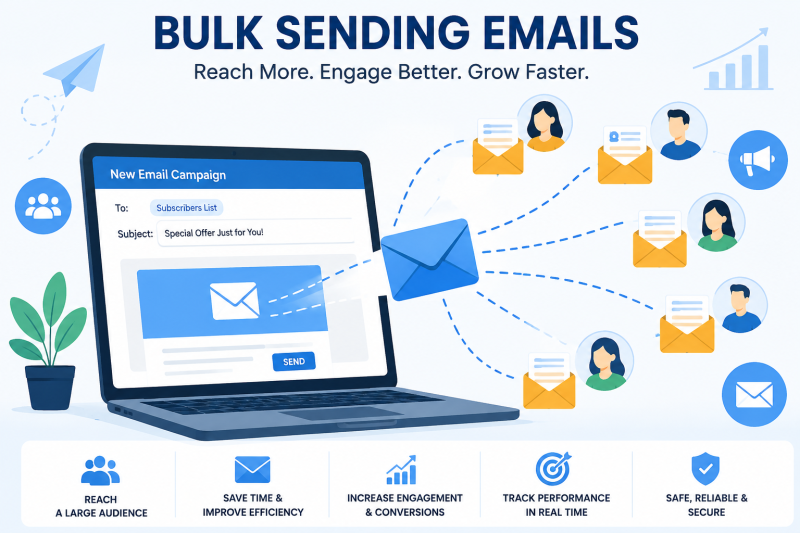
Businesses communicate with customers, leads, subscribers, and partners every day. When the same message needs to reach a large audience, sending emails individually can be time-consuming and inefficient. Bulk sending emails provides a practical solution by allowing businesses to deliver relevant messages to multiple recipients simultaneously while maintaining an organized communication process.
What Is Bulk Email Sending?
Bulk email sending refers to distributing a single email or a series of emails to a large group of recipients. Businesses commonly use it for newsletters, promotional campaigns, product announcements, event invitations, seasonal offers, and customer updates. Instead of manually sending each message, email marketing platforms automate the distribution process.
Why Is Bulk Email Important?
One of the biggest benefits of bulk email is efficiency. Marketing teams can communicate with thousands of subscribers without spending hours sending messages individually. It also makes campaign management easier because businesses can schedule emails, organize contact lists, and monitor campaign performance from one platform.
Another advantage is consistency. Every recipient can receive the same professionally designed message, helping maintain a consistent brand voice and customer experience.
Avoiding Common Mistakes
Sending too many emails can annoy subscribers and increase unsubscribe rates. Businesses should establish a reasonable communication frequency and provide recipients with an easy way to unsubscribe. It is also important to follow applicable email marketing and privacy regulations and avoid sending unsolicited messages.
Testing emails before sending them can prevent problems with broken links, formatting, images, or incorrect information. Businesses should also monitor delivery rates, opens, clicks, conversions, and unsubscribes to understand campaign performance.
Conclusion
Bulk sending emails can help businesses communicate efficiently, promote products, nurture leads, and maintain customer relationships. However, successful email communication depends on quality rather than simply sending a large number of messages. By using clean contact lists, relevant content, personalization, proper scheduling, and performance tracking, businesses can build more effective email campaigns and achieve better long-term engagement.
Source:
Click for the: Full Story
You might like