



 Close Menu
 World
World
 Biography
 Health
 Education
 Business
 Lifestyle
 Sports
 Technology
 Animals
 History
 Food
Food
 Religious
 Startups
 Movies
 Politics
 Fashion
 Covid
Covid
 Diet
Diet
 Fitness
 Marketing
 Travel
 Science
 Reviews
 Social media
 Stories
 Facts
Facts
 Art
Art
 Entertainment
george munsey

Education
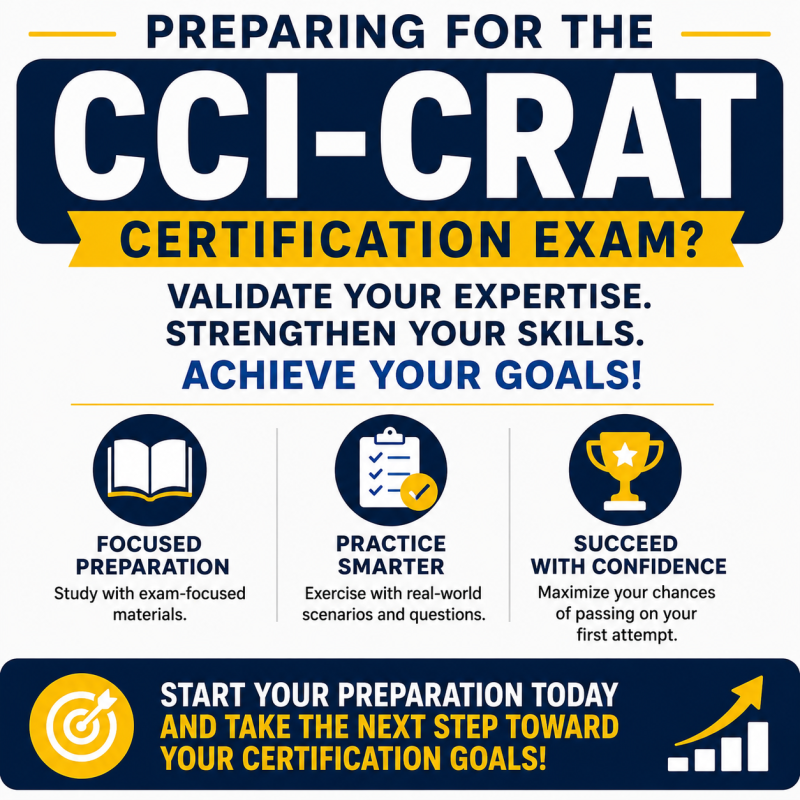
CCI-CRAT Certification Exam Guide
 george munsey
CCI-CRAT Certification Exam Guide
Introduction
The CCI-CRAT certification is a respected credential for healthcare professionals who specialize in cardiac rhythm monitoring and ECG interpretation. Offered by Cardiovascular Credentialing International (CCI), the Certified Rhythm Analysis Technician (CRAT) certification validates the knowledge and skills required to analyze cardiac rhythms, identify abnormalities, and support patient care in clinical environments. (CCI)
As healthcare facilities continue to rely on cardiac monitoring technology, employers increasingly seek professionals who can accurately recognize rhythm disturbances and respond appropriately. Earning the CCI-CRAT certification demonstrates competency in rhythm analysis and can help candidates stand out when applying for telemetry, cardiac monitoring, and ECG technician positions.
What is the CCI-CRAT Certification?
The Certified Rhythm Analysis Technician (CRAT) certification is designed for professionals who utilize specialized monitoring equipment to analyze cardiac rhythms. The credential confirms that a candidate possesses the foundational knowledge and practical skills needed to monitor, identify, and interpret cardiac rhythms in healthcare settings. (CCI)
Purpose of the Certification
The certification aims to verify a candidate's ability to:
- Interpret cardiac rhythms accurately
- Identify normal and abnormal ECG patterns
- Monitor patients using cardiac monitoring equipment
- Document and communicate findings
- Support patient safety and clinical decision-making
Benefits of the Certification
- Demonstrates professional competency
- Enhances career opportunities
- Validates ECG interpretation skills
- Improves credibility with employers
- Supports career advancement in cardiovascular healthcare
- Shows commitment to professional development
Key Skills Measured in the Exam
The CCI-CRAT exam focuses heavily on rhythm recognition and cardiac monitoring. According to the official exam matrix, candidates are evaluated across several content areas. (CCI)
Initiating Cardiac Monitoring Services
Candidates should understand:
- Patient identification procedures
- Patient history review
- Monitoring device education
- Safety requirements
Administering Cardiac Tests
Important topics include:
- Cardiac monitor placement
- ECG signal quality assessment
- Troubleshooting monitoring issues
- Correlating symptoms with cardiac events
Analyzing Normal Rhythms
Candidates are expected to understand:
- Cardiac anatomy and physiology
- ECG waveform components
- Sinus rhythms
- Heart rate calculation
- Rhythm regularity assessment
Analyzing Abnormal Rhythms
This is the largest section of the exam and represents approximately 60% of the exam content. Topics include: (CCI)
- Atrial fibrillation
- Atrial flutter
- Junctional rhythms
- Ventricular arrhythmias
- Ventricular tachycardia
- Ventricular fibrillation
- AV blocks
- Conduction defects
- Paced rhythms
- Asystole recognition
- ECG artifact identification
Processing Cardiac Test Findings
Candidates should understand:
- Documentation procedures
- Reporting findings
- Prioritizing critical results
- Follow-up communication processes
Who Should Take This Exam?
The CCI-CRAT certification is suitable for healthcare professionals involved in cardiac monitoring and ECG interpretation.
Telemetry Technicians
Professionals who continuously monitor cardiac rhythms in hospitals.
Monitor Technicians
Individuals responsible for identifying rhythm abnormalities and notifying clinical staff.
ECG Technicians
Healthcare workers performing electrocardiograms and rhythm analysis.
Allied Health Professionals
Candidates seeking specialized cardiovascular credentials.
Students in Cardiovascular Programs
Students and recent graduates looking to validate their skills and improve employment opportunities. (CCI)
Exam Details
Candidates should always verify the latest information through CCI before registering.
Exam Code
CCI-CRAT
Exam Name
Certified Rhythm Analysis Technician (CRAT)
Exam Format
Computer-based examination administered through Pearson VUE testing centers. (CCI)
Number of Questions
130 questions total, including scored and unscored questions. (CCI)
Duration
2 hours. (CCI)
Passing Score
CCI uses a scaled scoring system. A scaled score of 650 is required to pass. (CCI)
Exam Cost
The examination fee is $175 USD. (CCI)
Eligibility Requirements
Candidates must meet educational or employment-related qualification pathways established by CCI. These pathways include cardiovascular training, allied health experience, or relevant healthcare education. (CCI)
Why Earn the CCI-CRAT Certification?
Increased Job Opportunities
Many healthcare employers prefer or require certification for cardiac monitoring roles.
Professional Recognition
The credential demonstrates that you have met nationally recognized standards for rhythm analysis.
Career Advancement
Certified professionals may qualify for advanced positions and expanded responsibilities.
Greater Confidence
Preparation for the exam strengthens ECG interpretation skills and clinical knowledge.
Foundation for Future Credentials
The CRAT certification can serve as a stepping stone toward more advanced cardiovascular certifications.
How to Prepare for the CCI-CRAT Exam
Create a Structured Study Plan
A structured study schedule helps candidates cover all major exam objectives.
Week 1- Cardiac anatomy and physiology
- ECG fundamentals
- Medical terminology
- Normal rhythms
- Rate calculations
- Waveform interpretation
- Atrial arrhythmias
- Junctional rhythms
- Conduction abnormalities
- Ventricular arrhythmias
- Paced rhythms
- Emergency rhythm recognition
- Documentation
- Monitoring procedures
- Practice exams
Use Official Resources
CCI provides exam preparation resources, content outlines, and self-assessment tools that align with the exam objectives. (CCI)
Gain Hands-On Experience
Practical experience is extremely valuable for this certification.
Candidates should practice:
- Rhythm interpretation
- ECG strip analysis
- Arrhythmia identification
- Monitoring equipment usage
Practice Tests
Practice exams can help candidates:
- Identify weak areas
- Improve test-taking confidence
- Learn pacing strategies
- Become familiar with question formats
Community discussions often recommend repeated use of practice exams and self-assessment materials when preparing for the CRAT exam. (Reddit)
Time Management Strategies
- Study consistently rather than cramming.
- Focus extra time on abnormal rhythm recognition.
- Review missed questions carefully.
- Use flashcards for rhythm interpretation practice.
Common Challenges and How to Overcome Them
Recognizing Similar Arrhythmias
Many candidates struggle to differentiate rhythms that appear similar.
Solution: Practice interpreting large numbers of ECG strips and focus on identifying key distinguishing features.
Memorizing Rhythm Characteristics
The number of arrhythmias can feel overwhelming.
Solution: Create rhythm comparison charts and review them daily.
Exam Anxiety
Healthcare certification exams can create significant stress.
Solution: Complete timed practice exams to build confidence and improve pacing.
ECG Artifact Interpretation
Some candidates confuse artifacts with actual arrhythmias.
Solution: Study examples of common artifacts and learn how they differ from true cardiac events.
Best Practices for Exam Day
- Get adequate sleep before the exam.
- Eat a healthy meal before testing.
- Arrive early at the testing center.
- Read every question carefully.
- Pay attention to ECG strip details.
- Eliminate incorrect answers first.
- Manage your time throughout the exam.
- Stay calm and focused.
Frequently Asked Questions (FAQs)
1. What does CRAT stand for?
CRAT stands for Certified Rhythm Analysis Technician. (CCI)
2. How many questions are on the CCI-CRAT exam?
The exam contains 130 questions. (CCI)
3. How long is the exam?
Candidates have two hours to complete the examination. (CCI)
4. What is the passing score?
A scaled score of 650 is required to pass. (CCI)
5. Is the exam difficult?
Many candidates find rhythm interpretation challenging, especially abnormal arrhythmias. Consistent practice significantly improves success rates. (Reddit)
6. Can students take the exam?
Yes. Students enrolled in eligible cardiovascular or allied health programs may qualify. (CCI)
7. What should I focus on most during preparation?
Abnormal rhythm recognition represents the largest percentage of the exam and should receive significant study attention. (CCI)
Conclusion
The CCI-CRAT certification is a valuable credential for healthcare professionals involved in cardiac monitoring and rhythm interpretation. It validates essential skills in ECG analysis, arrhythmia recognition, patient monitoring, and clinical communication.
Success on the exam requires a combination of theoretical knowledge, practical experience, and consistent practice with rhythm interpretation. By following a structured study plan, utilizing official preparation resources, and dedicating time to ECG analysis, candidates can significantly improve their chances of passing the CCI-CRAT exam and advancing their healthcare careers.
Whether you are a telemetry technician, monitor technician, ECG specialist, or healthcare student, earning the CCI-CRAT certification can help strengthen your professional credentials and open new career opportunities in cardiovascular healthcare.
The exam details, eligibility requirements, scoring, and content domains above are based on the official CCI CRAT certification information. (CCI)
Source:
Click for the: Full Story
You might like







You Might Like this