Close Menu
 World
 Biography
 Health
 Education
 Business
 Lifestyle
 Sports
 Technology
 Animals
 History
 Food
 Religious
 Startups
 Movies
 Politics
 Fashion
 Covid
 Diet
 Fitness
 Marketing
 Travel
 Science
 Reviews
 Social media
 Stories
 Facts
 Art
 Entertainment
Michael Thompson

Technology
Data Annotation Outsourcing for Autonomous Vehicles
 Michael Thompson
Autonomous vehicles rely on artificial intelligence (AI), machine learning, and advanced sensors to understand their surroundings and make driving decisions. From identifying pedestrians to recognizing traffic signs, these systems must process large amounts of visual and sensor data accurately.
However, developing reliable self-driving technology requires more than advanced algorithms. AI models need properly labeled data to recognize objects, understand road conditions, and respond to different driving situations. This is where data annotation outsourcing for autonomous vehicles becomes valuable.
By outsourcing data annotation, automotive companies can access skilled annotation teams, manage large datasets, and maintain consistent labeling quality without building an extensive in-house workforce.
Why Data Annotation Is Important for Autonomous Vehicles
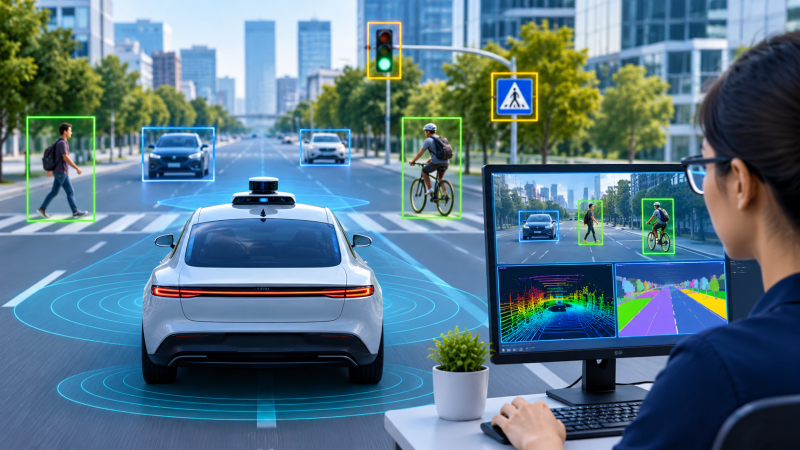
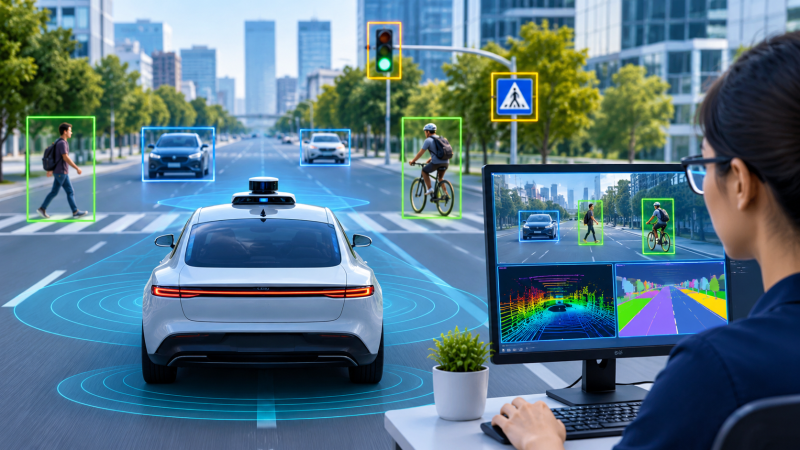
Self-driving vehicles collect information through cameras, LiDAR, radar, and other sensors. AI systems analyze this information to identify objects and understand their positions and movements.
For example, a vehicle must recognize whether an object ahead is a pedestrian, another vehicle, a cyclist, or a road barrier. Accurate annotation helps train machine learning models to make these distinctions.
Data annotation supports several important autonomous driving functions:
- Object detection: Identifies vehicles, pedestrians, cyclists, and other objects.
- Lane detection: Helps vehicles recognize lane markings and road boundaries.
- Traffic sign recognition: Trains systems to identify speed limits, stop signs, and traffic signals.
- Road segmentation: Separates roads, sidewalks, buildings, and other areas in an image.
- Object tracking: Helps AI systems monitor moving objects across multiple video frames.
Without properly labeled training data, autonomous driving systems may struggle to interpret complex road environments.
Types of Data Annotation Used in Autonomous Vehicles
Autonomous vehicle development requires different annotation methods depending on the sensor data and AI application.
1. Image Annotation
Image annotation involves labeling objects within images captured by vehicle-mounted cameras. Annotators identify cars, pedestrians, traffic signs, road markings, and other important elements.
Common techniques include bounding boxes, polygons, and keypoint annotation. These labels help computer vision models recognize objects in different environments.
2. Video Annotation
Video annotation involves labeling objects across multiple video frames. Unlike image annotation, it helps AI systems understand how objects move over time.
For example, an annotation team may track a pedestrian crossing a street or a vehicle changing lanes. Consistent video labels help train models to understand movement and predict potential hazards.
3. LiDAR Annotation
LiDAR sensors use laser pulses to create three-dimensional representations of the surrounding environment. Annotators label objects within point cloud data to help AI systems understand their distance, shape, and position.
This process is important for recognizing nearby vehicles, pedestrians, obstacles, and road infrastructure.
4. Sensor Fusion Annotation
Autonomous vehicles often combine information from cameras, LiDAR, and radar. Sensor fusion annotation helps align and label information from different sources.
This allows machine learning models to develop a more complete understanding of their surroundings.
Benefits of Outsourcing Data Annotation for Autonomous Vehicles
Managing large-scale annotation projects internally can require significant investment in technology, staffing, training, and quality control. Outsourcing provides automotive businesses with an alternative approach.
1. Handle Large Volumes of Data
Autonomous vehicle projects generate millions of images, video frames, and sensor records. Processing these datasets requires sufficient resources and trained annotators.
An outsourced data annotation team can support large projects and help businesses manage increasing workloads.
2. Reduce Operational Costs
Building an in-house annotation department involves hiring employees, providing training, purchasing tools, and managing infrastructure.
Outsourcing allows companies to access annotation resources without maintaining a large permanent team. Businesses can allocate their budgets toward other areas of AI development.
3. Improve Annotation Quality
Accurate labels are essential for training reliable machine learning models. Inconsistent annotations can affect model performance and create problems during testing.
Professional annotation teams can follow defined labeling guidelines, use quality checks, and review completed datasets to maintain consistency.
4. Scale Projects More Easily
Data requirements can change throughout autonomous vehicle development. Some projects may need additional annotators during model training or testing.
Outsourcing makes it easier to increase or reduce annotation capacity according to project requirements.
5. Focus on Core AI Development
Automotive technology companies need to focus on software development, model training, testing, and vehicle performance.
By outsourcing repetitive and resource-intensive annotation tasks, internal teams can spend more time on core engineering activities.
Challenges to Consider When Outsourcing Data Annotation
Although outsourcing offers several advantages, businesses should evaluate a few important factors before selecting a provider.
- Data security: Vehicle images and sensor records may contain sensitive information. Providers should follow appropriate data protection practices and access controls.
- Annotation accuracy: Incorrect labels can affect machine learning model performance. Clear guidelines and quality assurance processes are essential.
- Domain knowledge: Autonomous driving datasets require an understanding of road environments, vehicle behavior, and different object categories.
- Scalability: The provider should have the resources to manage changing project volumes and deadlines.
- Communication: Clear communication helps annotation teams understand project requirements and resolve labeling issues quickly.
Choosing an experienced outsourcing partner can help businesses manage these challenges more effectively.
How to Choose the Right Data Annotation Outsourcing Partner
Selecting a suitable provider is important for maintaining data quality and meeting project requirements. Before making a decision, consider the following factors:
Businesses should also consider starting with a small pilot project. This helps evaluate annotation accuracy, turnaround time, and communication before committing to larger projects.
Conclusion
Accurate data annotation plays an important role in developing autonomous vehicle technology. From identifying pedestrians to interpreting LiDAR point clouds, properly labeled datasets help machine learning models understand complex driving environments.
Data annotation outsourcing for autonomous vehicles allows automotive companies to manage large datasets, control operational costs, and access skilled annotation resources. With the right outsourcing partner, businesses can improve their data preparation processes and support the development of advanced AI-powered driving systems.
Source:
Click for the: Full Story
You might like