Close Menu
 World
World
 Biography
 Health
 Education
 Business
 Lifestyle
 Sports
 Technology
 Animals
 History
 Food
Food
 Religious
 Startups
 Movies
 Politics
 Fashion
 Covid
Covid
 Diet
Diet
 Fitness
 Marketing
 Travel
 Science
 Reviews
 Social media
 Stories
 Facts
Facts
 Art
Art
 Entertainment
TSMS Noida Junior School

Education
Educational Discipline: Balancing Study & Play
 TSMS Noida Junior School
Many of us grew up thinking that more hours spent staring at a textbook automatically meant better grades. But we now know that formula just doesn’t work. In fact, kids who get about an hour of unstructured playtime every day actually have much sharper focus when they finally sit down at their desks.
The brain isn't just a filing cabinet; it needs downtime to process and store new information. As parents explore options for an International School in Noida, many are realizing that a child's mental well-being and daily balance matter just as much as the syllabus. Let's look at why balancing work and play actually boosts real achievement.
Rethinking "Discipline"
We used to think of discipline as sitting perfectly still and being rigidly obedient. Today, we know it’s really about teaching kids self-regulation, knowing when to push through a tough assignment and when to take a brain break.
When a child learns to manage their own energy, they build study habits that last a lifetime. Even highly successful adults alternate between deep work and taking a walk! Teaching your child to recognize when they are mentally tired is a massive life skill. It’s the exact thing that prevents the burnout we so often see in high-pressure environments.
Why "Just Playing" is Serious Brain Work
Play isn't the opposite of learning; it’s just a different cognitive gear. When kids navigate a game without strict instructions from adults, their brains are doing some heavy lifting.
- Problem-solving: Figuring out the rules of a backyard game teaches strategy much faster than a classroom lecture.
- Emotional balance: Running around physically burns off stress. A stressed brain simply cannot remember facts, while a relaxed one absorbs them easily.
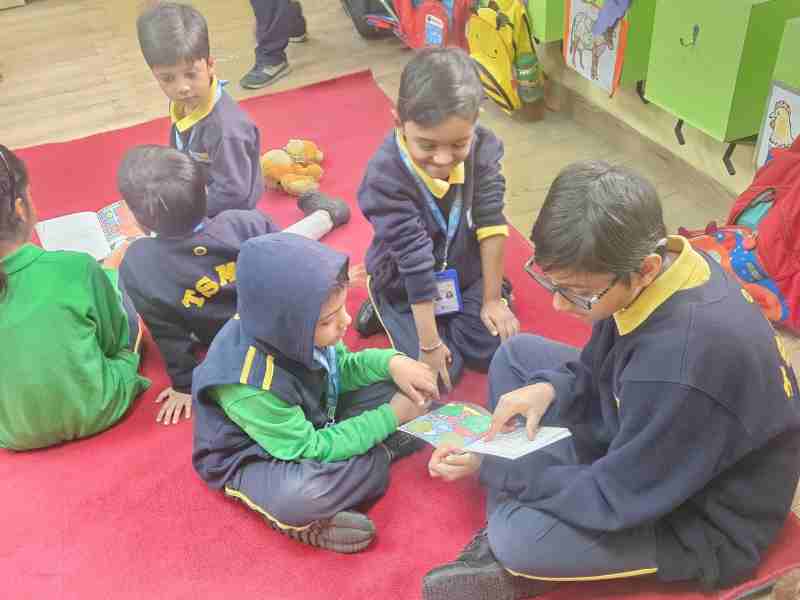
- Social skills: Navigating playground disagreements teaches negotiation and empathy—soft skills you just can't learn from a textbook.
This is exactly why parents looking at top International Schools in Noida often prioritize campuses with plenty of green space. Kids need to move to think clearly!
The Trap of the "Packed Schedule"
A calendar full of tuition, piano lessons, and sports looks highly productive on paper, but it often does more harm than good. Packing a child's day too full exhausts them mentally. If a student runs from one activity to the next without a breather in between, they won't retain much of what they learned. The information just washes over them.
Kids desperately need "white space" in their day, unscheduled downtime where their brain can just wander. This is where creativity actually happens! Finding the best International School in Noida means looking for a curriculum that respects this biological need for downtime, rather than rushing through topics without a pause.
Rigid Rules vs. Healthy Balance
There is a huge difference between forcing strict study hours and encouraging a balanced routine. Here is how the two approaches usually play out at home:
Feature
The Main Goal
The Child's Mindset
Taking Breaks
Your Role
The Rigid Approach
Counting the hours spent at the desk.
Enduring the homework just to get it over with.
Seen as a waste of time.
The strict enforcer of the rules.
The Balanced Approach
Focusing on the quality of work done.
Actually engaging with the topic.
Planned strategically to recharge the brain.
A helpful guide for time management.
How Good Schools Help Maintain the Peace
The school you choose plays a massive role in normalizing a healthy lifestyle. If a school piles on excessive hours of homework, your family's evening balance collapses. Progressive educators design workloads that challenge kids without crushing them. They do this through:
- Connected projects: Combining subjects into one cohesive project means fewer repetitive worksheets to juggle.
- Active learning: Lessons that involve moving around or debating keep energy high during the school day.
- Sensible homework limits: Ensuring kids actually have time to rest and be with family after school.
What You Can Do at Home
As parents, we are the architects of our home's routine. Here’s how you can support this balance:
- Lead by example: Kids watch everything we do. If you work late every night without a break, they will assume exhaustion is just the price of success.
- Protect their sleep: A tired brain is an inefficient brain. Getting enough sleep is the ultimate "study hack."
- Create a study zone: Have a specific spot for homework, so the rest of the house feels like a safe space to relax.
If you are ready to choose an environment where your child thrives both academically and personally, you aren't alone. Schools like TSMS International Junior School, Noida, frequently build structures where high academic standards naturally coexist with a supportive, balanced atmosphere. Choosing an educational partner that values your child's well-being ensures they build sustainable success for the future.
Frequently Asked Questions
How much play time does a middle school student need?
Older kids and young teens still need at least one hour of physical activity daily. It supports their brain development and helps regulate the hormonal shifts typical of that age group.
Will reducing study hours lower my child's grades?
Quality matters way more than quantity. Focused, distraction-free study for shorter periods yields much better retention than long, exhausting sessions. Cutting out "junk" study hours usually improves scores!
How do I handle the pressure when all their friends are going to tuition classes?
Focus on your child's specific needs rather than community trends. Additional classes are only useful if your child has a specific learning gap they need help bridging.
Is it okay if my child is bored?
Yes! Boredom is the prequel to creativity. When a child isn't being constantly entertained by a screen or an adult, they have to invent their own fun, which builds incredible independence.
Source:
Click for the: Full Story
You might like