Close Menu
 World
World
 Biography
 Health
 Education
 Business
 Lifestyle
 Sports
 Technology
 Animals
 History
 Food
Food
 Religious
 Startups
 Movies
 Politics
 Fashion
 Covid
Covid
 Diet
Diet
 Fitness
 Marketing
 Travel
 Science
 Reviews
 Social media
 Stories
 Facts
Facts
 Art
Art
 Entertainment
Merry Gomez

Business
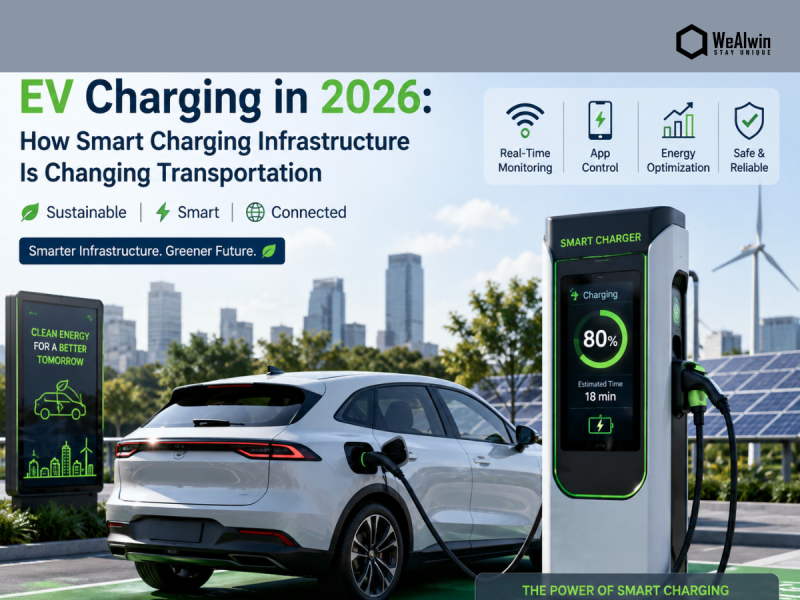
EV Charging in 2026: How Smart Charging Infrastructure Is Changing Transportation
 Merry Gomez
The global transportation industry is entering a new phase of electrification. Electric vehicles (EVs) are becoming a major part of modern mobility as governments, businesses, and consumers shift toward cleaner transportation solutions. However, the growth of electric vehicles depends on more than advanced batteries and vehicle technologies. One of the most important factors supporting this transition is the EV charging infrastructure.
EV charging has evolved beyond simply supplying power to a vehicle battery. It is now becoming a connected ecosystem that links vehicles, charging stations, software platforms, energy systems, and users. The future of mobility is closely connected to how efficiently and intelligently EV charging networks operate.
As EV adoption continues to rise, the demand for charging solutions is also increasing. Drivers want charging systems that are accessible, fast, reliable, and convenient. Businesses are searching for new revenue opportunities, while cities are investing in sustainable infrastructure. All these developments are making the EV charging platform a major component of the transportation industry.
Understanding EV Charging Infrastructure
EV charging infrastructure refers to the network of charging stations and technologies that allow electric vehicles to recharge their batteries. Similar to fuel stations used by conventional vehicles, charging stations provide energy support for EV users.
Charging stations are designed to meet different requirements based on user behavior and travel needs.
Residential Charging
Home charging solutions allow vehicle owners to charge their EVs overnight. This method offers convenience and helps users maintain daily charging routines without visiting public charging stations.
Advantages include:
- Easy access
- Lower charging costs
- Time efficiency
- Comfortable charging experience
Many EV owners prefer residential charging because it fits naturally into their everyday lives.
As battery technology improves, home charging systems are also becoming more advanced. Smart home chargers can connect with mobile applications and provide users with charging schedules, electricity usage reports, and energy management options.
Home charging also reduces dependence on public charging networks for daily commuting requirements.
Commercial Charging
Commercial charging stations are installed at workplaces, shopping centers, hotels, restaurants, and parking facilities.
Commercial charging provides several benefits:
- Supports customers and employees
- Increases convenience
- Improves business value
- Encourages customer retention
Businesses increasingly view EV charging as an important service offering rather than an additional feature.
Many organizations are realizing that charging facilities can improve customer experiences and attract visitors. Customers spending time charging their vehicles may also spend more time shopping, dining, or using services available at the location.
Commercial charging can also support employee satisfaction by allowing staff members to charge their vehicles while at work.
Public Fast Charging
Public fast charging networks are designed for users who require charging capabilities, especially during long-distance travel.
Benefits include:
- Reduced charging time
- Improved travel flexibility
- Better user experiences
- Greater accessibility
Fast charging technology continues to improve and supports the increasing expectations of EV users.
Highway charging stations are becoming more common because they help drivers travel long distances without worrying about battery limitations. As charging speeds improve, travel experiences become more convenient and practical.
The Role of Smart Charging Technology
Technology is changing how EV charging systems operate. Traditional charging stations focused mainly on supplying electricity, while modern systems integrate intelligent software and connected services.
Smart charging introduces features such as:
Remote Management
Charging station operators can monitor equipment remotely and identify operational issues quickly.
This improves:
- System efficiency
- Maintenance processes
- Charging reliability
Remote monitoring helps operators reduce downtime and maintain consistent service quality.
Real-Time Monitoring
Users can track charging sessions and monitor battery status in real time.
Features often include:
- Charging progress updates
- Estimated completion times
- Energy usage details
- Session history
Real-time monitoring improves user confidence because it can track charging activities without uncertainty.
Mobile Connectivity
Many charging systems now integrate with mobile applications.
Users can:
- Locate nearby charging stations
- Reserve charging slots
- Make digital payments
- Receive notifications
Connected charging experiences improve convenience significantly and reduce waiting times.
Why Businesses Are Investing in EV Charging?
Businesses across multiple industries are investing in charging infrastructure because of changing customer expectations and market opportunities.
Retail Industry
Shopping centers and retail stores can improve customer engagement by offering charging facilities.
When customers charge their vehicles during shopping visits, they often spend additional time at the location.
Potential benefits include:
- Increased customer visits
- Longer engagement periods
- Better customer experiences
- Competitive advantages
Restaurants and Cafes
Restaurants increasingly install charging stations to create additional convenience for customers.
Customers can enjoy meals while charging vehicles rather than spending time waiting elsewhere.
Charging facilities may also encourage repeat visits because users often prefer locations that provide useful services.
Hospitality Industry
Hotels and resorts are integrating charging infrastructure into guest services.
Charging availability may influence travel and accommodation decisions among EV owners.
Hotels can improve customer satisfaction by allowing guests to recharge vehicles overnight.
Corporate Offices
Workplace charging helps companies support employees and promote environmental goals.
Organizations can strengthen sustainability initiatives while improving employee satisfaction.
Workplace charging also demonstrates a company's commitment to modern transportation practices.
Future of EV Charging
The future of the EV charging platform is expected to become more advanced and connected. Emerging technologies are already changing charging experiences.
Future developments may include:
Ultra-Fast Charging Solutions
Ultra-fast chargers are expected to reduce charging times significantly. Drivers may eventually charge vehicles within minutes rather than spending longer periods waiting.
Wireless Charging Technology
Wireless charging systems are being developed to remove the need for physical cables.
Vehicles may simply park over charging surfaces and begin receiving power automatically.
Vehicle-to-Grid Communication Systems
Vehicle-to-grid systems allow electric vehicles to exchange energy with power networks.
This technology may support:
- Better electricity management
- Improved energy distribution
- Reduced grid pressure
Conclusion
EV charging is becoming one of the most important foundations of electric mobility. As electric vehicles continue expanding globally, charging infrastructure will play a major role in supporting transportation systems, businesses, and users.
Modern charging systems are moving beyond basic power delivery and becoming connected ecosystems that combine software, energy management, user convenience, and sustainability goals.
Although challenges such as infrastructure costs, charging availability, and energy demands still exist, continued technological improvements are creating better solutions for the future.
EV charging is no longer only about recharging vehicle batteries. It is becoming an essential part of building cleaner transportation systems, improving user experiences, and supporting the next stage of mobility development.
Source:
Click for the: Full Story
You might like