Close Menu
 World
World
 Biography
 Health
 Education
 Business
 Lifestyle
 Sports
 Technology
 Animals
 History
 Food
Food
 Religious
 Startups
 Movies
 Politics
 Fashion
 Covid
Covid
 Diet
Diet
 Fitness
 Marketing
 Travel
 Science
 Reviews
 Social media
 Stories
 Facts
Facts
 Art
Art
 Entertainment
Deepak

Health
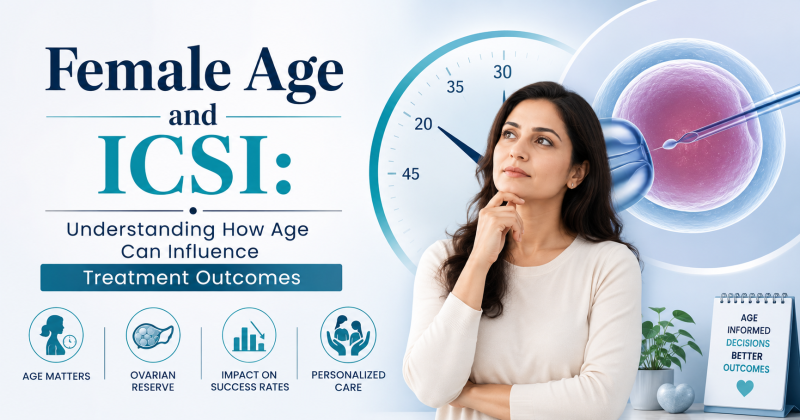
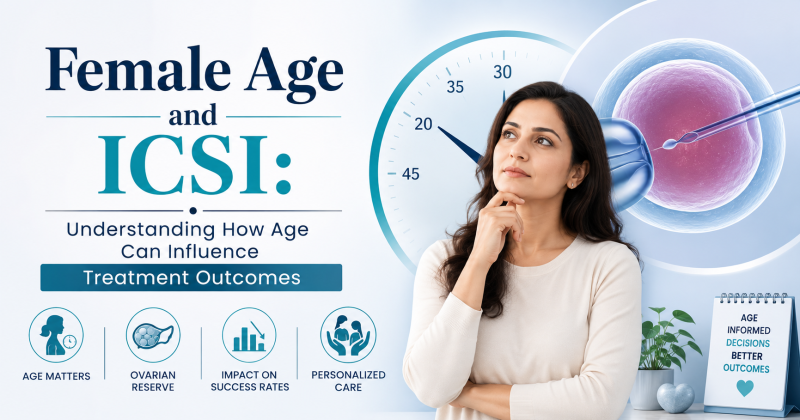
Female Age and ICSI: Understanding How Age Can Influence Treatment Outcomes
 Deepak
For couples considering fertility treatment, age is one of the most important factors to discuss before starting an ICSI cycle. While Intracytoplasmic Sperm Injection (ICSI) can help overcome certain fertilization problems—particularly male-factor infertility—it cannot completely eliminate the effects of female reproductive ageing.
As women age, changes in ovarian reserve and egg quality can influence the number of eggs retrieved, embryo development, implantation, miscarriage risk, and ultimately the chance of a live birth. However, age is not the only factor that determines treatment outcomes. Ovarian reserve, sperm quality, uterine health, medical history, embryo quality, and the specific reason for using ICSI all matter.
If you are researching ICSI Treatment in Delhi, understanding the relationship between age and treatment outcomes can help you have a more informed discussion with a fertility specialist.
What Is ICSI?
ICSI, or Intracytoplasmic Sperm Injection, is a laboratory fertilization technique used as part of an IVF treatment cycle. During ICSI, an embryologist injects a single sperm directly into a mature egg to assist fertilization.
ICSI may be considered in situations such as:
- Severe male-factor infertility
- Previous failure or very low fertilization with conventional IVF
- Certain sperm-related problems
- Use of previously frozen oocytes in selected circumstances
- Specific fertility-treatment situations where a fertility specialist believes ICSI is appropriate
Importantly, ICSI is not automatically a better option simply because a woman is older. The American Society for Reproductive Medicine's 2026 committee opinion states that routine ICSI for advanced maternal age, when there is no male-factor indication or previous fertilization problem, has not been shown to improve live-birth outcomes.
This distinction is important when evaluating different treatment options.
Why Does Female Age Matter in ICSI?
The number and quality of a woman's eggs generally decline with age. This can affect fertility treatment at several stages.
1. Ovarian reserve may decrease
Ovarian reserve refers broadly to the remaining supply of eggs in the ovaries. As age increases, ovarian reserve can decline, although the rate of decline varies considerably between individuals.
A lower ovarian response may mean that fewer eggs are obtained during an IVF/ICSI stimulation cycle.
However, ovarian reserve tests should not be interpreted in isolation. Tests such as AMH and antral follicle count can provide useful information about ovarian response, but they do not perfectly predict whether an individual will achieve a pregnancy.
2. Egg quality becomes increasingly important
Age affects not only the number of eggs but also their reproductive potential.
Changes in egg quality can contribute to:
- Lower fertilization or embryo-development potential
- Fewer embryos suitable for transfer
- Greater likelihood of chromosomal abnormalities in embryos
- Increased miscarriage risk
- Lower probability of live birth
ICSI can assist with the fertilization step, but it cannot reverse age-related changes in the egg or guarantee a chromosomally normal embryo.
This is one reason why simply choosing ICSI does not necessarily overcome the effects of increasing maternal age.
How Does Age Influence ICSI Outcomes?
It is useful to think of an ICSI cycle as a sequence of stages:
Egg production → Egg retrieval → Fertilization → Embryo development → Embryo transfer → Implantation → Pregnancy → Live birth
Age can potentially influence several points along this pathway.
For example, an older patient may produce fewer eggs during stimulation. If fewer eggs are available, there may also be fewer opportunities to obtain embryos suitable for transfer.
Age-related differences are reflected in broader IVF data as well. The UK's Human Fertilisation and Embryology Authority reported that in 2024, the average IVF birth rate per embryo transferred using patients' own eggs was highest among patients aged 18–34 and substantially lower among patients aged 43–44.
These figures are IVF statistics rather than a universal ICSI success-rate table, so they should not be used to predict an individual's ICSI outcome.
ICSI Outcomes by Broad Age Groups
Rather than focusing on a single "success rate," patients should understand the general trends.
ICSI in women under 35
Women under 35 generally have a stronger reproductive starting point than older age groups. Ovarian response and egg quality are often more favorable, although individual variation can be substantial.
This does not mean that every younger patient will have a successful ICSI cycle. Conditions such as endometriosis, diminished ovarian reserve, tubal or uterine problems, and male-factor infertility can affect outcomes.
ICSI between 35 and 37
Fertility potential can begin changing more noticeably during the mid-to-late 30s. Some women in this age group may still respond well to ovarian stimulation and produce good-quality embryos.
However, age should be considered alongside ovarian reserve and the couple's overall fertility history when developing a treatment plan.
ICSI between 38 and 40
At this stage, age-related changes in egg quality become increasingly important. Some patients may require more than one treatment cycle to achieve a transferable embryo.
A personalized evaluation becomes particularly valuable because two women of the same age can have very different ovarian reserve, medical histories, and treatment responses.
ICSI after 40
Pregnancy through IVF/ICSI using a woman's own eggs can still occur after 40, but the probability generally decreases with advancing age.
The HFEA's 2024 data illustrate this age-related pattern: IVF birth rates per embryo transferred were considerably lower in older age groups than among patients aged 18–34.
For women over 40, discussing treatment promptly with a fertility specialist can be important because reproductive potential can continue to change with time.
Does ICSI Increase Success Rates for Older Women?
This is one of the most common questions patients ask.
Not necessarily.
ICSI is primarily a method of assisting fertilization. It can be particularly useful when sperm-related factors or previous fertilization problems make conventional IVF less suitable.
But injecting a sperm into an egg does not eliminate age-related changes in egg quality or embryo genetics.
In fact, current ASRM guidance specifically notes that ICSI for advanced maternal age, in the absence of a male-factor indication, has not been shown to improve fertilization or live-birth outcomes.
Therefore, the question should not simply be:
"Am I older, so should I choose ICSI?"A better question is:
"Why is ICSI being recommended in my particular case?"That distinction can lead to more informed treatment decisions.
What Other Factors Affect ICSI Success?
Female age is important, but it is only one part of the picture.
Ovarian reserve
AMH, antral follicle count, previous ovarian response, and other clinical factors can help doctors assess how the ovaries may respond to stimulation.
Sperm quality
Sperm concentration, motility and morphology can influence the choice of fertilization method. Male-factor infertility is one of the major reasons ICSI is used.
Embryo quality
The number and quality of embryos available for transfer can affect the chances of pregnancy.
Uterine health
Conditions involving the uterus or endometrium may influence implantation and pregnancy outcomes.
Previous fertility treatment
Previous IVF or ICSI cycles can provide valuable information about ovarian response, fertilization, embryo development and implantation.
Underlying medical conditions
Conditions such as endometriosis, fibroids and other reproductive or general health factors may affect fertility treatment and should be evaluated individually.
Can Lifestyle Improve ICSI Outcomes?
Lifestyle cannot stop reproductive ageing, but maintaining overall health can support fertility treatment and pregnancy.
Before an ICSI cycle, patients can discuss with their doctor:
- Maintaining a healthy weight
- Avoiding smoking and tobacco exposure
- Limiting alcohol
- Taking recommended prenatal vitamins, including folic acid
- Managing existing medical conditions
- Reviewing medications with a doctor
- Getting adequate sleep and regular physical activity
- Following the fertility specialist's specific pre-treatment instructions
It is important to avoid claims that a particular diet, supplement or exercise routine can "guarantee" ICSI success.
How Should Patients Choose an ICSI Clinic in Delhi?
If you are looking for Best ICSI Treatment in Delhi, comparing clinics solely on advertised success percentages may not provide the complete picture.
Instead, consider asking:
- Why is ICSI being recommended in my case?
- What are my AMH and other ovarian-reserve findings?
- How many eggs might reasonably be expected from stimulation?
- What factors could affect embryo development?
- How does my age affect my individual treatment plan?
- What are the clinic's laboratory facilities and embryology practices?
- How are success rates calculated and reported?
- What additional costs could arise during treatment?
- What happens if the first cycle does not result in a pregnancy?
- What alternatives may be appropriate in my situation?
A transparent clinic should be willing to explain both the potential benefits and limitations of treatment.
Finding ICSI Doctors in Yamuna Vihar, Delhi
Patients searching for ICSI Doctors In Yamuna Vihar Delhi may find it useful to look beyond proximity when selecting a fertility specialist.
Consider the doctor's experience with your particular fertility concern, the availability of embryology and IVF laboratory services, the clinic's approach to individualized treatment, and how clearly the team communicates expected outcomes.
If you specifically need ICSI Treatment In Yamuna Vihar Delhi, discussing your age, ovarian reserve, fertility history and sperm parameters during the initial consultation can help determine whether ICSI is appropriate and what other treatment considerations may apply.
Does Age Mean ICSI Cannot Work?
No.
Age affects reproductive potential, but it does not mean that pregnancy is impossible at an older age.
Treatment outcomes vary from person to person, and age should be interpreted together with ovarian reserve, egg and sperm factors, embryo development, uterine health and previous treatment history.
The most useful approach is therefore individualized fertility assessment rather than relying on a single age-based success percentage.
Source:
Click for the: Full Story
You might like