



 Close Menu
 World
World
 Biography
 Health
 Education
 Business
 Lifestyle
 Sports
 Technology
 Animals
 History
 Food
Food
 Religious
 Startups
 Movies
 Politics
 Fashion
 Covid
Covid
 Diet
Diet
 Fitness
 Marketing
 Travel
 Science
 Reviews
 Social media
 Stories
 Facts
Facts
 Art
Art
 Entertainment
Yatin Samra

Technology
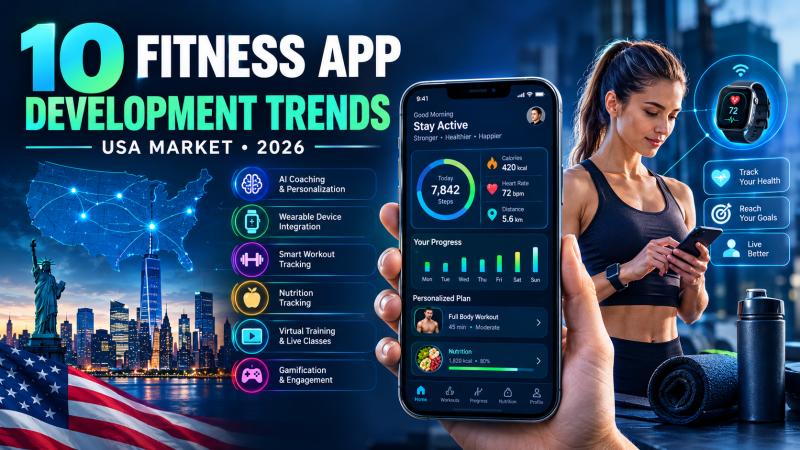
Fitness App Development in the USA: Key Technologies, Features, and Market Considerations
 Yatin Samra
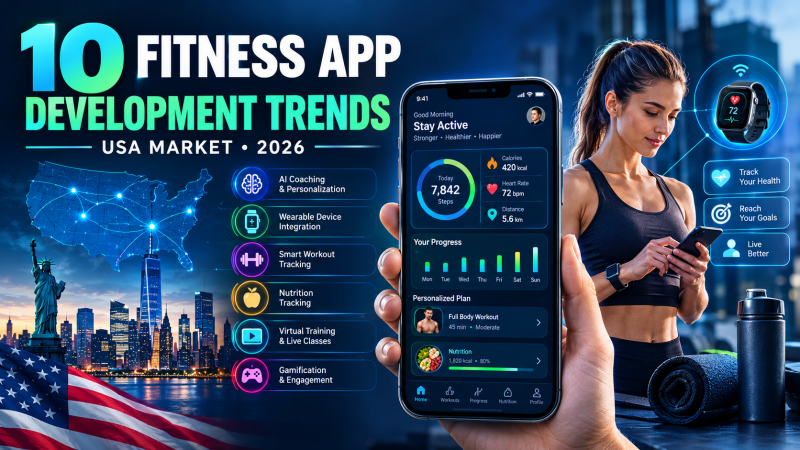
The fitness industry has evolved tremendously due to the introduction of mobile technologies, wearables, artificial intelligence, and fitness platforms. Now a person can plan his/her workouts, monitor their activity level, stick to customized training plans, communicate with the coach, and manage wellness goals through the mobile app.
In order to build a successful fitness app, for a business that wants to create a fitness app, it is necessary to know all peculiarities of the technology, user expectations from the users, and the development process prior to the start of the project. The fitness app is not only about workout videos. The right blend of features is important.
The USA is an exciting market for the development of fitness technologies because the users have access to a variety of digital wellness products, connected devices, gyms, fitness trainers, and subscription-based solutions.
Understanding the Modern Fitness App Ecosystem
A fitness app can serve several different purposes depending on its target audience and business model.
Some applications focus primarily on workout tracking, while others provide complete digital fitness experiences.
Common categories include:
- Workout and exercise tracking apps
- Personal training platforms
- Gym and fitness studio applications
- Nutrition and wellness apps
- Running and cycling platforms
- Meditation and recovery applications
- Wearable-connected fitness products
- Corporate wellness platforms
- Connected fitness equipment applications
The choice of category directly influences the application's features, technology architecture, integrations, and monetization strategy.
For example, a gym application may need membership management and class scheduling, while a personal training platform may require video sessions, trainer communication, and customized workout plans.
Personalization Is Becoming a Core Requirement
Users increasingly expect fitness applications to provide experiences relevant to their individual goals.
A beginner who wants to improve general fitness should not necessarily receive the same recommendations as an experienced athlete training for a specific performance goal.
Personalization can be based on information such as:
- Fitness objectives
- Current activity level
- Workout history
- Preferred exercise types
- Available equipment
- Training frequency
- Progress over time
The application can use this information to recommend suitable workouts and gradually adjust the user's training experience.
This makes personalization both a technology consideration and an important part of product strategy.
The Role of Artificial Intelligence
Artificial intelligence is becoming increasingly useful in fitness applications.
AI can help businesses process large amounts of user activity data and generate personalized recommendations. It can also support conversational assistants and automated content discovery.
Potential applications of AI include:
Personalized Workout Recommendations
AI systems can evaluate workout history and user preferences to suggest suitable training sessions.
Virtual Fitness Assistance
A conversational assistant can help users navigate workouts, answer general fitness questions, and provide reminders.
Progress Analysis
Machine learning models can identify patterns in activity and help present meaningful progress insights.
Content Recommendations
AI can recommend workouts, educational content, or wellness resources based on user behavior.
However, AI should be implemented with clear limitations. Fitness applications should avoid presenting automated outputs as professional medical diagnoses or treatment recommendations.
Wearable Integration and Connected Data
Wearable devices have become an important part of the digital fitness ecosystem.
Smartwatches, fitness trackers, and heart-rate monitors can provide information that would otherwise require manual input.
Depending on the device and platform, a fitness application may receive information related to:
- Steps
- Heart rate
- Distance
- Active calories
- Exercise sessions
- Sleep
- Activity duration
Integrating this information can make the application more convenient and help create a more complete picture of user activity.
However, wearable integration requires careful planning. Developers need to consider API limitations, synchronization issues, permissions, supported devices, and differences between platforms.
Essential Features of a Fitness Application
The feature set should depend on the application's target audience, but several capabilities are commonly valuable.
User Profiles
Users should be able to create profiles containing relevant information such as goals, preferences, fitness level, and activity history.
Workout Management
The platform can provide workout plans, exercise instructions, training schedules, and completion tracking.
Progress Tracking
Users should be able to understand their performance through metrics, charts, milestones, and historical activity.
Notifications
Push notifications can remind users about scheduled workouts, goals, challenges, or other activities.
Search and Content Discovery
As the content library grows, search and filtering become increasingly important for helping users find appropriate workouts.
Subscription Management
For subscription-based products, users need a simple way to view plans, manage payments, and access premium content.
Video Content and Live Training
Video can be a major component of many fitness applications.
Businesses can provide professionally produced workout sessions covering different fitness levels and objectives.
A video-based platform needs to consider:
- Reliable content delivery
- Adaptive streaming
- Video compression
- Content categorization
- Search and filtering
- Access control
- Content management
Some businesses may also offer live training sessions where users interact with instructors in real time.
This introduces additional technical requirements, including live streaming infrastructure, scheduling, communication, and moderation.
Gamification and User Engagement
One of the biggest challenges for fitness apps is maintaining long-term engagement.
Users may download an application with strong intentions but stop using it after a short period. Gamification can help encourage consistent participation.
Common approaches include:
- Workout streaks
- Achievement badges
- Challenges
- Points
- Milestones
- Leaderboards
- Goal-based rewards
However, gamification should support the core fitness experience rather than distract users from it.
Businesses should test different engagement mechanisms to understand which ones actually encourage continued usage.
Social Features and Digital Communities
Social functionality can turn a fitness application into a community platform.
Users can participate in group challenges, share achievements, follow friends, or communicate with trainers and other members.
Depending on the business model, social features might include:
- User communities
- Group challenges
- Friend connections
- Activity sharing
- Trainer messaging
- Discussion spaces
- Team competitions
Community features can be especially valuable for subscription-based platforms because they can provide additional reasons for users to remain active.
Nutrition and Wellness Integration
Fitness is closely connected with nutrition, recovery, sleep, and overall lifestyle.
Some fitness applications are therefore expanding beyond workouts and incorporating broader wellness functionality.
Potential features include:
- Meal tracking
- Hydration reminders
- Nutrition information
- Sleep integrations
- Meditation
- Breathing exercises
- Recovery tracking
- Habit monitoring
Businesses should define the boundaries of these features carefully, especially when collecting sensitive information or providing health-related recommendations.
Fitness App Monetization Models
A clear revenue strategy should be established before development begins.
Different business models can be used depending on the target audience and product.
Subscription Model
Users pay monthly or annually for access to premium features and content.
Freemium Model
Basic functionality is available for free while advanced features require payment.
One-Time Purchase
Users pay once for access to a specific product or program.
Personal Training Marketplace
The platform can connect users with trainers and generate revenue through commissions or service fees.
Corporate Wellness
Businesses can pay for access to fitness and wellness services for their employees.
The monetization model influences application architecture, payment integrations, user permissions, and administrative functionality.
Building the Right Technology Architecture
Fitness apps can generate significant amounts of user and activity data, particularly when connected to wearables and other services.
A scalable architecture should be capable of supporting growing numbers of users and data events.
Depending on the application, the technology stack may include:
- iOS and Android applications
- Cloud infrastructure
- Backend APIs
- Secure databases
- Authentication services
- AI and machine learning components
- Wearable APIs
- Video delivery systems
- Analytics tools
- Payment integrations
- Administrative dashboards
A modular architecture can make future expansion easier. New devices, services, content types, and features can be added without requiring major changes to the entire system.
Security and Privacy Considerations
Fitness applications can collect information that users may consider highly personal.
Examples include activity data, location information, body measurements, health-related information, and wearable data.
Security should therefore be part of the development process from the beginning.
Important measures include:
- Strong authentication
- Encryption
- Secure API communication
- Role-based permissions
- Access controls
- Secure data storage
- Audit logging
- Regular security testing
- Appropriate privacy controls
Businesses targeting users in the USA should also evaluate the privacy obligations relevant to their application, the information they collect, and the states where they operate.
The Importance of the Admin Panel
The user-facing mobile application is only one part of the overall platform.
A powerful administrative dashboard allows business teams to manage the application and monitor its performance.
An admin panel may provide tools for:
- User management
- Workout management
- Trainer management
- Content publishing
- Subscription management
- Payment monitoring
- Analytics
- Notifications
- Reports
- Customer support
Without an effective administration system, managing a growing fitness platform can become unnecessarily difficult.
Testing a Fitness Application
Testing should cover more than basic functionality.
Because fitness applications often depend on multiple integrations and real-time data sources, comprehensive testing is essential.
Development teams should evaluate:
- Functional performance
- Device compatibility
- Wearable synchronization
- API reliability
- Video performance
- Payment workflows
- Security
- Application speed
- Usability
- Notifications
- Data accuracy
Testing across different devices and network conditions is particularly important because users may access fitness applications from homes, gyms, outdoor locations, and areas with inconsistent connectivity.
How to Approach Fitness App Development
A structured development process can reduce complexity and improve the chances of building a useful product.
Step 1: Define the Target Audience
Determine whether the application is intended for gym members, personal training clients, athletes, general consumers, wellness users, or another audience.
Step 2: Define the Core Value Proposition
Identify the specific problem the application will solve.
Step 3: Prioritize the MVP
Select the features required for the initial launch rather than attempting to build every possible capability.
Step 4: Design the User Experience
Create simple user journeys for onboarding, workouts, progress tracking, payments, and other core activities.
Step 5: Build the Technology Foundation
Develop the backend, APIs, mobile applications, database, and integrations.
Step 6: Test With Real Users
Collect feedback from a limited user group before expanding the platform.
Step 7: Improve Based on Data
Use analytics and user feedback to identify which features should be improved or introduced next.
To Know More About Fitness App Development
To know more about developing this app, click the link below and watch the video.
https://www.youtube.com/watch?v=Q1W0s_3pKUU
The video can provide further information about the development process, important features, technology choices, and business considerations involved in building a modern fitness application.
Conclusion
The scope of developing fitness apps goes beyond exercising. Contemporary solutions can include personalized workouts, artificial intelligence, wearables, videos, social communities, health tools, analytics, and connected fitness.
Businesses entering the US market need to design apps based on their specific target audience and actual needs rather than trying to squeeze all possible technologies into their solution. A scalable solution architecture, good UX/UI design, proper security measures, and MVP focus can be good starting points for future growth.
With time, digital fitness keeps evolving and businesses capable of combining technology with engaging experiences will be able to develop apps that become an integral part of users' daily exercising routine.
Source:
Click for the: Full Story
You might like








You Might Like this