



 Close Menu
 World
World
 Biography
 Health
 Education
 Business
 Lifestyle
 Sports
 Technology
 Animals
 History
 Food
Food
 Religious
 Startups
 Movies
 Politics
 Fashion
 Covid
Covid
 Diet
Diet
 Fitness
 Marketing
 Travel
 Science
 Reviews
 Social media
 Stories
 Facts
Facts
 Art
Art
 Entertainment
Manish Bandawal

Fitness
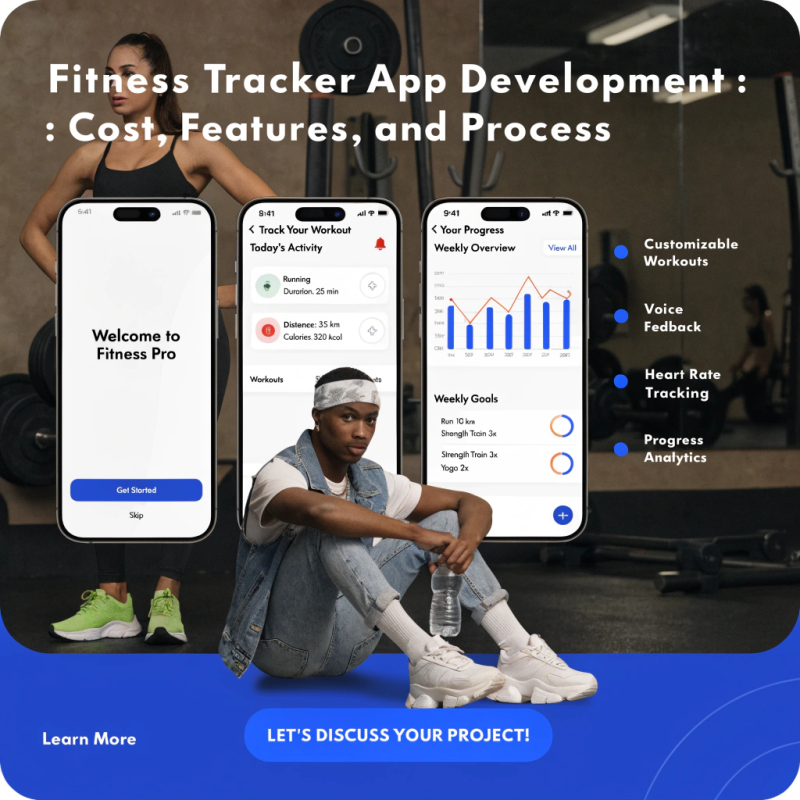
Fitness Tracker App Development in 2026: Cost, Features, and Process
 Manish Bandawal
The international fitness and health technology market is still expanding at a fast pace in 2026 as more and more people use mobile apps and fitness trackers to track their health and fitness. Fitness tracker apps have become an essential part of people’s lives, right from tracking their steps and heart rate to analyzing their sleep patterns and workout routines.
With the rising demand for personalized health solutions, many startups, gyms, and health technology companies are now looking to develop a fitness tracker app that provides real-time results and long-term benefits. This article will provide a comprehensive overview of the entire fitness tracker app development process in 2026.
What Is a Fitness Tracker App?
A fitness tracker app is a mobile application that helps track and analyze the physical activities and health parameters of users. Fitness apps use the sensors of smartphones and wearable devices to track the steps, calories burned, heart rate, and other parameters of users.
The latest fitness tracking apps have evolved beyond the basic tracking functionality. They incorporate AI, analytics, and cloud computing to offer personalized recommendations, goal-oriented coaching, and valuable health insights to users. This has led to increased investments in custom fitness app development to build sophisticated fitness tracking solutions.
Key Features of a Fitness Tracker App
To stay competitive, your fitness tracker app should offer a rich set of features that deliver value to users and support long-term engagement.
1. Activity & Step Tracking
Tracks daily steps, distance traveled, active minutes, and calories burned using smartphone sensors and wearable integrations.
2. Heart Rate Monitoring
Collects heart rate data from compatible devices to help users understand cardiovascular health and workout intensity.
3. Sleep Tracking & Analysis
Monitors sleep duration and quality, providing insights into sleep cycles and recovery patterns.
4. Workout Tracking
Supports multiple workout types such as running, cycling, strength training, yoga, and HIIT with performance metrics.
5. Goal Setting & Progress Reports
Allows users to set fitness goals and track progress through visual dashboards and reports.
6. Wearable Device Integration
Seamless integration with Apple Watch, Fitbit, Garmin, Samsung Galaxy Watch, and other wearables.
7. AI-Powered Insights
Uses AI to analyze user data and provide personalized recommendations, alerts, and coaching tips.
8. Nutrition & Hydration Tracking
Optional features to log meals, calories, and water intake for a complete fitness and wellness experience.
9. Social & Community Features
Includes challenges, leaderboards, and sharing options to boost motivation and engagement.
10. Cloud Sync & Data Backup
Secure cloud storage to sync user data across devices and prevent data loss.
How to Make a Fitness Tracker App: Step-by-Step Process
Understanding how to make a fitness tracker app is essential for successful development. Here is a standard development process followed by most professional teams.
Step 1: Market Research & Idea Validation
Analyze competitors, identify your target audience, and validate your unique value proposition. Define the problem your app will solve and how it will stand out.
Step 2: Feature Planning & Requirements
Create a detailed feature list and technical requirements document. Decide whether you want an MVP or a full-scale solution.
Step 3: UI/UX Design
Design intuitive user interfaces and user journeys. A clean, simple design improves user engagement and retention.
Step 4: Backend Development
Build secure and scalable backend systems to handle user data, APIs, cloud storage, and analytics.
Step 5: Mobile App Development
Develop native or cross-platform apps for Android and iOS. This is a core part of fitness tracker app development.
Step 6: Wearable & API Integration
Integrate third-party APIs and wearable devices to collect real-time fitness data.
Step 7: Testing & Quality Assurance
Perform functional, performance, and security testing to ensure a bug-free user experience.
Step 8: Launch & Deployment
Publish the app on the Google Play Store and Apple App Store. Set up monitoring tools to track performance.
Step 9: Maintenance & Updates
Regular updates, bug fixes, and feature enhancements are critical for long-term success.
How to Create a Fitness Tracker App for Different Business Models
When planning how to create a fitness tracker app, you should also consider your business model:
- B2C Fitness App – Direct-to-consumer fitness tracking and wellness
- Gym & Trainer App – For gyms, personal trainers, and fitness studios
- Corporate Wellness App – Employee wellness and activity tracking
- Healthcare & Remote Monitoring App – Patient health tracking and reporting
Each model requires different features, compliance standards, and user experiences.
Fitness Tracker App Development Cost in 2026
The cost of fitness tracker app development depends on several factors:
Key Cost Factors
- App complexity and number of features
- Android, iOS, or cross-platform development
- Wearable device integrations
- AI and data analytics features
- UI/UX design quality
- Backend infrastructure and cloud services
- Security and compliance requirements
- Ongoing maintenance and updates
Estimated Cost Range (2026)
- Basic MVP App: $20,000 – $40,000
- Mid-Level App: $40,000 – $80,000
- Advanced Fitness Tracker App: $80,000 – $150,000+
Partnering with the right fitness application development company can help optimize costs while maintaining quality.
Choosing the Right Development Partner
Selecting the right fitness app development company is one of the most important decisions you will make.
Look for a partner that offers:
- End-to-end fitness app development services
- Experience with health and fitness platforms
- Strong UI/UX design capabilities
- Expertise in wearable and API integrations
- Knowledge of data security and compliance
- Proven portfolio and client testimonials
A reliable health and fitness app development company will help you reduce risks, speed up time-to-market, and build a scalable product.
Fitness App Development Solution for 2026 and Beyond
Modern fitness app development Solution strategies focus on:
- AI-driven personalization
- Cloud-native architecture
- Cross-platform development
- Real-time data analytics
- Secure data management
- Integration with emerging health technologies
These solutions ensure your fitness tracker app remains competitive and future-ready.
Challenges in Fitness Tracker App Development
While the market is promising, there are also challenges:
- Ensuring data accuracy from sensors
- Managing data privacy and compliance
- Supporting multiple wearable devices
- Maintaining high app performance
- Achieving long-term user retention
Working with an experienced development partner helps mitigate these risks.
Conclusion
By the year 2026, fitness tracker app development will have become an absolute necessity, as these apps are now a necessary digital tool for individuals, organizations, and medical professionals. The increasing demand for health information and fitness tracking through wearables makes the current scenario the best time to invest in fitness tracker app development.
Regardless of whether you are looking to develop a fitness tracker app for individuals, fitness centers, or organizations, the success of your project depends on a well-planned development process and the selection of the right fitness application development company. With professional fitness app development services, you can develop a robust and scalable solution that can make a real difference in the competitive digital health industry.
Source:
Click for the: Full Story
You might like









You Might Like this