Close Menu
 World
World
 Biography
 Health
 Education
 Business
 Lifestyle
 Sports
 Technology
 Animals
 History
 Food
Food
 Religious
 Startups
 Movies
 Politics
 Fashion
 Covid
Covid
 Diet
Diet
 Fitness
 Marketing
 Travel
 Science
 Reviews
 Social media
 Stories
 Facts
Facts
 Art
Art
 Entertainment
Yatin Samra

Technology
Fleet Management Software Development: 12 Technologies Transforming Modern Fleet Operations
 Yatin Samra
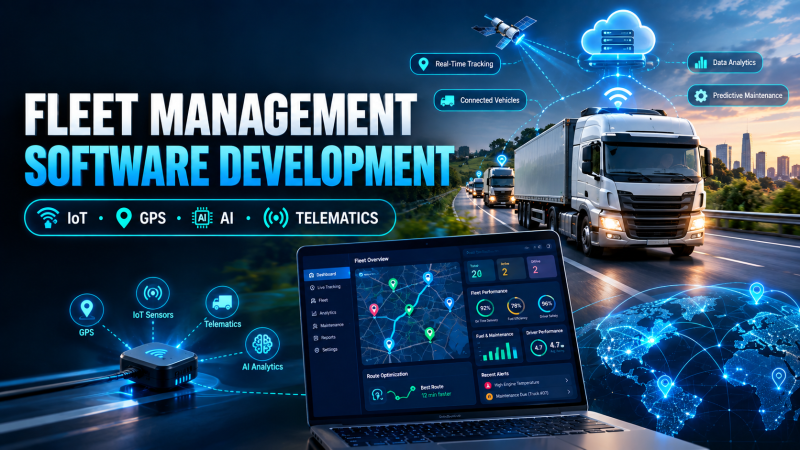
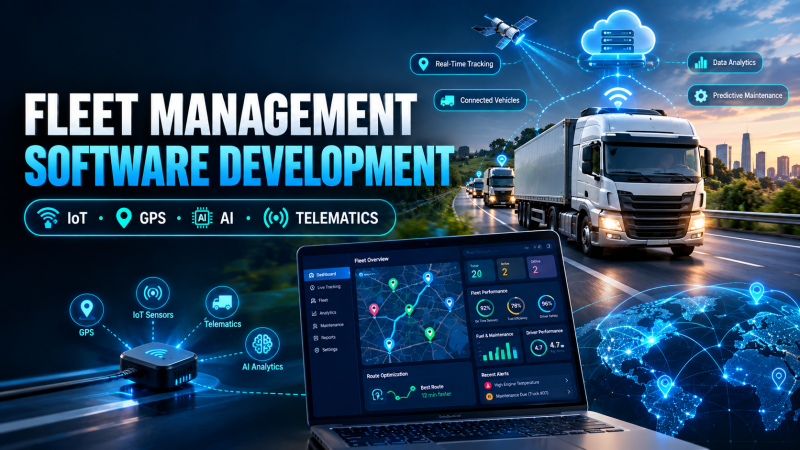
Today’s fleet management is a lot more than tracking cars on a map. Firms require accurate data, automatic maintenance, better routes, information about drivers, and more visibility throughout their operations. As the technologies of connected cars and cloud technologies advance further, the creation of fleet management systems becomes more and more focused on IoT, GPS, AI, and telematics.
Such technologies can be used together for the creation of smart platforms, which will assist fleet owners in monitoring their vehicles and making the right decisions based on data analysis.
These technologies can work together to create intelligent platforms that help fleet operators monitor vehicles, analyze operational data, and make informed decisions.
Here are 12 technologies and capabilities shaping modern fleet management software.
1. GPS-Based Vehicle Tracking
GPS tracking provides the foundation for real-time fleet visibility. Managers can monitor vehicle locations, review historical routes, and establish geofences for specific areas.
A GPS module can also generate alerts when a vehicle leaves an approved area, remains stationary for an unusual period, or deviates from a planned route.
For businesses with large vehicle networks, centralized tracking can make dispatch and operational coordination considerably easier.
2. IoT Sensor Connectivity
IoT sensors can collect data directly from vehicles and connected equipment. Instead of relying on manual reports, businesses can receive information continuously through connected devices.
Common data points include:
- Engine temperature
- Fuel levels
- Tire pressure
- Battery condition
- Cargo temperature
- Vehicle status
- Equipment usage
This data can then be processed and displayed through the fleet management dashboard.
3. Telematics Systems
Telematics combines vehicle data with communication technologies to provide detailed information about vehicle operation.
By integrating telematics with fleet software, businesses can monitor mileage, engine diagnostics, fuel consumption, driving behavior, and other performance indicators.
An integration-friendly architecture can also allow operators to connect telematics hardware from different vendors.
4. Artificial Intelligence
AI can help convert large volumes of fleet data into useful insights.
For example, an AI-powered system can analyze historical maintenance records and vehicle sensor data to identify patterns associated with potential equipment problems.
AI can also support route planning, fuel analysis, driver behavior assessment, demand forecasting, and operational reporting.
The objective is not simply to collect more data, but to make that data easier to interpret and act upon.
5. Predictive Maintenance
Unexpected vehicle failures can disrupt deliveries, increase repair costs, and reduce fleet availability.
Predictive maintenance uses information such as mileage, diagnostics, sensor readings, service records, and operating conditions to identify potential issues before they become major problems.
Fleet software can automatically generate maintenance alerts and provide managers with a centralized view of upcoming service requirements.
6. Intelligent Route Optimization
Route optimization can help businesses coordinate vehicles and deliveries more efficiently.
Modern systems can consider:
- Current vehicle locations
- Traffic conditions
- Delivery priorities
- Vehicle capacity
- Driver schedules
- Road restrictions
- Estimated travel times
AI and historical data can further improve route planning by identifying recurring traffic patterns or operational bottlenecks.
7. Driver Behavior Analytics
Driver analytics provides insights into how vehicles are being operated.
The platform may monitor events such as:
- Harsh braking
- Rapid acceleration
- Speeding
- Excessive idling
- Sudden turns
- Unauthorized vehicle use
Managers can use this information for training, safety programs, and operational analysis.
Driver monitoring should be implemented with clear policies and appropriate privacy safeguards.
8. Fuel and Energy Monitoring
Fuel management remains important for conventional fleets, while electric vehicles are creating new requirements around battery and charging data.
A modern platform can monitor fuel consumption, refueling activity, mileage, and idle time. For electric fleets, it can also track charging sessions, battery status, energy consumption, and estimated range.
These capabilities provide operators with a clearer understanding of vehicle energy usage.
9. Cloud-Based Fleet Infrastructure
Cloud technology provides the infrastructure needed to store, process, and access large volumes of fleet data.
Cloud-based systems can support:
- Real-time dashboards
- Remote access
- Automatic backups
- Scalable computing
- API integrations
- Centralized data management
Businesses planning to develop fleet management software can use cloud infrastructure to create platforms capable of expanding as their fleet and data requirements grow.
10. Mobile Applications
Fleet operations do not always happen from a desktop office. Drivers, technicians, supervisors, and field teams may need access to relevant information while working remotely.
A mobile application can provide features such as:
- Driver assignments
- Navigation
- Vehicle inspections
- Maintenance updates
- Delivery status
- Incident reporting
- Communication tools
A well-designed mobile experience can connect field employees with the central fleet management platform.
11. Security and Data Protection
Fleet management platforms process valuable operational information and may handle sensitive driver and business data.
Security should therefore be incorporated into every layer of the system.
Important practices can include:
- Data encryption
- Secure APIs
- Multi-factor authentication
- Role-based permissions
- Activity logs
- Regular security testing
- Secure cloud configurations
- Backup and recovery systems
Businesses operating in the USA and other regions should also consider the privacy, cybersecurity, transportation, and industry-specific requirements applicable to their operations.
12. Analytics and Real-Time Dashboards
A fleet platform becomes more useful when complex data is presented in a clear format.
Dashboards can display information about vehicle locations, maintenance status, fuel consumption, driver activity, route performance, and system alerts.
Real-time analytics can help managers identify operational issues quickly, while historical reports can reveal longer-term patterns and support strategic planning.
How These Technologies Work Together
The real potential of modern fleet software comes from integration.
GPS provides location information, IoT devices generate sensor data, telematics provides vehicle diagnostics, and AI analyzes the resulting datasets. Cloud infrastructure connects these components and makes the information accessible through web and mobile applications.
Instead of using separate systems for each task, businesses can create a centralized technology ecosystem where data flows between different operational functions.
What to Consider Before Development
Before starting development, fleet operators should define their business requirements and identify the technologies they actually need.
Important considerations include:
- Fleet size and vehicle types
- Target users
- Required integrations
- Data volume
- Mobile requirements
- Security needs
- Regional regulations
- Scalability expectations
- Maintenance and support requirements
A modular architecture can make it easier to add new vehicle technologies and integrations as the business grows.
Conclusion
The technology of fleet management systems is getting smarter due to the convergence of GPS, IoT, AI, telematics, cloud computing, and mobile technology. Such solutions will allow businesses to gain better insight into their fleets and assist in maintenance, routing, management, and analysis.
When choosing a solution for fleet management software for your organization, the main aim should be creating a solution that is reliable, scalable, and integrative enough to adapt to changes in fleet management.
Source:
Click for the: Full Story
You might like