



 Close Menu
 World
World
 Biography
 Health
 Education
 Business
 Lifestyle
 Sports
 Technology
 Animals
 History
 Food
Food
 Religious
 Startups
 Movies
 Politics
 Fashion
 Covid
Covid
 Diet
Diet
 Fitness
 Marketing
 Travel
 Science
 Reviews
 Social media
 Stories
 Facts
Facts
 Art
Art
 Entertainment
Angelina Smith

Health
Heart Health: The Small Daily Choices That Add Up to a Lifetime of Difference
 Angelina Smith
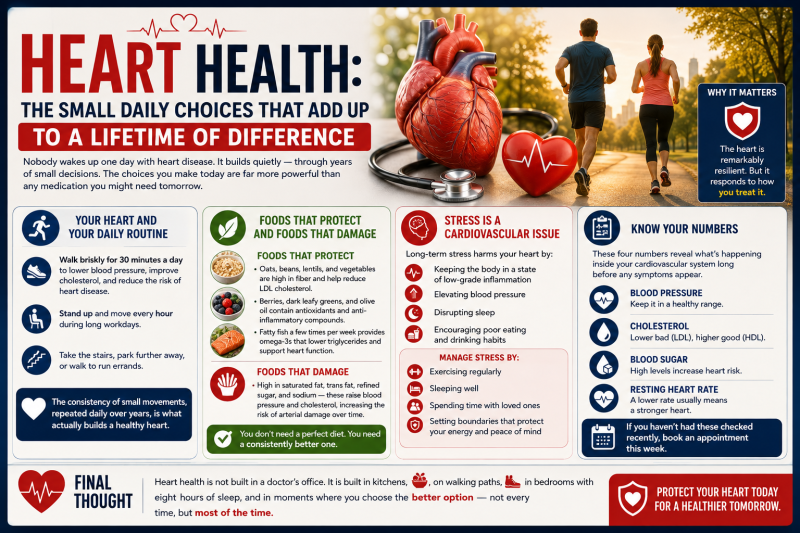
Nobody wakes up one day with heart disease. It builds quietly through years of small decisions that individually seem harmless but collectively take a significant toll. Understanding heart health isn't about fear. It's about recognizing that the choices available to you today are far more powerful than any medication you might need tomorrow.
The heart is remarkably resilient. But it responds to how you treat it.
Your Heart and Your Daily Routine
Most people think protecting their heart requires dramatic lifestyle changes hours of intense exercise, strict dieting, and complete elimination of anything enjoyable. The reality is far more manageable.
Walking briskly for 30 minutes a day lowers blood pressure, improves cholesterol levels, and reduces the risk of cardiovascular disease by a measurable margin. Standing up and moving every hour during a long workday makes a difference. Taking the stairs, parking further away, or walking to run errands all contribute to cardiovascular fitness without requiring a gym membership or a complete schedule overhaul.
The consistency of small movements, repeated daily over years, is what actually builds a healthy heart.
Foods That Protect and Foods That Damage
The relationship between diet and heart health is well established and worth understanding clearly. Foods high in saturated fat, trans fat, refined sugar, and sodium gradually raise blood pressure and cholesterol, increasing the risk of arterial damage over time.
On the other side, foods rich in fiber oats, beans, lentils, vegetables actively help reduce LDL cholesterol. Berries, dark leafy greens, and olive oil contain antioxidants and anti-inflammatory compounds that protect blood vessels. Fatty fish consumed a few times per week provides omega-3 fatty acids that lower triglycerides and support overall cardiovascular function.
You don't need a perfect diet. You need a consistently better one.
Stress Is a Cardiovascular Issue
This point is chronically underappreciated. Long-term psychological stress keeps the body in a state of low-grade inflammation, elevates blood pressure, disrupts sleep, and encourages poor eating and drinking habits all of which directly harm the heart.
Managing stress is not optional if cardiovascular health matters to you. Regular exercise helps. So does quality sleep, time spent with people you care about, and learning to set boundaries that protect your energy and peace of mind.
Know Your Numbers
Blood pressure, cholesterol, blood sugar, and resting heart rate are four numbers every adult should know. They reveal what is happening inside the cardiovascular system long before any outward symptoms appear.
If you haven't had these checked recently, book an appointment this week.
Final Thought
Heart health is not built in a doctor's office. It is built in kitchens, on walking paths, in bedrooms with eight hours of sleep, and in moments where you choose the better option not every time, but most of the time.
Source:
Click for the: Full Story
You might like








You Might Like this