Close Menu
 World
World
 Biography
 Health
 Education
 Business
 Lifestyle
 Sports
 Technology
 Animals
 History
 Food
Food
 Religious
 Startups
 Movies
 Politics
 Fashion
 Covid
Covid
 Diet
Diet
 Fitness
 Marketing
 Travel
 Science
 Reviews
 Social media
 Stories
 Facts
Facts
 Art
Art
 Entertainment
Deepanshu

Technology
How AI for Banking is Revolutionizing Financial Services in 2026
 Deepanshu
Have you ever wondered why your bank now seems to predict your needs before you even realize them yourself?
The banking industry has undergone a seismic transformation in recent years. Customers no longer tolerate long wait times, impersonal service, or one-size-fits-all financial products. They expect instant responses, personalized recommendations, and seamless digital experiences comparable to their favorite streaming or shopping platforms. This dramatic shift in expectations has forced financial institutions to completely rethink how they operate.
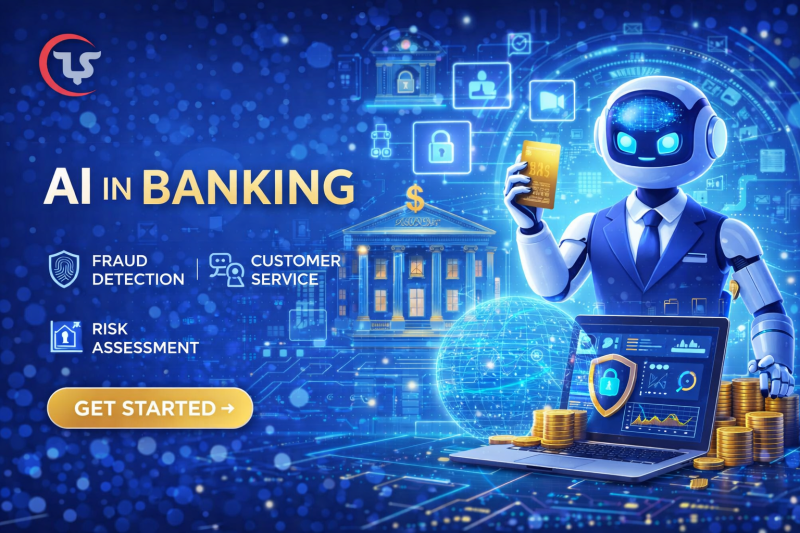
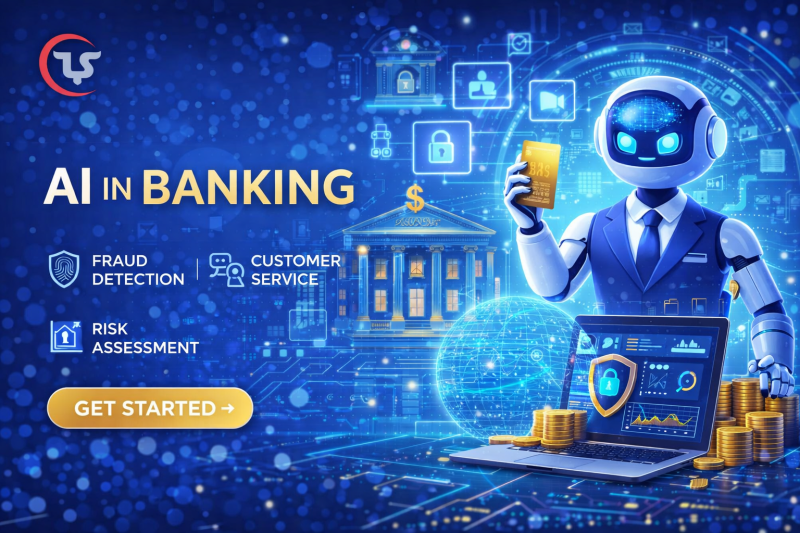
Enter artificial intelligence—the game-changing technology reshaping every aspect of banking operations. AI for banking isn't just a trendy buzzword; it's the fundamental backbone powering modern financial services. From detecting fraud in milliseconds to providing 24/7 customer support, AI has become indispensable for banks aiming to stay competitive and relevant.
This transformation affects everyone—from individual customers checking balances on mobile apps to institutional investors managing billion-dollar portfolios. Understanding how AI is revolutionizing banking helps us appreciate the technology behind our daily financial interactions and prepares us for the future of money management.
The Banking Problem AI Solves
Traditional banking operations faced multiple challenges that frustrated both customers and financial institutions. Manual processes created bottlenecks, human-only fraud detection missed sophisticated scams, and personalized service remained economically unfeasible for most customers.
Customer service representatives couldn't handle the sheer volume of routine inquiries. Simple questions about account balances or transaction histories tied up valuable human resources. Meanwhile, complex fraud schemes evolved faster than traditional detection systems could adapt.
Risk assessment relied heavily on rigid formulas and limited data points. Loan officers made decisions based on standardized criteria that often overlooked qualified applicants or approved risky borrowers. This inflexibility resulted in missed opportunities and increased default rates.
Back-office operations consumed enormous time and resources. Processing documents, verifying identities, and ensuring regulatory compliance required armies of staff performing repetitive tasks. These inefficiencies translated directly into higher costs for banks and, ultimately, customers.
How AI Transforms Banking Operations
Intelligent Customer Service
AI-powered chatbots and virtual assistants now handle millions of customer interactions daily. These systems answer questions, resolve issues, and complete transactions without human intervention. Unlike their clunky predecessors, modern AI assistants understand context, detect sentiment, and provide genuinely helpful responses.
Banks using AI for customer service report satisfaction scores rivaling human representatives. The technology works around the clock, never takes breaks, and maintains consistency across every interaction. When situations require human expertise, AI seamlessly escalates cases to appropriate specialists with full context already provided.
Natural language processing allows these systems to understand regional dialects, slang, and even emotional undertones. A frustrated customer receives empathetic responses, while straightforward inquiries get quick, efficient answers. This nuanced communication was impossible with previous automated systems.
Fraud Detection and Prevention
Financial fraud costs billions annually, but AI for banking has dramatically improved detection capabilities. Machine learning algorithms analyze millions of transactions simultaneously, identifying suspicious patterns invisible to human observers.
These systems establish baseline behavior for each customer account. When transactions deviate from established patterns—unusual locations, atypical spending amounts, or irregular timing—AI flags them instantly. The technology considers hundreds of variables simultaneously, creating sophisticated risk profiles.
Real-time monitoring means fraudulent transactions get stopped before completing. Traditional systems often detect fraud hours or days later, after damage occurred. Modern AI prevention saves customers from unauthorized charges and banks from reimbursement costs.
The technology also reduces false positives that plague conventional fraud detection. Legitimate transactions no longer get blocked unnecessarily, improving customer experience while maintaining security. AI learns from each decision, continuously refining its accuracy.
Personalized Financial Products
Banks now offer customized products matching individual customer needs and financial situations. AI for banking analyzes spending patterns, income fluctuations, savings goals, and life events to recommend appropriate services.
A customer consistently maintaining high balances might receive premium account upgrade suggestions. Someone with irregular income could get personalized budgeting tools and flexible payment options. Young professionals might see targeted investment opportunities aligned with their risk tolerance and retirement timeline.
This personalization extends beyond product recommendations. AI adjusts credit limits, suggests optimal payment schedules, and identifies refinancing opportunities that save customers money. The technology monitors financial health continuously, providing proactive guidance rather than reactive responses.
Marketing becomes relevant rather than intrusive. Instead of generic promotional emails, customers receive information about services genuinely beneficial to their situations. This targeted approach increases engagement rates while reducing marketing waste.
Credit Risk Assessment
AI transforms how banks evaluate loan applications and assess creditworthiness. Traditional credit scoring relied on limited data points—payment history, debt levels, and income verification. AI considers thousands of additional factors, creating comprehensive risk profiles.
Alternative data sources provide insights into applicants previously deemed "credit invisible." Utility payment patterns, rental history, education credentials, and employment stability all contribute to more accurate assessments. This inclusivity expands access to credit for underserved populations.
Small business lending particularly benefits from AI-enhanced evaluation. Algorithms analyze cash flow patterns, seasonal variations, supplier relationships, and market conditions. These nuanced assessments replace rigid formulas that often rejected viable businesses.
Default prediction accuracy improves significantly with machine learning models. Banks reduce losses from bad loans while approving more qualified applicants. The efficiency gains also speed up approval processes, with some decisions rendered in minutes rather than weeks.
Real-World Applications Transforming Banking
Robo-Advisors and Wealth Management
Automated investment platforms democratize wealth management services previously available only to affluent clients. AI-driven robo-advisors create diversified portfolios, rebalance assets, and optimize tax strategies without expensive human advisors.
These platforms gather information about financial goals, risk tolerance, and investment timelines. Algorithms then construct personalized portfolios from thousands of potential investments. The technology continuously monitors performance, automatically adjusting allocations as market conditions change.
Lower fees make professional investment management accessible to average investors. While human advisors typically charge one to two percent of assets managed, robo-advisors often cost a fraction of that amount. This affordability opens wealth-building opportunities to broader populations.
Hybrid models combine AI efficiency with human expertise for complex situations. Customers receive algorithm-driven management for routine decisions and access human advisors for major life events or unusual circumstances. This balanced approach delivers cost-effective, comprehensive service.
Document Processing and Compliance
AI for banking automates tedious paperwork that historically consumed significant resources. Optical character recognition extracts information from documents, while natural language processing interprets content and context. These technologies eliminate manual data entry and reduce processing errors.
Know Your Customer (KYC) and Anti-Money Laundering (AML) compliance become faster and more accurate. AI systems verify identities, cross-reference watchlists, and detect suspicious activity patterns. Regulatory reporting that once required teams of analysts now happens automatically.
Mortgage applications demonstrate this transformation clearly. Document verification that took weeks now completes in hours or days. AI extracts relevant information from pay stubs, tax returns, and bank statements, validating details against multiple databases simultaneously.
Contract analysis represents another breakthrough application. AI reviews loan agreements, identifies standard versus custom clauses, and flags potential issues. This capability accelerates legal review while ensuring thoroughness and consistency.
Predictive Analytics for Business Strategy
Financial institutions use AI to forecast market trends, customer behavior, and operational needs. Predictive models analyze historical data alongside real-time information, identifying patterns that inform strategic decisions.
Branch network optimization relies on algorithms predicting foot traffic, transaction volumes, and service demand. Banks determine optimal locations for new branches or ATMs based on demographic trends and customer movement patterns. They also identify underperforming locations for consolidation or closure.
Product development benefits from AI-driven customer insights. Banks understand which features matter most to different segments and what unmet needs exist. This intelligence guides innovation, ensuring new products address actual customer pain points.
Cash flow forecasting helps institutions manage liquidity efficiently. AI predicts deposit fluctuations, withdrawal patterns, and loan demand with remarkable accuracy. This precision minimizes idle cash while ensuring sufficient reserves for customer needs.
The Human Element in AI Banking
Despite automation's expansion, human expertise remains crucial in banking. AI for banking augments human capabilities rather than replacing them entirely. Complex financial planning, relationship management, and ethical judgment still require human intelligence and empathy.
Relationship managers freed from routine tasks focus on high-value interactions. They help customers navigate major financial decisions—buying homes, funding education, planning retirement. These consultative relationships build trust and loyalty that algorithms alone cannot achieve.
AI also requires human oversight to prevent bias and ensure fairness. Machine learning models sometimes perpetuate historical prejudices present in training data. Human judgment identifies and corrects these issues, maintaining ethical standards and regulatory compliance.
Employee roles evolve rather than disappear. Staff transition from data entry and routine processing to analysis, strategy, and customer relationship building. This shift requires training and adaptation but ultimately creates more fulfilling, valuable positions.
Challenges and Considerations
Data Privacy and Security
AI systems require vast amounts of personal financial data to function effectively. This necessity raises legitimate privacy concerns among customers and regulators. Banks must implement robust security measures protecting sensitive information from breaches and misuse.
Transparency about data collection and usage builds customer trust. Clear policies explaining what information gets gathered, how algorithms use it, and who can access it help customers make informed decisions about banking relationships.
Cybersecurity threats evolve alongside AI capabilities. As banks deploy more sophisticated technology, criminals develop new attack methods. Continuous security updates and vigilant monitoring remain essential to protect both institutions and customers.
Regulatory Compliance
Financial services operate in heavily regulated environments designed to protect consumers and maintain system stability. AI implementations must comply with existing regulations while regulators develop frameworks addressing novel technological capabilities.
Explainability requirements present particular challenges for some AI models. Regulators often require banks to explain decision-making processes, but complex neural networks sometimes function as "black boxes." Developing interpretable AI systems that maintain accuracy while providing transparency remains an ongoing challenge.
Different jurisdictions impose varying requirements, complicating global banking operations. An AI system compliant in one country might violate regulations elsewhere. Banks must navigate this complexity while pursuing technological innovation.
Bias and Fairness
AI models trained on historical data can perpetuate existing biases in lending, hiring, and service delivery. If past loan approvals favored certain demographics unfairly, algorithms might continue these discriminatory patterns unless specifically addressed.
Diverse development teams and comprehensive testing help identify and eliminate bias. Regular audits ensure AI systems treat all customers fairly regardless of race, gender, age, or socioeconomic status. This vigilance protects both customers and banks from discrimination.
Balancing risk management with fair access requires ongoing attention. Banks must make sound business decisions while ensuring everyone receives equal consideration. AI transparency helps identify when legitimate risk factors versus inappropriate bias influences decisions.
The Future of AI in Banking
Emerging technologies promise even more dramatic transformations ahead. Quantum computing could exponentially increase processing power, enabling more sophisticated analysis and faster transaction processing. Blockchain integration might enhance security and transparency while reducing costs.
Voice banking represents the next interface evolution. Customers increasingly prefer speaking naturally rather than navigating apps or websites. AI-powered voice assistants will handle complex transactions, answer detailed questions, and provide personalized advice through simple conversation.
Emotional AI that detects and responds to customer feelings will enhance service quality. Systems recognizing frustration, confusion, or satisfaction can adjust responses accordingly, providing more empathetic, effective support. This capability moves automated service closer to human-quality interaction.
Predictive banking will shift from reactive to proactive service models. Instead of customers requesting specific actions, AI will anticipate needs and offer solutions before problems arise. Your bank might suggest budget adjustments before cash flow issues develop or recommend insurance coverage based on lifestyle changes.
Open banking initiatives combined with AI create ecosystems connecting multiple financial services. Customers manage banking, investments, insurance, and payments through unified interfaces powered by intelligent algorithms coordinating across platforms.
Making AI Banking Work for You
Understanding how banks use AI helps customers make informed decisions and maximize available benefits. Ask your financial institution which AI-powered services they offer and how to access them.
Mobile banking apps typically include numerous AI features. Spending categorization, budget alerts, and fraud notifications all rely on artificial intelligence. Explore these tools to gain better control over your finances.
Review privacy settings and understand what data your bank collects. Opt into features providing value while protecting information you prefer keeping private. Most institutions offer granular controls allowing customized privacy levels.
Provide feedback on AI interactions to help systems improve. When chatbots misunderstand questions or provide unhelpful responses, corrections teach algorithms to perform better. Your input enhances service for yourself and other customers.
Stay informed about new features and capabilities as they launch. AI for banking evolves rapidly, with institutions regularly introducing improved services. Periodic reviews ensure you benefit from the latest innovations.
Conclusion
AI for banking has fundamentally transformed how financial institutions operate and how customers interact with their money. What began as simple automation has evolved into sophisticated systems providing personalized service, enhanced security, and improved accessibility.
The technology addresses longstanding industry challenges while creating entirely new possibilities. Customers enjoy faster service, better fraud protection, and access to financial tools previously unavailable or unaffordable. Banks operate more efficiently, make better decisions, and serve broader populations.
Source:
Click for the: Full Story
You might like