



 Close Menu
 World
World
 Biography
 Health
 Education
 Business
 Lifestyle
 Sports
 Technology
 Animals
 History
 Food
Food
 Religious
 Startups
 Movies
 Politics
 Fashion
 Covid
Covid
 Diet
Diet
 Fitness
 Marketing
 Travel
 Science
 Reviews
 Social media
 Stories
 Facts
Facts
 Art
Art
 Entertainment
samiksha

Technology
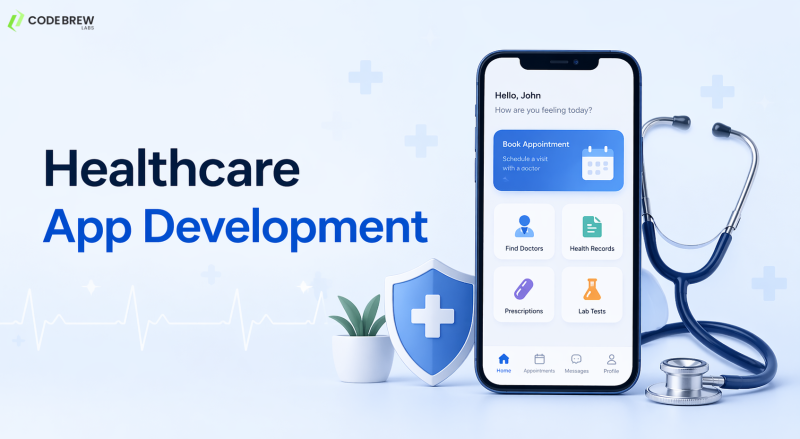
How AI is Transforming Healthcare App Development in 2026?
 samiksha
Artificial Intelligence (AI) is no longer a futuristic concept in healthcare—it’s a present-day reality driving massive innovation. In 2026, AI is fundamentally transforming healthcare app development by enabling smarter, faster, and more personalized digital health solutions.
From predictive diagnostics to virtual assistants, AI-powered healthcare apps are reshaping how patients receive care and how providers deliver it. Businesses investing in healthcare app development today are increasingly integrating AI to stay competitive and meet evolving user expectations.
In this guide, we’ll explore how AI is revolutionizing healthcare app development in 2026, its benefits, use cases, technologies, challenges, and what the future holds.
The Rise of AI in Healthcare App Development
Healthcare has always relied on data, but traditional systems faced challenges in processing and analyzing large volumes of medical data efficiently. AI has transformed this situation.
With the ability to analyze vast datasets, recognize patterns, and make predictions, AI is helping healthcare apps become more intelligent and proactive.
Why AI is a Game-Changer:
- Enables faster and more accurate diagnosis
- Improves patient outcomes through predictive insights
- Automates repetitive administrative tasks
- Enhances personalization in healthcare services
- Reduces operational costs
AI is not just enhancing healthcare app development—it’s redefining it.
Key Ways AI is Transforming Healthcare App Development
1. AI-Powered Diagnostics
AI algorithms can analyze medical data such as images, reports, and patient history to detect diseases early.
Impact:- Faster diagnosis
- Reduced human error
- Early detection of critical conditions
Healthcare apps integrated with AI can assist doctors in making better clinical decisions.
2. Personalized Treatment Plans
AI enables healthcare apps to deliver tailored treatment recommendations based on:
- Patient history
- Lifestyle data
- Genetic information
This level of personalization improves patient engagement and treatment effectiveness.
3. Virtual Health Assistants & Chatbots
AI-powered chatbots are becoming a standard feature in healthcare app development.
Capabilities:- Answer patient queries
- Schedule appointments
- Provide medication reminders
- Offer basic health advice
These assistants improve accessibility and reduce the workload on healthcare providers.
4. Predictive Analytics
AI helps predict potential health risks by analyzing historical and real-time data.
Use Cases:- Identifying high-risk patients
- Predicting disease outbreaks
- Preventive healthcare planning
Predictive analytics shifts healthcare from reactive to proactive.
5. Remote Patient Monitoring
AI enhances remote monitoring by analyzing data from wearable devices in real time.
Benefits:- Continuous health tracking
- Early detection of anomalies
- Reduced hospital visits
This is especially useful for chronic disease management.
6. Medical Image Analysis
AI can process medical images like X-rays, MRIs, and CT scans with high accuracy.
Advantages:- Faster image interpretation
- Improved diagnostic accuracy
- Reduced workload for radiologists
This capability is revolutionizing healthcare app development in diagnostic solutions.
7. Workflow Automation
AI automates repetitive tasks such as:
- Data entry
- Appointment scheduling
- Billing and claims processing
Automation improves efficiency and reduces human errors.
Technologies Behind AI in Healthcare App Development
To integrate AI effectively, developers rely on advanced technologies:
Machine Learning (ML)
Enables systems to learn from data and improve over time.
Natural Language Processing (NLP)
Helps apps understand and respond to human language.
Computer Vision
Used for analyzing medical images.
Deep Learning
Enhances pattern recognition and predictive accuracy.
Cloud Computing
Provides scalable infrastructure for AI processing.
Must-Have AI Features in Healthcare Apps
If you’re planning healthcare app development in 2026, consider including:
- AI-based symptom checker
- Smart chatbots
- Predictive health analytics
- Personalized recommendations
- Voice-enabled assistance
- Real-time health monitoring
These features enhance user experience and add significant value.
Benefits of AI in Healthcare App Development
Improved Patient Outcomes
AI enables early diagnosis and personalized care.
Enhanced User Experience
Smart features make apps more intuitive and engaging.
Operational Efficiency
Automation reduces workload and costs.
Data-Driven Decisions
AI provides actionable insights for better decision-making.
Scalability
AI-powered systems can handle large volumes of data efficiently.
Challenges of AI in Healthcare App Development
Despite its advantages, integrating AI comes with challenges:
Data Privacy & Security
Handling sensitive patient data requires strict security measures.
Regulatory Compliance
Healthcare apps must comply with regulations like HIPAA and GDPR.
High Development Costs
AI integration can increase initial investment.
Data Quality Issues
AI systems require high-quality data to function effectively.
Integration Complexity
Combining AI with existing healthcare systems can be challenging.
Healthcare App Development Cost with AI Integration
Adding AI features impacts the overall cost.
Estimated Cost:
- Basic AI Integration: $40,000 – $80,000
- Medium Complexity: $80,000 – $150,000
- Advanced AI Solutions: $150,000 – $400,000+
Costs vary based on features, data requirements, and complexity.
Best Practices for AI-Powered Healthcare App Development
To build a successful AI healthcare app:
- Focus on user-centric design
- Ensure data security and compliance
- Start with an MVP
- Use scalable technologies
- Continuously train AI models
- Test thoroughly before launch
Future of AI in Healthcare App Development
AI will continue to evolve and unlock new possibilities.
Future Trends:
- AI-driven virtual doctors
- Advanced predictive healthcare systems
- Integration with genomics
- Real-time health risk assessments
- Autonomous healthcare solutions
The future of healthcare app development is deeply intertwined with AI innovation.
Why Businesses Should Invest in AI Healthcare App Development
Investing in AI-powered healthcare app development offers:
- Competitive advantage
- Improved patient satisfaction
- Increased operational efficiency
- Higher ROI
- Long-term scalability
Businesses that adopt AI early will lead the digital healthcare revolution.
Conclusion
AI is transforming healthcare app development in 2026 by making digital health solutions smarter, faster, and more personalized. From predictive analytics to virtual assistants, AI is reshaping every aspect of healthcare delivery.
For businesses and startups, integrating AI into healthcare app development is no longer optional—it’s essential. With the right strategy, technology, and execution, AI-powered healthcare apps with Code Brew Labs can drive innovation, improve patient outcomes, and create sustainable growth.
Source:
Click for the: Full Story
You might like






You Might Like this