Close Menu
 World
World
 Biography
 Health
 Education
 Business
 Lifestyle
 Sports
 Technology
 Animals
 History
 Food
Food
 Religious
 Startups
 Movies
 Politics
 Fashion
 Covid
Covid
 Diet
Diet
 Fitness
 Marketing
 Travel
 Science
 Reviews
 Social media
 Stories
 Facts
Facts
 Art
Art
 Entertainment
vflex shop

Art
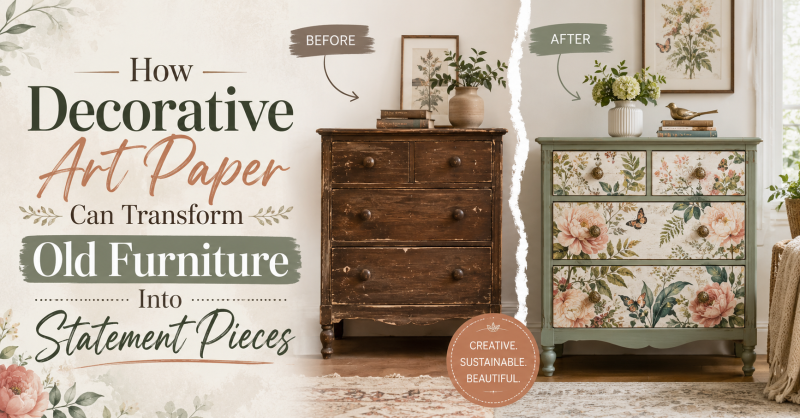
How Decorative Art Paper Can Transform Old Furniture Into Statement Pieces
 vflex shop
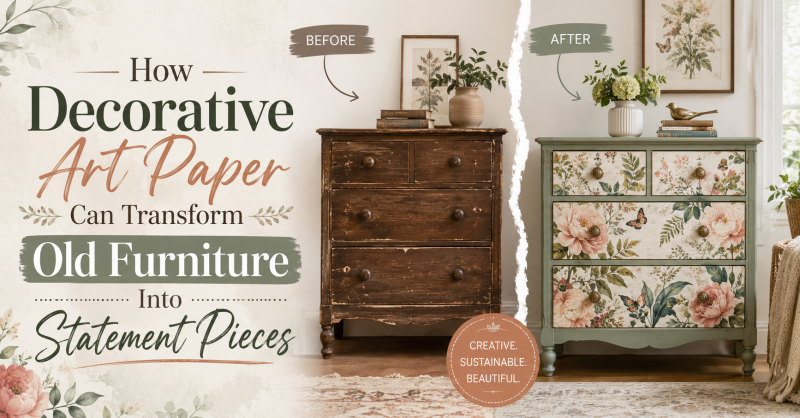
Old furniture often has more potential than it first appears to have. A dresser may feel dated because of its finish. A cabinet may no longer match the room around it. A side table may simply look too plain for a more expressive interior. Replacing these pieces is one option. Transforming them is another.
Decorative art paper gives furniture owners a creative way to refresh existing pieces without rebuilding them from scratch. It can introduce colour, pattern, artwork, and personality while keeping the original furniture structure intact. This makes it especially useful for upcycling projects where the goal is to create something distinctive rather than simply make an old item look new again.
With the right design and careful preparation, an ordinary piece of furniture can become a focal point that adds character to an entire room.
What Is Decorative Art Paper?
Decorative art paper is designed for creative applications such as decoupage, furniture makeovers, craft projects, and mixed media work. Unlike standard wrapping paper or basic craft paper, it is often created with detailed illustrations, artistic compositions, and finishes that work well across larger surfaces.
Furniture artists can choose from a wide range of styles. Floral patterns can create a soft and romantic effect. Botanical artwork works well in natural interiors. Vintage illustrations can suit older furniture forms. Darker artwork can make a piece feel more dramatic. Fantasy themes can create something playful and unexpected.
There are also specialist papers that allow furniture makers to create more polished results. Collections of artistic Dragonfly Crafts rice paper can work especially well for decorative furniture projects that need detailed imagery without relying on hand-painted artwork.
The main advantage is flexibility. Decorative art paper can be used across an entire surface or added only to selected areas to create visual interest.
Why Decorative Art Paper Works So Well on Old Furniture
Old furniture can remain structurally strong even when its surface looks outdated. This makes it an ideal base for a creative transformation.
Decorative art paper can quickly change how a piece feels. A plain cabinet can become more artistic. A simple chest of drawers can gain a strong visual identity. A worn tabletop can become the feature of the room rather than something that needs to be hidden.
Another benefit is access to detailed artwork. Creating the same level of detail by hand could require advanced painting skills and many hours of work. Decorative paper makes intricate patterns and illustrations more accessible.
It also gives furniture owners more freedom to personalize their homes. Instead of choosing from mass-produced furniture finishes, they can select artwork that reflects the mood and character they want to create.
This is one reason furniture upcycling has become such a useful approach for people who want interiors that feel more personal.
Turning Ordinary Furniture Into Statement Pieces
Statement furniture does not always need an unusual shape or expensive materials. Sometimes the visual treatment is what makes a piece memorable.
A basic dresser can become the main feature of a bedroom when its drawer fronts carry one continuous artwork design. A cabinet can stand out with decorative doors while the frame remains simple. A bedside table can gain more character through a single floral panel.
The most successful transformations often use contrast carefully. A detailed decorative design can be paired with a simple painted frame. Natural wood can sit beside artistic imagery. New hardware can be added to complete the overall look.
Collections such as the Forevermore collection can suit projects where a furniture artist wants to introduce romantic, expressive, or vintage-inspired visual details without overwhelming the entire piece.
The goal is not always to cover every surface. In many cases, selective placement creates a stronger result.
Creative Ways to Use Decorative Art Paper
There is no single way to use decorative paper on furniture. The right approach depends on the size of the piece, the artwork, and how bold the final design needs to feel.
Drawer Front Transformations
Drawer fronts provide a natural surface for decorative artwork. A large image can be divided across several drawers so that the complete design appears when the drawers are closed.
Another option is to use different sections of the same artwork on individual drawers. This creates variation while keeping the overall furniture design connected.
A plain chest of drawers can become much more visually interesting through this simple treatment.
Cabinet Door Accents
Cabinet doors are another useful area for decorative paper. Instead of changing the whole cabinet, the doors can become the main visual feature.
This works particularly well on older cupboards, sideboards, and display cabinets. Decorative artwork can also be framed by painted borders so that the finished piece feels intentional rather than heavily covered.
Tabletop Features
Tabletops can act almost like a canvas.
A decorative image across the top of a side table or console can introduce a striking detail without changing the rest of the furniture. The surrounding frame can remain painted or natural depending on the desired style.
Because tabletops receive regular use, an appropriate protective finish is important once the artwork is fully dry.
Interior Surprises
Decorative art paper does not always need to be visible from across the room.
It can also be added inside drawers, cupboards, shelves, and storage compartments. These hidden areas create a more detailed furniture makeover without making the exterior too busy.
This approach works especially well for people who prefer subtle design details.
Mixed Material Furniture
Some of the most interesting furniture transformations combine several finishes rather than relying on one technique.
Painted surfaces can sit alongside decorative paper. Natural wood can remain exposed around artwork. Metallic handles can add contrast. Foils and textured finishes can introduce another layer of detail.
Products from Artistic Painting Studio can be considered when a project combines decorative paper with creative finishing techniques such as foils or complementary surface effects.
Choosing the Right Artwork for the Furniture
The artwork should suit both the furniture and the room where the piece will be used.
Furniture size is an important starting point. Large cabinets and dressers can usually handle more detailed imagery. Smaller tables may work better with one carefully selected section of a larger design.
Colour also matters. The artwork does not have to match every colour already in the room. It does need to feel connected to the wider palette.
The furniture style can influence the choice as well. Ornate vintage furniture may suit romantic imagery. A simple modern cabinet may benefit from bold botanical artwork or abstract patterns.
Design scale is equally important. Very small patterns can disappear on large furniture. Very large imagery may lose impact if it is cut into too many small sections.
For dramatic or romantic furniture projects, Queen of Hearts rice paper prints can provide inspiration for pieces that are intended to feel expressive and visually distinctive.
Hardware can then be selected to complement the chosen artwork. Handles, knobs, and pulls can make a significant difference to the finished look.
Basic Furniture Preparation Before Applying Decorative Paper
Good preparation helps decorative art paper sit more smoothly and remain visually consistent.
A basic process can include:
- Clean the furniture thoroughly to remove dust, grease, and residue.
- Remove handles, knobs, or other hardware where needed.
- Repair damaged corners, cracks, or uneven areas.
- Lightly sand rough surfaces when appropriate.
- Prepare or prime the surface so the paper has a consistent base.
- Measure the area carefully before cutting or positioning the artwork.
- Apply the decorative paper gradually and smooth it carefully.
- Check for trapped air, creases, or uneven edges.
- Allow the surface to dry fully.
- Apply a suitable protective finish if the furniture requires one.
- Reattach the original hardware or replace it with something that better suits the new design.
Supporting materials also matter during this stage. Mediums, finishes, paints, and decorative products from collections such as Pentart products can be useful when a furniture project involves several finishing techniques.
The exact process may vary depending on the type of furniture and the paper being used. Testing materials on a small area first can help prevent avoidable mistakes.
How Decorative Furniture Supports More Sustainable Interiors
Furniture upcycling is also a practical way to make better use of pieces that are still functional.
A cabinet may no longer suit a room but still have many years of use left. A dresser may have a dated finish while its construction remains solid. Transforming the surface can make the piece relevant again without replacing it unnecessarily.
This approach helps extend the useful life of furniture and encourages creative reuse.
It can also make interior updates more personal. Instead of buying a replacement that looks similar to furniture in many other homes, an existing piece can be redesigned around a specific visual idea.
The result is often a piece with more individual character.
Making the Finished Piece Look Professionally Designed
A successful furniture makeover depends on more than the artwork itself.
The surrounding paint colour should support the decorative design rather than compete with it. Neutral colours can help bold artwork stand out. Stronger colours can work when they are pulled directly from the image.
Clean edges also matter. Careful trimming and neat placement can make a major difference to the final appearance.
Hardware can help complete the design. Old handles may work on some vintage pieces. Other projects may benefit from new knobs or pulls that better match the colour and style of the artwork.
It is also useful to avoid too many competing details. Decorative paper, paint, wood, metallic finishes, and hardware can work together. They do not all need to demand equal attention.
Furniture artists looking for more distinctive artwork and creative papers can also explore specialist resources from VFLEX when planning furniture transformations that need a more individual visual direction.
The strongest designs usually feel balanced. Every finish has a purpose and the furniture still feels like one complete piece.
Conclusion
Old furniture does not always need to be replaced to feel relevant again.
Decorative art paper gives furniture owners a flexible way to rethink dressers, cabinets, tables, and other everyday pieces. It can introduce detailed artwork, create stronger visual focal points, and help existing furniture fit into a completely different interior style.
The most effective transformations start with thoughtful artwork selection and careful preparation. They also avoid adding decoration simply for the sake of it.
When decorative paper is used with purpose, a forgotten furniture piece can become one of the most distinctive elements in the room.
Source:
Click for the: Full Story
You might like