



 Close Menu
 World
World
 Biography
 Health
 Education
 Business
 Lifestyle
 Sports
 Technology
 Animals
 History
 Food
Food
 Religious
 Startups
 Movies
 Politics
 Fashion
 Covid
Covid
 Diet
Diet
 Fitness
 Marketing
 Travel
 Science
 Reviews
 Social media
 Stories
 Facts
Facts
 Art
Art
 Entertainment
suzie iris

Education
How Do Real World Asset Tokenization Services Help in Capital Market Innovation?
 suzie iris
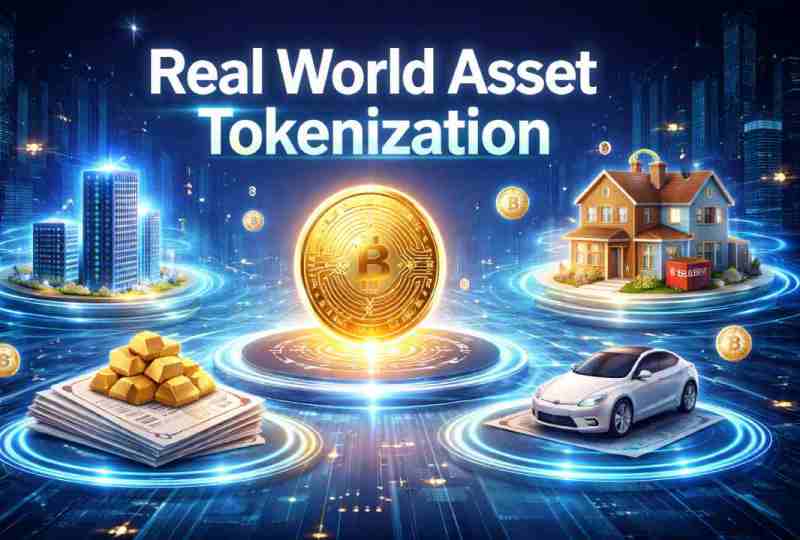
Real World Asset (RWA) tokenization is reshaping the structural foundations of capital markets by introducing programmable, transparent, and highly accessible financial instruments. Rather than functioning as a parallel system, tokenization services are increasingly embedded into existing capital market frameworks, enabling efficiency gains, new investment models, and broader participation. The innovation lies not only in digitizing assets but in redefining how capital is created, distributed, and managed across global financial ecosystems.
Bridging Traditional Assets with Digital Infrastructure
One of the most fundamental contributions of RWA tokenization services is their ability to bridge traditional financial assets with blockchain-based infrastructure. In conventional capital markets, asset ownership is recorded through centralized registries and intermediaries such as custodians, clearing houses, and transfer agents. These systems often involve delays, reconciliation complexities, and limited transparency.
Tokenization replaces fragmented record-keeping with a unified ledger where ownership and transaction history are recorded immutably. This creates a single source of truth, reducing operational inefficiencies and minimizing disputes. As a result, capital markets benefit from faster settlement cycles, often shifting from T+2 systems to near-instant or real-time settlement environments.
Enhancing Liquidity in Traditionally Illiquid Markets
Capital markets have historically struggled with liquidity constraints in asset classes such as real estate, private equity, and infrastructure investments. These assets are typically difficult to trade due to high entry barriers, long holding periods, and limited secondary markets.
RWA tokenization services address this challenge by converting large, illiquid assets into divisible digital tokens. These tokens can be traded on secondary platforms, enabling partial ownership transfers without requiring the sale of the entire asset.
This innovation leads to:
- Increased trading activity in previously illiquid markets
- More efficient price discovery
- Reduced capital lock-in periods
By unlocking liquidity, tokenization enhances capital efficiency and allows investors to rebalance portfolios more dynamically.
Enabling Fractional Ownership and Broader Market Access
Traditional capital markets often restrict participation to institutional investors or high-net-worth individuals due to large minimum investment requirements. Tokenization disrupts this model by enabling fractional ownership, allowing assets to be divided into smaller units that are accessible to a wider investor base.
This democratization of access introduces a more inclusive investment environment where retail investors can participate in asset classes that were previously out of reach. It also enables global participation, as blockchain-based platforms are not constrained by geographic boundaries in the same way as traditional financial systems.
As a result, capital markets experience:
- A broader and more diverse investor base
- Increased capital inflows
- Enhanced market depth
Streamlining Issuance and Fundraising Processes
RWA tokenization services significantly improve the efficiency of asset issuance and capital raising. In traditional markets, issuing securities involves multiple intermediaries, extensive documentation, and lengthy approval processes.
Tokenization introduces programmable issuance mechanisms through smart contracts, which automate many aspects of the process, including:
- Investor onboarding and compliance checks
- Allocation of tokens during issuance
- Distribution of proceeds and returns
This reduces administrative overhead and shortens the time required to bring assets to market. For issuers, this means faster access to capital. For investors, it means quicker participation in new opportunities.
Reducing Costs Through Disintermediation
Capital markets rely heavily on intermediaries to facilitate transactions, ensure compliance, and maintain records. While these intermediaries play important roles, they also contribute to higher transaction costs and operational complexity.
Tokenization services reduce the reliance on intermediaries by embedding many of their functions into blockchain protocols and smart contracts. This process, often referred to as disintermediation, leads to:
- Lower transaction and settlement costs
- Reduced administrative burdens
- Improved operational efficiency
By minimizing unnecessary layers, capital markets become more streamlined and cost-effective.
Improving Transparency and Trust
Transparency is a critical factor in maintaining trust within capital markets. Traditional systems often suffer from information asymmetry, where access to data is unevenly distributed among participants.
Tokenized assets operate on distributed ledgers where transaction data is visible and verifiable. This transparency ensures that:
- Ownership records are easily auditable
- Transactions can be traced in real time
- Market participants have equal access to information
Enhanced transparency reduces the risk of fraud, improves regulatory oversight, and strengthens investor confidence.
Enabling Programmable Financial Instruments
One of the most transformative aspects of tokenization is programmability. Smart contracts allow financial instruments to be embedded with predefined rules and logic, enabling automated execution of complex processes.
In capital markets, this enables:
- Automatic dividend or interest payments
- Real-time compliance enforcement
- Conditional transfers based on regulatory requirements
- Dynamic asset rebalancing
Programmable assets reduce manual intervention and ensure that contractual obligations are executed accurately and efficiently.
Supporting 24/7 Global Markets
Traditional capital markets operate within fixed trading hours and are often segmented by geographic regions. This limits the ability of investors to react to global events in real time.
Tokenization services enable continuous trading on blockchain networks, allowing markets to operate 24/7. This creates a more dynamic and responsive financial environment where:
- Investors can trade at any time
- Global participation is seamless
- Market efficiency is enhanced
The shift toward always-on markets aligns with the increasing globalization of finance.
Strengthening Compliance and Regulatory Integration
Regulatory compliance is a critical aspect of capital market operations. Tokenization services incorporate compliance mechanisms directly into the asset lifecycle through programmable rules.
These include:
- Know Your Customer (KYC) and Anti-Money Laundering (AML) checks
- Transfer restrictions based on jurisdiction
- Automated reporting to regulators
By embedding compliance into the infrastructure, tokenization reduces the risk of regulatory violations and simplifies oversight processes.
Facilitating Cross-Border Investment
Cross-border investment in traditional capital markets is often hindered by regulatory differences, currency conversions, and settlement delays. Tokenization services streamline these processes by providing a unified digital framework.
Blockchain-based systems enable:
- Faster cross-border transactions
- Reduced reliance on correspondent banking networks
- Simplified currency exchange through digital assets
This facilitates global capital flows and enhances the efficiency of international investment.
Driving Innovation in Financial Products
RWA tokenization is enabling the creation of new financial products that were not feasible in traditional systems. These include hybrid instruments that combine features of multiple asset classes, as well as dynamic investment structures that adapt to market conditions.
Examples include:
- Tokenized funds with automated rebalancing
- Revenue-sharing tokens linked to real-world performance
- Asset-backed tokens with programmable yield structures
Such innovations expand the range of investment opportunities and contribute to the evolution of capital markets.
Improving Risk Management and Data Accessibility
Access to real-time data is essential for effective risk management. Tokenization enhances data availability by providing continuous visibility into asset performance and market activity.
This allows:
- Better risk assessment and modeling
- Faster identification of market trends
- Improved decision-making for investors and institutions
Enhanced data transparency contributes to more resilient and efficient capital markets.
Conclusion
Real World Asset tokenization services are playing a pivotal role in driving innovation within capital markets. By integrating traditional assets with blockchain infrastructure, these services are transforming how capital is raised, allocated, and traded.
The impact is evident across multiple dimensions, including liquidity enhancement, cost reduction, transparency improvement, and global accessibility. Tokenization is not merely an incremental improvement but a structural shift that redefines the mechanics of financial systems.
As adoption continues to grow, capital markets are likely to become more inclusive, efficient, and technologically advanced. The ongoing evolution of tokenization services signals a future where financial innovation is deeply rooted in programmability, interoperability, and decentralized infrastructure.
Source:
Click for the: Full Story
You might like









You Might Like this