Close Menu
 World
World
 Biography
 Health
 Education
 Business
 Lifestyle
 Sports
 Technology
 Animals
 History
 Food
Food
 Religious
 Startups
 Movies
 Politics
 Fashion
 Covid
Covid
 Diet
Diet
 Fitness
 Marketing
 Travel
 Science
 Reviews
 Social media
 Stories
 Facts
Facts
 Art
Art
 Entertainment
Ghyoor Qasim

Technology
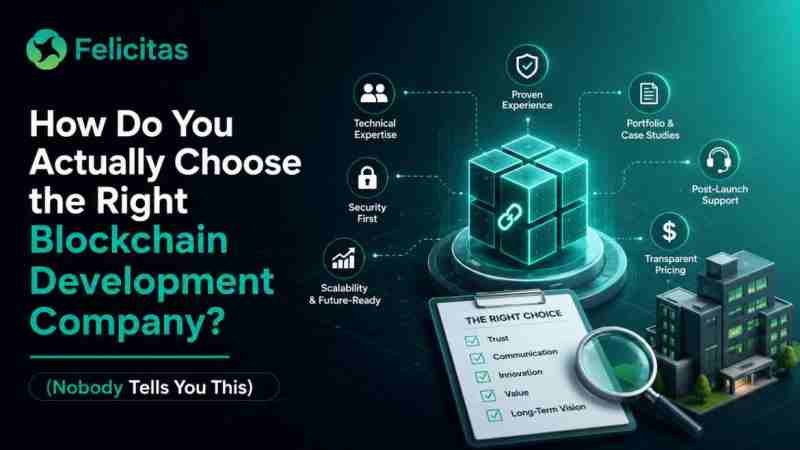
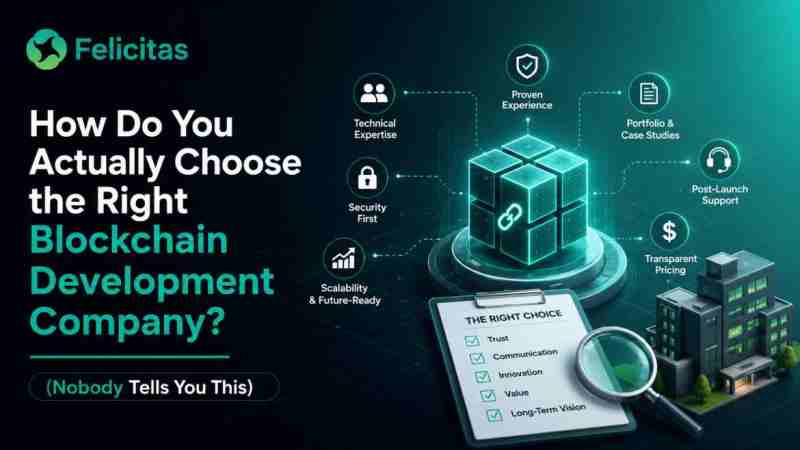
How Do You Actually Choose the Right Blockchain Development Company? (Nobody Tells You This)
 Ghyoor Qasim
Let's be honest for a second. You've probably had five sales calls this month with five different agencies, and every single one of them said the exact same things. "We're a leading Blockchain Development Company." "We deliver custom solutions." "Security is our top priority." And after all five calls, you're no closer to actually knowing who's good and who's just good at talking.
That's the real problem nobody addresses. Not "what is blockchain development" — you already know that. The actual problem is: how do you cut through the sameness and figure out who deserves your budget, your timeline, and your product's reputation?
Here's the answer, minus the fluff.
Why Does Everyone Sound Exactly the Same?
Because most agencies are copying each other's marketing, not their engineering. The words "innovative," "cutting-edge," and "end-to-end Blockchain Development Solutions" show up on almost every homepage in this space, and none of them tell you anything useful. So stop reading homepages and start asking questions that a copywriter can't answer for the sales rep.
Things worth asking instead:
- What's the worst technical problem you've hit on a live project, and how did you fix it?
- Name a project that didn't go as planned. What happened?
- Who exactly will be writing my smart contracts — senior devs or someone two months out of a bootcamp?
If the answers get vague or defensive, that's your answer right there.
What Should You Actually Look At Before Hiring Anyone?
Skip the pitch deck. Go straight to these:
Live products, not concepts
Anyone can mock up a roadmap. Ask for products that are actually running, with real transaction volume.
Post-launch history
Has anything they built ever been exploited? A team that answers honestly and explains what changed afterward is more trustworthy than one that claims a perfect record and says nothing else.
Category match
DeFi, tokenization, NFT marketplaces, enterprise ledgers, Web3 games — these are not interchangeable skill sets. A team great at one isn't automatically great at another. Ask for work in your exact category.
Support after delivery
Plenty of vendors are fine at shipping v1 and disappear the moment it's live. Ask directly what maintenance and patching looks like six months out.
Is "Custom" Actually Custom, or Just a Word on the Website?
This is where a lot of Blockchain Development Services quietly cut corners. A real Custom Blockchain Development Services provider starts by asking about your business logic, your compliance needs, your expected user behavior, your growth plans — before writing a single line of code.
A team faking "custom" will instead:
- Hand you a templated smart contract with your logo swapped in
- Skip the discovery conversation entirely
- Quote you a price before understanding your actual requirements
If a vendor can price your project in the first call, that's not efficiency. That's a red flag.
What Does Real Security Actually Look Like (Not Just Talk)?
Every agency says security is their priority. Say it back to them and ask them to prove it:
Do they use third-party audits, or just internal review?
Have they used formal verification or established testing frameworks?
Do they have a documented incident response process — actually written down?
Do completed products have a bug bounty program?
If they get cagey about naming their auditors, or the answer is "we're very careful," push further. Careful isn't a process.
Why Does Pricing Feel So Inconsistent Across Agencies?
Because most serious blockchain work has unknowns that only show up mid-build — network conditions change, third-party integrations get messy, requirements shift once real users test the thing. A fixed, one-number quote on anything beyond a narrow, well-defined scope should make you nervous, not relieved.
What a genuine Top Blockchain Development Company usually offers instead:
- Milestone-based pricing tied to actual deliverables
- Clear documentation of what's included in each phase
- Upfront honesty about what's not included — audits, deployment, post-launch support
If the number sounds too clean, ask what it's leaving out.
Who's Really Writing Your Code?
Senior engineers show up for the sales call and the architecture discussion. Then, sometimes, the actual build quietly gets handed to junior developers still learning the ropes — on your project, at your cost. That's not disqualifying by itself; everyone starts somewhere. But you have every right to know who's actually touching your codebase, and what oversight exists over their work.
Ask this directly. Don't assume.
So How Do You Actually Decide?
Stop comparing homepages. Start comparing:
- What they've shipped and how it's held up
- Whether their specialization matches your actual use case
- Whether their security process is documented or just claimed
- Whether their pricing reflects real scope or hides gaps
- Whether they're transparent about who's on your project
The agencies like PrimaFelicitas worth trusting won't flinch when you ask hard questions — they'll welcome it, because they know their work holds up under scrutiny. The ones optimizing for a quick close will dodge, deflect, or repeat the same buzzwords you've already heard five times this month.
FAQ
Q: How long does it usually take to build a blockchain product?
It depends heavily on complexity. A simple token or smart contract deployment can take a few weeks, while a full DeFi protocol, tokenization platform, or enterprise solution can take several months, especially once audits and testing are factored in. Be skeptical of any agency promising a complex build in an unusually short timeline.
Q: Should I choose an agency based only in my country?
Not necessarily. Many strong blockchain teams work remotely and across time zones. What matters more is their track record, communication style, and how well they understand your specific use case — not their physical location.
Q: What's the difference between Blockchain Development Services and Blockchain Development Solutions?
In practice, "services" usually refers to the work an agency performs — development, audits, consulting — while "solutions" often refers to the end product or system delivered to solve your specific problem. Vendors use these terms loosely, so focus on what's actually being delivered rather than which word they use.
Q: How much should I expect to pay for custom blockchain development?
Costs vary widely based on complexity, chain choice, and scope — a basic smart contract project costs far less than a full tokenization platform or enterprise-grade solution. Rather than anchoring to a number, ask for a milestone-based breakdown so you can see exactly what you're paying for at each stage.
Q: How do I know if a company is really a "top" blockchain development company or just marketing itself that way?
Ignore the label entirely. Look at live products, audit history, client references you can actually call, and how specific their answers are when you ask technical questions. Reputation shows up in details, not taglines.
Q: What happens if my project needs changes after launch?
Any serious provider should have a clear post-launch support plan — patching, monitoring, and handling upgrades as your product or the underlying chain evolves. Ask about this before signing, not after something breaks.
Source:
Click for the: Full Story
You might like