Close Menu
 World
World
 Biography
 Health
 Education
 Business
 Lifestyle
 Sports
 Technology
 Animals
 History
 Food
Food
 Religious
 Startups
 Movies
 Politics
 Fashion
 Covid
Covid
 Diet
Diet
 Fitness
 Marketing
 Travel
 Science
 Reviews
 Social media
 Stories
 Facts
Facts
 Art
Art
 Entertainment
Jennifer Letty

Business
How Does a Crypto Arbitrage Trading Bot Work? A Beginner-Friendly Guide
 Jennifer Letty
Have you ever noticed that the price of the same cryptocurrency can be slightly different across two exchanges?
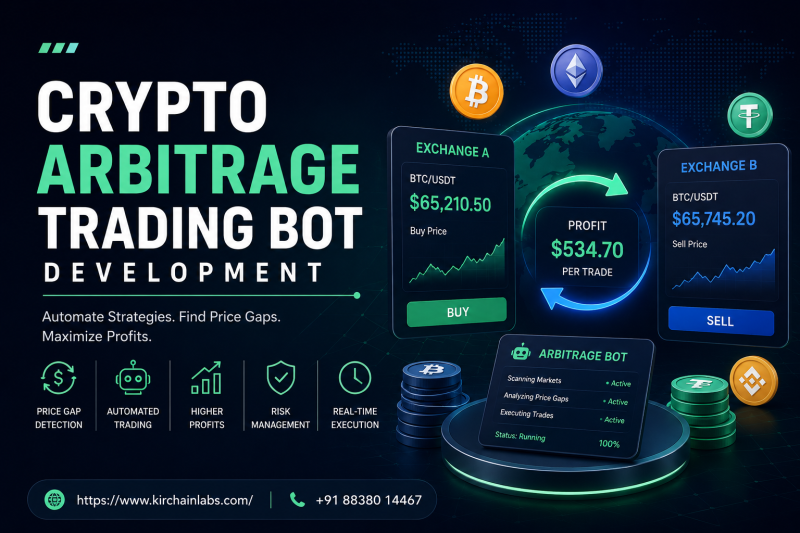
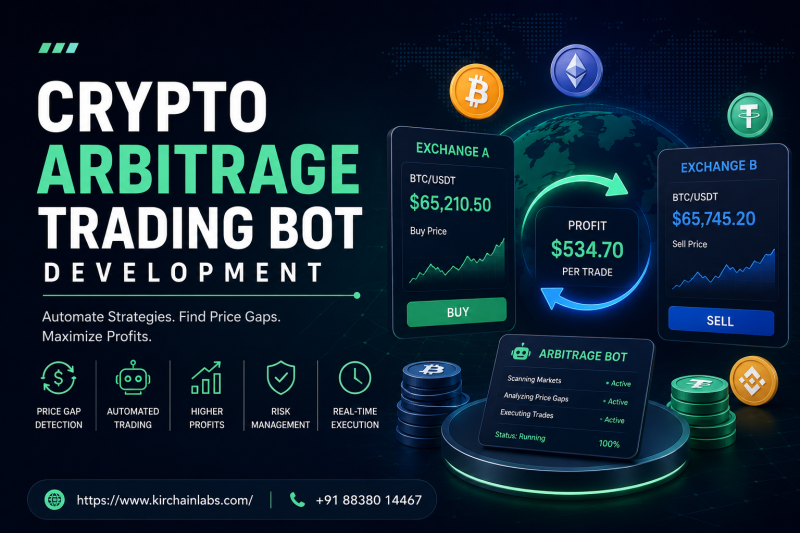
For example, Bitcoin might be available at one price on Exchange A and at a slightly higher price on Exchange B. This difference may create an arbitrage opportunity.
But manually watching multiple exchanges, comparing prices, calculating costs, and reacting quickly is difficult. This is where a crypto arbitrage trading bot can become useful.
A crypto arbitrage trading bot is software designed to monitor cryptocurrency markets, identify potential price differences, and automate predefined trading actions based on specific strategies.
But how does a crypto arbitrage trading bot work? Let’s break it down in simple terms.
What Is Crypto Arbitrage?
Crypto arbitrage is based on identifying price differences for the same asset across different markets or exchanges.
Imagine:
Exchange A: Bitcoin = $100,000
Exchange B: Bitcoin = $100,500
Potential price difference = $500
In theory, a trader could buy on the lower-priced exchange and sell on the higher-priced exchange.
Therefore, a price difference doesn't automatically mean there is a profitable opportunity.
How Does a Crypto Arbitrage Trading Bot Work?
The basic working process can be understood as a continuous cycle:
Monitor → Compare → Analyze → Execute → Track
The bot connects with supported cryptocurrency exchanges through APIs and continuously receives market information. It then compares prices and evaluates whether a potential arbitrage opportunity meets the predefined conditions.
If the opportunity satisfies the strategy rules, the bot can initiate the required actions automatically.
Step 1: Connecting to Multiple Exchanges
The first step in crypto arbitrage trading bot development is connecting the bot with cryptocurrency exchanges.
Exchange APIs can provide information such as:
- Current asset prices
- Order-book data
- Trading pairs
- Account balances
- Market depth
- Order status
Multiple exchange connections allow the bot to compare market conditions without requiring the user to manually open several platforms.
Step 2: Collecting Real-Time Market Data
Once connected, the bot continuously collects market data. Speed matters because cryptocurrency prices can change rapidly.
A well-designed system may monitor:
- Bid and ask prices
- Trading volume
- Order-book depth
- Price movements
- Liquidity
- Trading fees
- Available balances
The goal is to create a current picture of market conditions.
Step 3: Identifying Potential Opportunities
This is where the arbitrage strategy comes into play. The bot compares the prices of the same asset across different exchanges or markets.
For instance:
Exchange A → Lower price
Exchange B → higher price
The system then calculates whether the price difference is large enough to potentially justify further action after considering relevant costs.
This is an important part of automated crypto arbitrage trading because the bot doesn't simply look for the largest price difference. It needs to evaluate the opportunity in context.
Step 4: Applying Trading Rules
Businesses can define specific conditions that determine when the bot should act. For example, a strategy might consider:
Minimum price difference.
- Maximum acceptable slippage
- Trading volume requirements
- Available liquidity
- Transaction costs
- Maximum trade size
- Risk limits
This gives the system a structured decision-making framework instead of allowing it to act randomly based on short-term price movements.
Step 5: Executing the Strategy
When predefined conditions are satisfied, the bot can send orders through exchange APIs. The objective is generally to execute the intended transactions as efficiently as possible.
Execution speed is important because an arbitrage opportunity may disappear quickly.
However, execution is not guaranteed at the expected price. Market movement, API delays, liquidity limitations, and order-book changes can all affect the outcome.
Step 6: Monitoring the Transaction
A crypto arbitrage bot doesn't necessarily stop after placing an order. It can continue monitoring:
- Order status
- Execution prices
- Remaining balances
- Transaction costs
- Market movements
- Completed and failed orders
This allows the system to maintain a record of its activities and provide useful information through dashboards or reports.
What Features Should a Crypto Arbitrage Trading Bot Have?
When businesses explore how to build a crypto arbitrage trading bot, functionality should be designed around the strategy rather than simply adding as many features as possible.
Important components can include:
- Multi-exchange API integration
- Real-time price monitoring
- Opportunity detection
- Automated order management
- Portfolio and balance tracking
- Risk controls
Security should also receive significant attention because exchange API credentials and trading permissions need to be handled carefully.
Why Are Businesses Interested in Crypto Arbitrage Bots?
The main attraction is automation. Instead of requiring someone to constantly monitor multiple markets, software can perform repetitive monitoring and calculations based on predefined rules.
Businesses may use such systems to:
- Reduce manual market monitoring
- Compare multiple exchanges efficiently
- React faster to selected opportunities
- Organize trading operations
- Analyze market data continuously
- Apply predefined risk parameters
However, automation doesn't eliminate market risk. Arbitrage opportunities can disappear quickly, and costs, volatility, liquidity, technical failures, and regulatory requirements can affect results.
Final Thoughts
A crypto arbitrage trading bot essentially combines market data, automated analysis, predefined strategies, and order management into one system.
The concept may sound complicated initially, but its basic workflow is straightforward: monitor markets, identify price differences, evaluate the opportunity, execute according to predefined rules, and continuously track the results.
For businesses exploring crypto arbitrage bot development, the real challenge isn't simply creating a bot that detects price differences. It is building a reliable system that can handle real-time data, execution challenges, security, costs, and changing market conditions.
With the right strategy and technical foundation, a crypto arbitrage trading bot can become a powerful automation tool for businesses looking to streamline how they monitor and respond to opportunities across digital asset markets.
Source:
Click for the: Full Story
You might like