Close Menu
 World
World
 Biography
 Health
 Education
 Business
 Lifestyle
 Sports
 Technology
 Animals
 History
 Food
Food
 Religious
 Startups
 Movies
 Politics
 Fashion
 Covid
Covid
 Diet
Diet
 Fitness
 Marketing
 Travel
 Science
 Reviews
 Social media
 Stories
 Facts
Facts
 Art
Art
 Entertainment
Yatin Samra

Technology
How Fleet Management Software Improves Business Efficiency: Features, Benefits, and Implementation Guide
 Yatin Samra
The process of operating a fleet consists of various components, including tracking of the vehicles, arranging drivers’ schedules, maintenance, fueling, and route planning. The more vehicles are present in the fleet, the more complicated it becomes to manage everything by means of spreadsheets, calls, and separate systems.
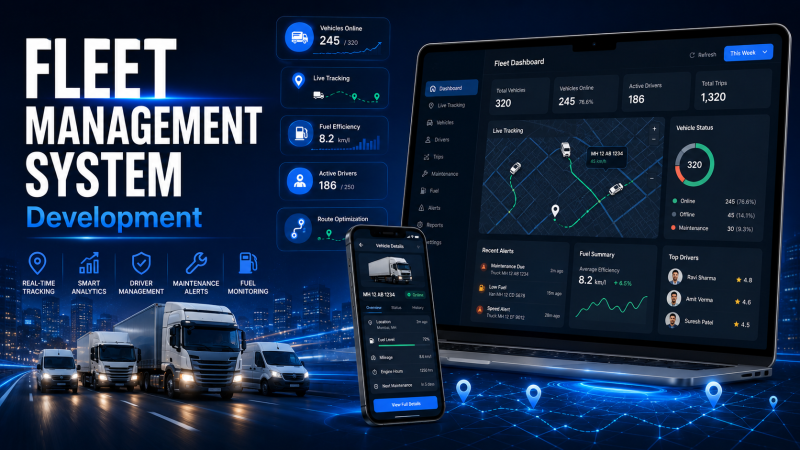
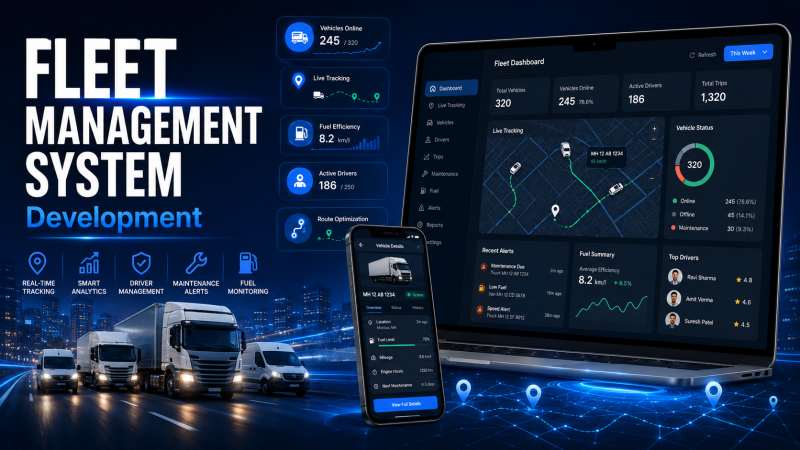
Modern fleet management solutions allow a business to track, organize, assess, and automate all these processes through a single system. When developing fleet management software, companies must understand the technology and its benefits for the business.
What Is Fleet Management Software?
Fleet management software is a digital platform designed to help businesses manage vehicles, drivers, assets, and transportation-related operations.
Depending on the industry, the platform can support:
- Vehicle tracking
- Driver management
- Route planning
- Dispatching
- Maintenance
- Fuel monitoring
- Asset utilization
- Reporting
- Analytics
- Notifications
The software can connect information from vehicles, drivers, GPS devices, telematics systems, and other business applications into a centralized platform.
1. Real-Time Vehicle Tracking
GPS tracking provides fleet managers with visibility into vehicle locations and trip activity.
A tracking dashboard can display:
- Current location
- Vehicle status
- Trip history
- Route progress
- Estimated arrival time
- Route deviations
This information can help managers coordinate field operations more effectively and respond quickly when schedules change.
For businesses managing vehicles across different cities in the USA, centralized tracking can make geographically distributed operations easier to monitor.
2. Intelligent Route Planning
Route optimization can help reduce unnecessary travel and improve productivity.
A fleet platform can use mapping and routing services to consider:
- Distance
- Traffic conditions
- Delivery windows
- Multiple stops
- Vehicle availability
- Service priorities
Instead of creating routes manually, dispatchers can use software to identify efficient travel plans and make adjustments when conditions change.
3. Automated Driver Scheduling
Driver scheduling can become complicated when businesses manage multiple vehicles, employees, locations, and assignments.
A fleet platform can help automate job allocation based on:
- Driver availability
- Location
- Skills
- Vehicle type
- Working hours
- Job requirements
This can reduce administrative effort while helping businesses make better use of available drivers.
4. Preventive Maintenance Management
Vehicle maintenance is essential for operational continuity.
A maintenance module can track service schedules, mileage, inspections, repair history, and maintenance expenses.
Automated reminders can notify fleet managers when vehicles are approaching scheduled maintenance intervals.
This can help businesses take a preventive approach instead of waiting for vehicles to develop problems that result in unexpected downtime.
5. Fuel and Cost Monitoring
Fuel expenses can represent a significant portion of fleet operating costs.
Fleet software can consolidate fuel transactions with vehicle and mileage data to help managers understand overall fuel efficiency.
Useful metrics can include:
- Fuel consumption
- Fuel cost per vehicle
- Cost per mile
- Mileage
- Fuel efficiency
- Unusual consumption patterns
These insights can help businesses identify opportunities to control operating expenses.
6. Driver Performance Insights
Telematics data can provide information about driving patterns and vehicle usage.
Depending on the available data, managers may be able to monitor:
- Excessive idling
- Harsh acceleration
- Sudden braking
- Route deviations
- Other predefined driving events
These insights can support driver training and operational improvement programs. Any monitoring program should be implemented transparently and in accordance with applicable laws and company policies.
7. Automated Alerts and Notifications
Fleet managers cannot manually monitor every vehicle and operational event. Automated alerts can help bring important situations to their attention.
Notifications can be triggered by:
- Maintenance deadlines
- Route deviations
- Geofence events
- Vehicle status changes
- Excessive idling
- Assignment updates
- Other predefined conditions
This allows managers to focus on exceptions while routine processes remain automated.
8. Centralized Fleet Analytics
Fleet platforms generate large amounts of operational data. Analytics can transform that information into useful insights.
A management dashboard can track:
- Vehicle utilization
- Driver activity
- Maintenance expenses
- Fuel consumption
- Mileage
- Route efficiency
- Vehicle downtime
- Operating costs
Businesses can use these metrics to identify inefficient processes and make better resource-allocation decisions.
9. Better Asset Utilization
Businesses may have vehicles that are underused while others are operating at maximum capacity.
Fleet analytics can show how frequently vehicles are being used and how much time they spend idle or undergoing maintenance.
This information can support decisions about:
- Vehicle allocation
- Fleet expansion
- Vehicle replacement
- Scheduling
- Asset retirement
Instead of relying on assumptions, managers can make decisions based on actual utilization data.
10. Improved Customer Service
Fleet technology can also improve the customer experience.
Businesses can use real-time information to provide customers with:
- Estimated arrival times
- Delivery updates
- Service notifications
- Appointment confirmations
- Completion updates
This can be particularly useful for logistics, delivery, field-service, and transportation businesses.
Essential Components of a Modern Fleet Platform
A complete fleet management ecosystem generally includes several connected components.
Fleet Manager Dashboard
The administrative interface provides visibility into vehicles, drivers, routes, maintenance, expenses, and analytics.
Driver Application
Drivers can access assignments, navigation, job information, notifications, and status updates from a mobile device.
GPS and Telematics Integration
These integrations provide vehicle and operational data to the platform.
Maintenance Module
This component manages servicing, inspections, repair records, and maintenance schedules.
Reporting and Analytics
Dashboards and reports help managers evaluate fleet performance and operating costs.
Integration Layer
APIs can connect the platform with mapping services, fuel systems, accounting software, CRM tools, and other business applications.
How to Build Scalable Fleet Management Software
When planning fleet management software development, businesses should think about future requirements rather than only the current fleet size.
A platform may eventually need to support thousands of vehicles, multiple user roles, high-frequency GPS updates, and large volumes of operational data.
A scalable architecture can use:
- Cloud infrastructure
- Modular services
- Secure APIs
- Database optimization
- Caching
- Load balancing
- Real-time processing
- Monitoring and alerts
This approach can help the system accommodate growth without significant performance issues.
Security and Data Protection
Fleet platforms can contain sensitive information about vehicles, drivers, routes, customers, and business operations.
Security measures should therefore be included throughout the development process.
Important considerations include:
- Secure authentication
- Role-based access control
- Encryption
- API security
- Audit logs
- Data backups
- Monitoring
- Regular security testing
Access should be limited according to user responsibilities so that employees only see the information necessary for their roles.
Compliance Considerations in the USA
Fleet businesses operating in the USA may need to address different operational and regulatory requirements depending on their vehicle types, industry, and locations.
Certain commercial fleets may require workflows related to driver records, inspections, electronic records, or hours-of-service requirements.
Because requirements can vary, businesses should identify applicable obligations during product planning and obtain appropriate legal or compliance guidance when developing related functionality.
A Practical Development Roadmap
A fleet platform does not need to launch with every possible feature.
A phased approach can help businesses manage complexity.
Phase 1: Vehicle tracking, driver management, scheduling, maintenance, and basic reporting.
Phase 2: Route optimization, fuel management, automated alerts, mobile applications, and advanced analytics.
Phase 3: Predictive maintenance, AI-powered insights, advanced telematics, and additional integrations.
This allows the business to validate the core platform before introducing more sophisticated capabilities.
Conclusion
There could be many ways in which fleet management software solutions could assist companies to get rid of manual processes and become more connected and data-driven.
In case a company is planning to develop a fleet management software solution, the key to success would be developing a solution based on actual needs, while taking into account security, scalability, and integration issues.
Regardless of whether a company owns a local fleet or manages its fleet located at different sites throughout the USA, a well-designed solution could bring a lot of value.
To know more about this platform development, click the link below and watch the video.
Watch the video to learn more about fleet management software development
Source:
Click for the: Full Story
You might like