Close Menu
 World
World
 Biography
 Health
 Education
 Business
 Lifestyle
 Sports
 Technology
 Animals
 History
 Food
Food
 Religious
 Startups
 Movies
 Politics
 Fashion
 Covid
Covid
 Diet
Diet
 Fitness
 Marketing
 Travel
 Science
 Reviews
 Social media
 Stories
 Facts
Facts
 Art
Art
 Entertainment
samiksha

Business
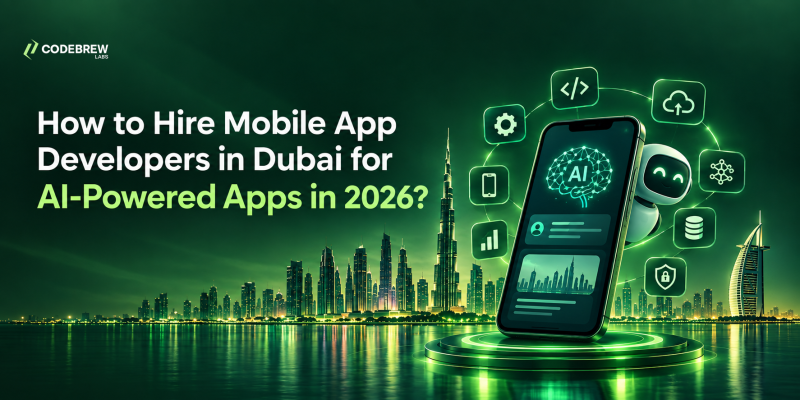
How Intelligent Automation Is Reshaping App Development in the UAE?
 samiksha
Intelligent automation is changing how businesses approach digital products. Instead of relying only on traditional workflows, companies can now build mobile applications that automate repetitive tasks, analyze information, personalize interactions, and respond to users in real time. This shift is becoming increasingly relevant for businesses across the UAE, where companies are investing in digital platforms to improve efficiency and deliver more convenient services.
App development in the UAE is moving beyond basic mobile applications. Businesses are exploring AI-powered automation, machine learning, predictive analytics, intelligent chatbots, workflow automation, and cloud-based technologies to create applications that can support more complex business requirements.
From retail and real estate to healthcare, logistics, finance, education, and hospitality, intelligent automation can influence how mobile applications are designed and used. It can reduce manual work while helping businesses create faster and more connected digital experiences.
What Is Intelligent Automation?
Intelligent automation combines traditional automation with technologies such as artificial intelligence, machine learning, natural language processing, data analytics, and intelligent decision-making.
Traditional automation generally follows predefined rules. For example, an application may automatically send an order confirmation after a customer completes a purchase.
Intelligent automation can go further. It can analyze customer behavior, identify patterns, make recommendations, understand natural language, and adapt certain actions based on available data.
In mobile applications, this can mean:
- Automated customer support
- Personalized recommendations
- Smart notifications
- Automated document processing
- AI-powered search
- Predictive analytics
- Intelligent workflow management
- Automated fraud detection
- Voice-enabled features
- Personalized content
This combination is making applications more responsive and capable of handling tasks that previously required manual intervention.
Why Intelligent Automation Matters for UAE Businesses?
The UAE is prioritizing digital transformation and technology-driven business models. As organizations become more digitally connected, mobile applications have emerged as vital channels for customers, employees, and partners.
Simply having an application is no longer enough; it must support business processes and adapt to user expectations. Intelligent automation can help reduce repetitive tasks, allowing employees to focus on critical decision-making.
For example, a logistics company could use a mobile app to automate delivery updates and order tracking, while a real estate business could streamline lead qualification and property visit scheduling. The value lies in connecting automation to real business processes, not adding AI features without clear intent.
How Is Intelligent Automation Changing App Development in the UAE?
1. Smarter Customer Support
Customer support is one of the areas where automation can have an immediate impact.
Mobile applications can include AI-powered chat assistants that respond to frequently asked questions, guide users through services, and help customers find relevant information.
Instead of waiting for a support representative, users can receive immediate responses to common queries.
For UAE businesses serving customers across different backgrounds and languages, multilingual support can also be valuable. Applications can be designed to understand and respond to multiple languages, depending on the business requirements and target audience.
2. Personalized User Experiences
Modern users expect applications to provide relevant information instead of showing the same content to everyone.
Intelligent automation can analyze factors such as browsing behavior, purchase history, preferences, and previous interactions to provide more personalized recommendations.
For example, an eCommerce application could recommend products based on previous purchases. A travel application could suggest destinations based on search behavior. A financial application could provide personalized insights based on user activity.
This makes personalization an important part of modern app development in the UAE.
3. Automated Business Workflows
Many businesses still depend on repetitive manual processes.
Mobile applications can connect these processes and automate activities such as approvals, notifications, document collection, task assignments, and status updates.
Consider an employee management application. Instead of manually forwarding leave requests, the application could route requests to the appropriate manager, send notifications, update records, and maintain an approval history automatically.
The same concept can be applied to logistics, procurement, sales, property management, healthcare administration, and other industries.
4. Predictive Analytics
Automation becomes more useful when applications can identify patterns before an issue occurs.
Machine learning models can analyze historical and real-time data to identify trends and generate predictions.
For example:
- Retail apps can forecast customer demand.
- Logistics apps can identify potential delivery delays.
- Fintech apps can detect unusual transactions.
- Healthcare platforms can analyze relevant patient information.
- Real estate apps can identify patterns in property searches.
These capabilities can help businesses make more informed decisions while reducing the amount of manual data analysis required.
5. Faster Decision-Making
Intelligent applications can bring relevant information together in one place.
Instead of employees checking different systems and manually comparing information, an application can collect data, organize it, and provide useful insights through dashboards and alerts.
For managers, this can make it easier to monitor operations. For customers, it can simplify decisions by providing recommendations or relevant information at the right time.
The result is an application that supports decision-making rather than functioning only as a digital interface.
Intelligent Automation Across UAE Industries
Different sectors can use automation in different ways.
Retail and eCommerce
Retail applications can automate recommendations, inventory alerts, customer support, order updates, and marketing notifications. AI can also help businesses understand shopping behavior and improve personalization.
Healthcare
Healthcare applications can automate appointment reminders, patient communication, basic information requests, and administrative workflows. Intelligent systems can also help organize large amounts of information for healthcare professionals.
Real Estate
Property applications can use intelligent automation for lead qualification, property recommendations, appointment scheduling, and customer communication. This can help real estate businesses manage large numbers of inquiries more efficiently.
Logistics
Logistics applications can automate delivery updates, driver communication, order tracking, and operational alerts. Predictive systems can also help businesses identify possible delays and optimize processes.
Banking and Fintech
Financial applications can use automation for transaction monitoring, customer assistance, personalized financial insights, and security-related processes. Intelligent systems can help identify unusual activity and trigger appropriate alerts.
Hospitality
Hotels and hospitality businesses can automate booking communication, personalized recommendations, service requests, and customer support through mobile applications.
The Role of AI in Modern App Development
Artificial intelligence is becoming an important component of intelligent automation.
However, AI should not simply be added to an application because it is a current trend. Businesses need to identify where AI can solve a real problem.
For example, an AI chatbot may be useful when a business receives a large number of repetitive customer questions. Predictive analytics may make more sense for a business that has substantial historical data.
This makes the planning stage especially important.
A reliable app development company in UAE can help businesses identify suitable automation opportunities, select appropriate technologies, design the application architecture, and determine how AI should be integrated into the product.
Building an Automation-Ready Mobile App
Businesses planning a new application can consider several areas from the beginning.
Start With Business Processes
Before selecting an AI or automation technology, identify repetitive tasks and processes that consume significant time.
This provides a clear foundation for deciding where automation can create value.
Design for Scalability
As the number of users and amount of data increases, the application should be able to handle higher workloads.
Cloud infrastructure, modular architecture, APIs, and scalable databases can support future growth.
Protect User Data
Automation often depends on customer and business data. Security and privacy should therefore be considered throughout the development process.
Authentication, encryption, access controls, secure APIs, and appropriate data-management practices should be incorporated into the application.
Keep Humans in the Loop
Not every decision should be completely automated.
For sensitive processes, businesses may need human approval or intervention. A good application should provide users with appropriate controls instead of making every decision automatically.
Measure Results
Businesses should define measurable objectives before launching automation.
These could include reduced processing time, fewer support requests, improved conversion rates, faster response times, or better operational efficiency.
Measuring results helps determine whether automation is actually delivering business value.
What the Future Holds for App Development in UAE
Intelligent automation is likely to become a larger part of mobile application development as businesses collect more data and adopt AI technologies.
Future applications may combine AI agents, voice interfaces, predictive analytics, automation, cloud computing, and real-time data processing within a single platform.
Instead of simply waiting for users to perform an action, applications could proactively identify requirements and assist users.
For example, a business application might detect a potential operational issue and notify a manager before it affects customers. A retail application could automatically adjust recommendations based on changing customer behavior. A service application could anticipate routine requirements and provide relevant options before the user asks.
These developments can make applications more responsive and connected to everyday business operations.
Conclusion
Intelligent automation is reshaping app development in UAE by moving mobile applications from simple digital touchpoints toward smarter business platforms. AI, machine learning, predictive analytics, and workflow automation can help businesses improve customer service, reduce repetitive work, personalize interactions, and make faster decisions.
For UAE businesses, the focus should not be on adding technology simply because it is trending. The stronger approach is to identify genuine business challenges and use intelligent automation where it can provide measurable value.
As mobile applications become increasingly connected to business operations, companies that plan for automation, scalability, security, and intelligent functionality can build digital products that are better prepared for changing customer and market requirements. Code Brew Labs, a Dubai-based technology company with 13+ years of expertise, helps businesses build custom mobile applications by combining AI, automation, modern technologies, and scalable development approaches to support evolving digital needs.
Source:
Click for the: Full Story
You might like