



 Close Menu
 World
World
 Biography
 Health
 Education
 Business
 Lifestyle
 Sports
 Technology
 Animals
 History
 Food
Food
 Religious
 Startups
 Movies
 Politics
 Fashion
 Covid
Covid
 Diet
Diet
 Fitness
 Marketing
 Travel
 Science
 Reviews
 Social media
 Stories
 Facts
Facts
 Art
Art
 Entertainment
Yatin Samra

Technology
How Is Fantasy Sports Software Changing the Digital Sports Experience in 2026?
 Yatin Samra
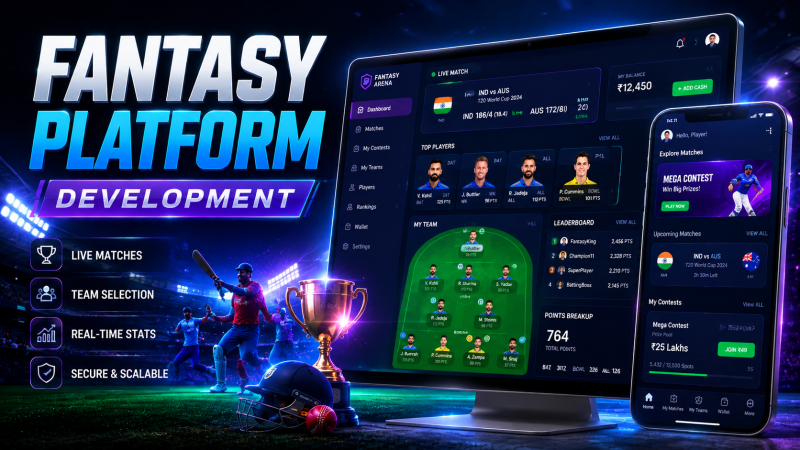
The field of fantasy sports has moved from basic player selection-based games to advanced digital platforms that incorporate the latest data from live sports events, analytics, social interaction, and customization. In 2026, there will be a chance for organizations to develop platforms that will allow fans a greater way to interact with their favorite sports.
If organizations are thinking about developing a fantasy sports platform, knowing about these developments can certainly be helpful.
Why Is Fantasy Sports Software Growing?
Sports fans increasingly want to participate rather than simply watch games. Fantasy platforms provide an interactive layer where users can create teams, follow player performances, compare results, and compete with friends.
Modern platforms can bring together:
- Live scores
- Player statistics
- Fantasy contests
- Private leagues
- Leaderboards
- Notifications
- Analytics
- Social features
This combination can create a more engaging digital experience around live sports.
How Important Is Real-Time Sports Data?
Real-time data is one of the most important components of a fantasy platform.
Users may expect updates about:
- Scores
- Player statistics
- Game events
- Player availability
- Match schedules
- Contest rankings
A reliable data integration layer can keep the platform synchronized with live sporting events and reduce delays in scoring and leaderboard updates.
Can AI Improve Fantasy Platforms?
AI can support several areas of the user experience.
For example, it can help deliver:
- Personalized content
- Player performance insights
- Contest recommendations
- Automated notifications
- Behavioral analytics
- Trend identification
The purpose should be to make information easier to understand and the platform more personalized. AI outputs should be clearly presented as analysis rather than guaranteed predictions.
Why Is Mobile Experience So Important?
Fantasy users may interact with their teams before, during, and after live games.
A mobile-first experience can make it easier to:
- Create teams
- Join contests
- Monitor scores
- Check player statistics
- Receive notifications
- View leaderboards
A responsive web application can complement mobile apps and provide access across different devices.
What Role Do Social Features Play?
Fantasy sports are naturally competitive and social.
Features such as private leagues, friend challenges, leaderboards, group discussions, and social sharing can encourage users to invite others and remain active.
A strong community experience can also help differentiate a platform from products that focus only on scoring and contests.
How Can Businesses Monetize Fantasy Platforms?
Different business models can be considered depending on the product.
Advertising
Advertising can generate revenue from a large free user base.
Premium Subscriptions
Users can pay for advanced statistics, analytics, or additional features.
Sponsorships
Brands can sponsor contests, leagues, or specific platform sections.
Freemium
Basic functionality remains free while premium tools are available through paid plans.
Paid Contests
Where legally permitted, businesses may offer contests involving entry fees. These products require careful evaluation of applicable federal and state regulations.
What Technology Supports a Modern Fantasy Platform?
A scalable fantasy platform typically requires several interconnected components.
Sports Data APIs
Provide schedules, scores, player information, and statistics.
Backend Infrastructure
Handles contests, scoring, accounts, notifications, and platform logic.
Mobile and Web Applications
Provide access for users and administrators.
Cloud Infrastructure
Supports scalability during high-traffic sporting events.
Analytics
Provides insights into user engagement and platform performance.
Security Systems
Protect accounts, transactions, APIs, and sensitive information.
Selecting technologies based on actual product requirements is more important than simply choosing the newest tools.
What Features Should Businesses Prioritize?
A first release does not need every possible capability.
An MVP can focus on:
- User registration
- Sports selection
- Contest creation
- Team management
- Live scoring
- Leaderboards
- Notifications
- Basic analytics
- Administration
Additional capabilities can be introduced after the business validates demand.
What About the USA Market?
The USA remains an important market for fantasy sports, but businesses need to understand that requirements can differ between jurisdictions.
Before launching, companies should evaluate:
- State-specific rules
- Contest formats
- User eligibility
- Payment processes
- Data privacy
- Responsible gaming measures
- Advertising requirements
The legal treatment of fantasy products can depend on their specific structure, so businesses should obtain qualified legal advice before operating in individual states.
How Can Businesses Prepare for Growth?
Fantasy platforms can experience significant traffic increases during major sporting events.
Scalable architecture can help accommodate:
- More concurrent users
- Higher API traffic
- Frequent score updates
- Increased contest participation
- More notifications
- Larger databases
Cloud infrastructure, caching, load balancing, and real-time processing can contribute to a more reliable platform.
What Is the Future of Fantasy Software?
The next generation of fantasy platforms is likely to become increasingly data-driven and personalized.
Businesses may explore:
- AI-powered analytics
- More immersive mobile experiences
- Real-time social interaction
- Advanced personalization
- Multi-sport ecosystems
- Deeper sports data integration
- More sophisticated loyalty programs
However, the most valuable innovations will be those that genuinely improve the user experience.
Final Thoughts
Fantasy sports applications are an increasingly vital aspect of the current digital sports landscape. The integration of live data feeds, mobility, analytics, social networking, and personalization can lead to an incredibly engaging fan experience.
For companies interested in fantasy sports platform development, a well-formulated product strategy is crucial. It is essential to define your target audience, sports data, basic functionality of your fantasy app, and the architecture before developing any additional capabilities.
For organizations that are planning on reaching the market of the USA, regulatory planning should be an integral aspect of the product strategy.
To know more about this platform development, click the link below and watch the video.
Watch the video to learn more about fantasy platform development
Source:
Click for the: Full Story
You might like









You Might Like this