Close Menu
 World
World
 Biography
 Health
 Education
 Business
 Lifestyle
 Sports
 Technology
 Animals
 History
 Food
Food
 Religious
 Startups
 Movies
 Politics
 Fashion
 Covid
Covid
 Diet
Diet
 Fitness
 Marketing
 Travel
 Science
 Reviews
 Social media
 Stories
 Facts
Facts
 Art
Art
 Entertainment
samiksha

Business
How Real Estate Apps Drive Digital Transformation in Property Businesses?
 samiksha
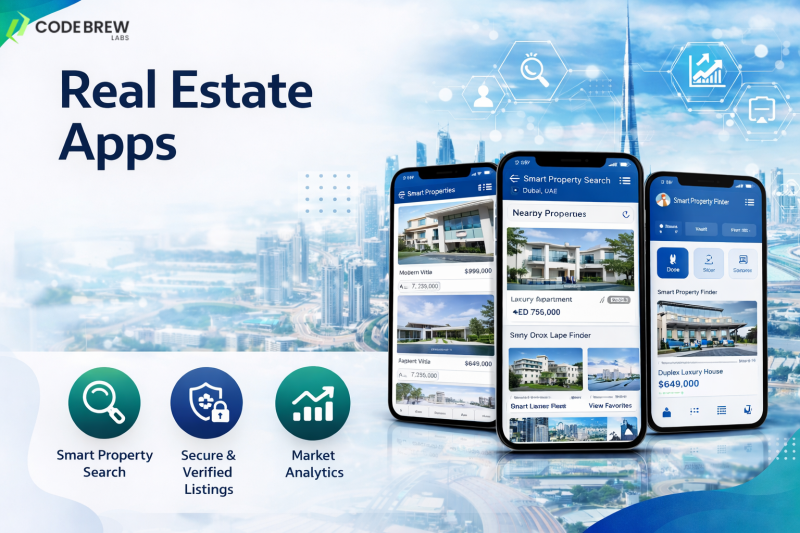
The real estate industry, once heavily reliant on traditional processes and in-person interactions, is now embracing a digital revolution. In 2026, real estate apps have become a cornerstone of this transformation, enabling property businesses to streamline operations, enhance customer experiences, and stay competitive in a fast-evolving market.
From property discovery to transaction management, real estate apps are reshaping how buyers, sellers, and agents interact. This blog explores how real estate apps are driving digital transformation in property businesses and why investing in them is no longer optional.
The Shift Toward Digital in Real Estate
The modern property buyer expects convenience, speed, and transparency. With increasing smartphone usage and digital adoption, businesses are moving away from manual processes to smart, app-driven ecosystems.
Digital transformation in real estate involves:
- Automating workflows
- Enhancing customer engagement
- Leveraging data for decision-making
- Integrating advanced technologies like AI and cloud computing
Real estate apps act as the central hub for all these innovations.
Key Ways Real Estate Apps Drive Digital Transformation
1. Simplifying Property Search
Real estate apps make property discovery faster and more efficient. Users can:
- Search properties based on location, budget, and preferences
- View high-quality images and videos
- Access detailed property information
Impact: Buyers no longer need to visit multiple locations physically, saving time and effort.
2. Enhancing Customer Experience
User experience is at the core of digital transformation. Real estate apps offer:
- Intuitive interfaces
- Personalized property recommendations
- Seamless navigation
By delivering a smooth and engaging experience, businesses can increase customer satisfaction and retention.
3. Enabling Virtual Tours & Remote Access
With technologies like AR/VR, real estate apps allow users to:
- Take virtual property tours
- Explore properties remotely
- Visualize interiors and layouts
This is especially valuable for international buyers and investors who cannot visit properties in person.
4. Automating Business Operations
Real estate apps help automate routine tasks such as:
- Appointment scheduling
- Lead management
- Document handling
- Payment processing
Result: Increased operational efficiency and reduced manual workload.
5. Data-Driven Decision Making
Modern real estate apps collect and analyze user data to provide valuable insights, including:
- Market trends
- Customer preferences
- Property demand patterns
Businesses can use this data to make informed decisions and refine their strategies.
6. Improving Communication & Engagement
Real estate apps enhance communication between buyers, sellers, and agents through:
- In-app messaging
- Notifications and alerts
- Chatbots for instant support
This ensures faster responses and better customer engagement.
7. Streamlining Transactions
Digital transformation has simplified property transactions by enabling:
- Online documentation
- Digital signatures
- Secure payment gateways
This reduces paperwork and accelerates the buying/selling process.
8. Integration with Advanced Technologies
Real estate apps are increasingly integrating cutting-edge technologies such as:
- Artificial Intelligence (AI): For personalized recommendations
- Blockchain: For secure transactions
- IoT: For smart property management
These integrations make apps more powerful and future-ready.
Benefits of Real Estate Apps for Property Businesses
Increased Efficiency
Automation reduces manual work and speeds up processes.
Better Customer Engagement
Interactive features keep users engaged and satisfied.
Higher Conversion Rates
Personalized experiences lead to more successful transactions.
Global Reach
Apps allow businesses to connect with international buyers.
Competitive Advantage
Digital-first businesses stand out in a crowded market.
Challenges in Adopting Real Estate Apps
While the benefits are significant, businesses may face challenges such as:
Data Security Concerns
Handling sensitive user and financial data requires robust security measures.
Development Costs
Building advanced apps with modern features can be expensive.
Technical Complexity
Integrating multiple technologies requires expertise.
User Adoption
Encouraging traditional users to switch to digital platforms can take time.
Key Features of a Successful Real Estate App
To drive effective digital transformation, a real estate app should include:
- Advanced property search filters
- AI-based recommendations
- Virtual tours and media galleries
- Secure payment integration
- Push notifications
- User-friendly dashboard
- CRM integration for agents
Future Trends in Real Estate App Development
The future of real estate apps is shaped by innovation and technology. Key trends include:
- AI-driven property insights
- Voice-enabled property search
- Blockchain-based smart contracts
- Augmented reality property visualization
- Hyper-personalized user experiences
These trends will further accelerate digital transformation in the industry.
Why Now Is the Right Time to Invest
The real estate market is becoming increasingly digital, and businesses that fail to adapt risk falling behind. Investing in a real estate app allows companies to:
- Meet modern customer expectations
- Improve operational efficiency
- Expand market reach
- Drive long-term growth
Conclusion
Real estate apps are no longer just an add-on—they are a necessity for driving digital transformation in property businesses. By simplifying processes, enhancing customer experiences, and leveraging advanced technologies, these apps are reshaping the real estate landscape in 2026.
For businesses looking to stay competitive and future-ready, adopting real estate app solutions is the key to success—with Code Brew Labs helping deliver innovative, scalable, and high-performing real estate applications. The shift to digital is already underway—those who embrace it will lead the industry, while others risk being left behind.
Source:
Click for the: Full Story
You might like