Close Menu
 World
World
 Biography
 Health
 Education
 Business
 Lifestyle
 Sports
 Technology
 Animals
 History
 Food
Food
 Religious
 Startups
 Movies
 Politics
 Fashion
 Covid
Covid
 Diet
Diet
 Fitness
 Marketing
 Travel
 Science
 Reviews
 Social media
 Stories
 Facts
Facts
 Art
Art
 Entertainment
THM Hydraulics

Business
How Smart Directional Control Valves Support Industry 4.0 and Factory Automation
 THM Hydraulics
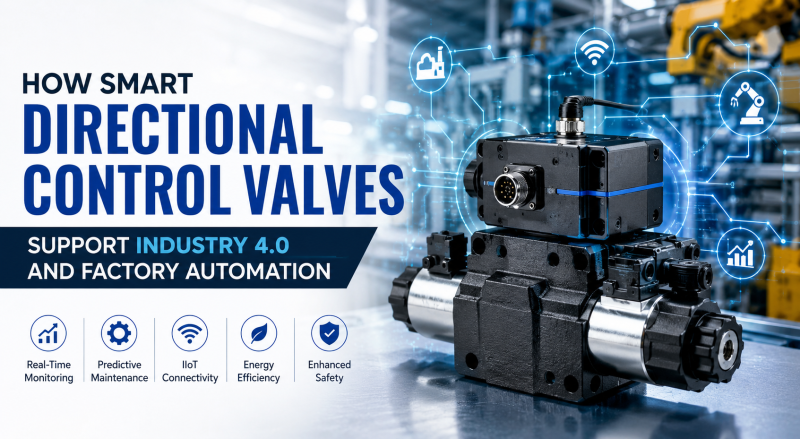
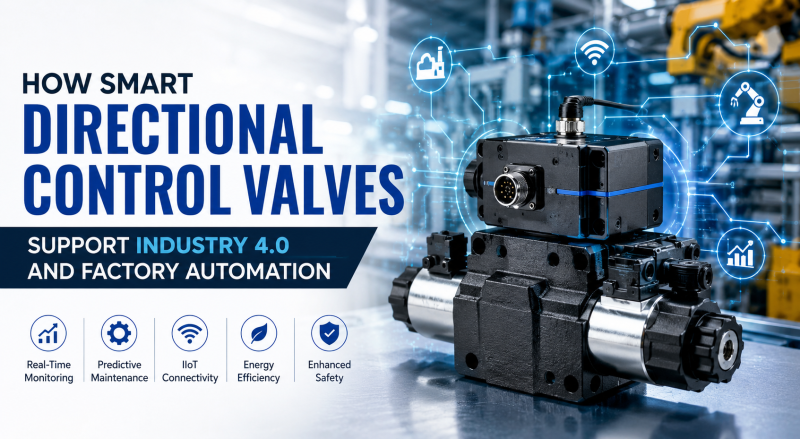
Modern industries are rapidly moving toward connected manufacturing systems, intelligent production lines, and data-driven operations. In this transformation, smart hydraulic components are playing a major role in improving productivity, precision, and operational efficiency. Among these components, the directional control valve has become one of the most important technologies supporting Industry 4.0 and factory automation.
Press enter or click to view image in full size
Smart directional control valves are no longer limited to basic fluid flow management. They now offer real-time monitoring, remote operation, predictive maintenance support, and seamless integration with industrial automation systems. These advanced capabilities help manufacturers reduce downtime, improve machine accuracy, and optimize energy consumption across production facilities.
In this blog, we will explore how smart directional control valves are transforming industrial automation and why they are essential for modern factories.
What Is a Smart Directional Control Valve?
A directional control valve controls the flow direction of hydraulic fluid or compressed air within an industrial system. It determines how actuators, cylinders, or motors operate during different machine functions.
A smart directional control valve goes beyond traditional operation by integrating digital technologies such as:
- Sensors
- Electronic controllers
- IoT connectivity
- Real-time monitoring systems
- Remote diagnostics
- Automated control features
These smart capabilities allow industries to collect operational data, monitor system health, and improve machine performance without manual intervention.
Understanding Industry 4.0 in Manufacturing
Industry 4.0 refers to the use of smart technologies in manufacturing environments. It combines automation, data exchange, machine communication, and intelligent monitoring to create highly efficient production systems.
Key features of Industry 4.0 include:
- Smart factories
- Industrial IoT connectivity
- Real-time data analysis
- Predictive maintenance
- Automated workflows
- Energy optimization
- Cloud-based monitoring systems
Smart directional control valves fit perfectly into this ecosystem because they enable accurate fluid control while continuously sharing system performance data with automation networks.
Role of Smart Directional Control Valves in Factory Automation
1. Real-Time Flow Control and Monitoring
Traditional valves operate mechanically and provide limited feedback. Smart directional control valves continuously monitor pressure, temperature, and flow conditions.
This real-time monitoring helps operators:
- Detect system abnormalities early
- Prevent pressure fluctuations
- Improve hydraulic system efficiency
- Ensure stable machine performance
With instant data access, factory managers can make faster operational decisions and minimize unexpected equipment failures.
2. Improved Machine Accuracy
Modern automated production lines require extremely precise motion control. Smart directional control valves help maintain accurate hydraulic movements by controlling fluid flow with high precision.
Benefits include:
- Better positioning accuracy
- Consistent production quality
- Reduced material waste
- Improved cycle times
Industries such as automotive manufacturing, packaging, metal processing, and heavy machinery rely heavily on accurate hydraulic control for smooth automation processes.
3. Integration with Industrial IoT Systems
One of the biggest advantages of smart directional control valves is their ability to connect with Industrial IoT platforms.
These valves can communicate with:
- PLC systems
- SCADA software
- Central monitoring platforms
- Cloud-based industrial applications
This connectivity allows manufacturers to monitor multiple machines from a single dashboard and improve operational visibility across the entire factory.
As a result, businesses gain better control over production efficiency and maintenance planning.
Predictive Maintenance Capabilities
Unexpected equipment downtime can create major production losses. Smart directional control valves support predictive maintenance by continuously analyzing system performance.
The valve sensors collect operational data such as:
- Pressure changes
- Temperature variations
- Flow irregularities
- Response times
- Valve cycle counts
This information helps maintenance teams identify wear or potential failures before major breakdowns occur.
Advantages of Predictive Maintenance
- Reduced unplanned downtime
- Lower maintenance costs
- Longer equipment lifespan
- Improved production continuity
- Better maintenance scheduling
Predictive maintenance is one of the most valuable Industry 4.0 features because it reduces costly emergency repairs and improves overall plant reliability.
Energy Efficiency in Modern Factories
Energy consumption is a major concern in industrial operations. Hydraulic systems can consume significant power if flow control is inefficient.
Smart directional control valves help optimize energy usage by:
- Adjusting flow rates automatically
- Reducing unnecessary pressure build-up
- Minimizing hydraulic losses
- Improving system responsiveness
Some advanced valves also operate with variable control technology that adapts to machine demand in real time.
This results in:
- Lower electricity costs
- Reduced heat generation
- Improved hydraulic efficiency
- Sustainable manufacturing operations
Energy-efficient systems are becoming increasingly important as industries focus on reducing operational expenses and environmental impact.
Faster Response and Automation Speed
Factory automation depends heavily on machine response time. Smart directional control valves provide faster and more accurate switching compared to conventional valve systems.
This improves:
- Production speed
- Automation synchronization
- Process consistency
- Operational reliability
In high-speed manufacturing environments, even small delays can affect productivity. Smart valves help maintain smooth workflow coordination across automated systems.
Enhanced Safety in Industrial Operations
Safety remains a top priority in industrial environments. Smart directional control valves improve safety by offering automatic monitoring and emergency response functions.
Advanced safety features may include:
- Automatic shutdown during abnormal pressure conditions
- Leak detection alerts
- Fault notifications
- Overload protection
- Remote emergency control
These features reduce the risk of hydraulic failures and help protect both equipment and workers.
Applications of Smart Directional Control Valves
Smart directional control valves are widely used across various industries due to their flexibility and automation support.
Automotive Manufacturing
Automotive plants use smart hydraulic systems for:
- Assembly line automation
- Press machines
- Material handling systems
- Precision movement control
The valves help maintain consistent production speed and product quality.
Packaging Industry
Packaging machines require accurate and repetitive motion control.
Smart valves support:
- Filling systems
- Conveyor automation
- Sealing equipment
- Labeling machines
Their fast response improves packaging accuracy and operational efficiency.
Construction Equipment Manufacturing
Heavy machinery production depends on reliable hydraulic systems.
Smart directional control valves help optimize:
- Hydraulic presses
- CNC machinery
- Material lifting systems
- Industrial cutting machines
Real-time monitoring improves machine reliability and maintenance planning.
Metal and Steel Processing
Industrial metal processing requires precise hydraulic pressure control for cutting, bending, and forming applications.
Smart valves ensure:
- Smooth pressure regulation
- Stable machine performance
- Better production accuracy
- Reduced operational interruptions
Benefits of Smart Directional Control Valves for Industry 4.0
Increased Productivity
Automated monitoring and faster hydraulic response improve overall production output while reducing operational delays.
Reduced Downtime
Predictive maintenance features help prevent sudden machine failures and support continuous manufacturing operations.
Better Data Collection
Real-time data improves operational insights and helps manufacturers optimize performance.
Lower Maintenance Costs
Condition monitoring reduces unnecessary servicing and improves maintenance efficiency.
Improved Process Automation
Smart valves support advanced automation systems and help manufacturers build connected production environments.
Greater System Reliability
Continuous monitoring ensures stable hydraulic performance across industrial applications.
Key Features to Look for in Smart Directional Control Valves
When selecting smart directional control valves for factory automation, manufacturers should consider several important features.
Sensor Integration
Built-in sensors improve monitoring accuracy and operational visibility.
Communication Protocol Support
Ensure compatibility with industrial communication systems such as:
- Modbus
- CAN bus
- EtherCAT
- PROFIBUS
Remote Diagnostics
Remote monitoring helps reduce maintenance response time and improves troubleshooting efficiency.
Fast Switching Performance
High-speed response is essential for automated manufacturing systems.
Energy-Efficient Design
Choose valves designed to minimize hydraulic losses and reduce energy consumption.
Durable Construction
Industrial environments require valves that can withstand pressure fluctuations, contamination, and demanding operating conditions.
Challenges in Implementing Smart Valve Systems
Although smart directional control valves offer many advantages, some challenges may arise during implementation.
Initial Investment Costs
Advanced automation systems require higher upfront investment compared to conventional hydraulic components.
System Integration Complexity
Factories may need software upgrades or automation infrastructure improvements to support smart valve communication.
Skilled Workforce Requirements
Technicians may require training to manage digital hydraulic systems and data monitoring tools.
Despite these challenges, the long-term benefits often outweigh the initial implementation costs.
Future of Smart Directional Control Valves
As Industry 4.0 continues evolving, smart directional control valves will become even more advanced.
Future developments may include:
- AI-driven performance optimization
- Advanced predictive analytics
- Improved cloud connectivity
- Enhanced self-diagnostic systems
- More energy-efficient hydraulic designs
Manufacturers are increasingly adopting intelligent hydraulic technologies to stay competitive in modern industrial markets.
Smart directional control valves will continue playing a major role in supporting connected factories and high-performance automation systems.
Conclusion
Smart directional control valves are transforming modern manufacturing by supporting Industry 4.0 and factory automation initiatives. Their ability to provide real-time monitoring, predictive maintenance, energy optimization, and advanced automation control makes them essential for today’s industrial operations.
From automotive production to packaging and heavy machinery manufacturing, these intelligent valve systems help improve productivity, reduce downtime, and enhance operational efficiency.
As factories continue moving toward connected and data-driven manufacturing environments, smart directional control valves will remain a critical component in achieving reliable, efficient, and future-ready industrial automation systems.
Businesses investing in advanced hydraulic control technology today are better positioned to improve production performance and meet the growing demands of modern manufacturing.
Source:
Click for the: Full Story
You might like