



 Close Menu
 World
World
 Biography
 Health
 Education
 Business
 Lifestyle
 Sports
 Technology
 Animals
 History
 Food
Food
 Religious
 Startups
 Movies
 Politics
 Fashion
 Covid
Covid
 Diet
Diet
 Fitness
 Marketing
 Travel
 Science
 Reviews
 Social media
 Stories
 Facts
Facts
 Art
Art
 Entertainment
Yatin Samra

Technology
How to Build a High-Performance Forex Trading Platform in 2026: A Practical Guide
 Yatin Samra
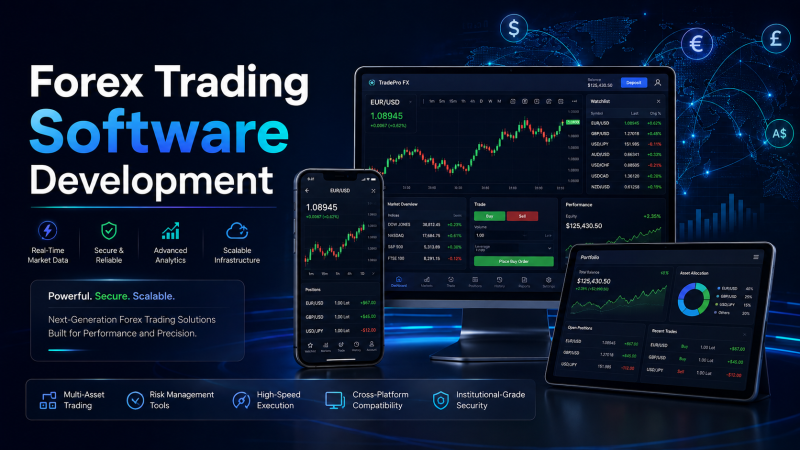
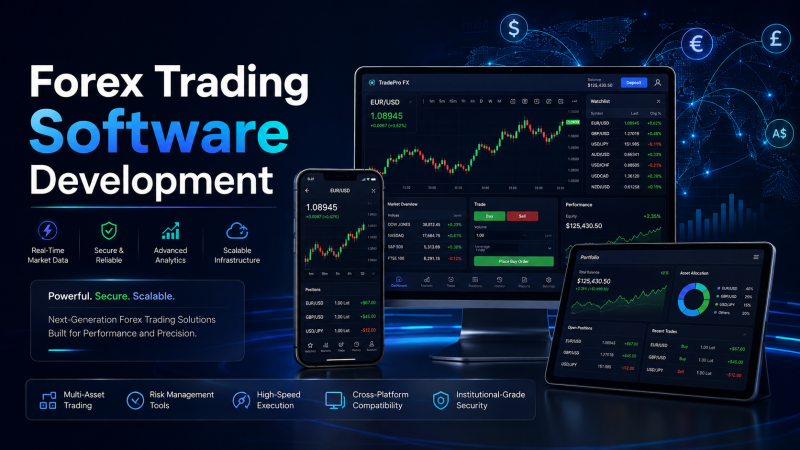
Trading platforms for foreign exchange markets are developing rapidly because of the increasing demand for real-time data, fast execution, improved charts, increased mobility, and security. On the other hand, platform providers require reliable technological infrastructure capable of supporting high levels of activity and regulatory compliance.
For companies considering the development of trading software solutions, it means designing a platform that combines high performance with user-friendliness, security, compliance, and scalability.
The following sections of this guide will provide you with the most important considerations while developing a forex trading platform in 2026.
1. Begin With a Clear Platform Strategy
Before development starts, define what the platform is intended to accomplish.
Key considerations include:
- Target users
- Supported currency pairs
- Trading products
- Geographic markets
- Revenue model
- Required integrations
- Mobile and web requirements
A platform designed for professional traders will have different requirements from one intended for beginners.
Starting with a clear scope can prevent unnecessary features from increasing development complexity.
2. Build a Reliable Market Data Layer
Forex trading depends heavily on timely and accurate market information.
The platform may need to process:
- Live currency prices
- Bid and ask prices
- Historical data
- Market trends
- Economic indicators
- Trading alerts
The data architecture should be capable of handling continuous updates while maintaining reliability during periods of high market activity.
Third-party market-data providers should also be evaluated for coverage, latency, licensing, reliability, and pricing.
3. Focus on Efficient Order Execution
Execution infrastructure is at the heart of a trading platform.
Depending on the platform model, the technology may need to manage:
- Market orders
- Limit orders
- Stop orders
- Position management
- Order status
- Trade history
Efficient communication between the user interface, backend services, liquidity providers, and other connected systems can contribute to a smoother trading experience.
4. Develop Advanced Charting Tools
Charts allow traders to analyze price movements and identify patterns.
A comprehensive charting module can include:
- Candlestick charts
- Line charts
- Multiple timeframes
- Technical indicators
- Drawing tools
- Custom layouts
- Price alerts
The interface should allow experienced traders to access advanced functionality while remaining understandable for less experienced users.
5. Create a Strong Mobile Experience
A forex platform should not assume that users will always trade from desktop computers.
Mobile applications can allow users to:
- Monitor currency pairs
- Review positions
- Receive notifications
- Analyze charts
- Manage orders
- Review account activity
Mobile security should include appropriate authentication, encrypted communications, session controls, and secure storage.
6. Implement Strong Security Controls
Security should be integrated throughout the platform architecture.
Potential measures include:
Multi-Factor Authentication
Provides an additional verification layer for account access.
Encryption
Protects sensitive information during transmission and storage.
Access Management
Controls which users and administrators can access specific platform functions.
Security Monitoring
Helps identify suspicious activity and potential attacks.
Regular Testing
Security assessments can identify vulnerabilities as the platform evolves.
A layered approach is generally more effective than relying on a single security mechanism.
7. Include Risk-Management Tools
Risk management is an important part of the trading experience.
Depending on the platform, tools can include:
- Stop-loss functionality
- Take-profit orders
- Position monitoring
- Exposure information
- Trading limits
- Account alerts
The platform should clearly communicate how these tools work so users can make informed decisions.
8. Use Personalization to Reduce Complexity
Forex platforms can contain large amounts of information. Personalization can help users focus on the markets and tools relevant to them.
Users could customize:
- Watchlists
- Dashboards
- Chart layouts
- Alerts
- Currency pairs
- Analytical tools
A customizable interface can support different trading styles without requiring separate applications for different user groups.
9. Design the Backend for Scalability
As user numbers and trading activity increase, the platform's infrastructure must be able to handle additional demand.
Scalable architecture can involve:
- Cloud infrastructure
- Load balancing
- Caching
- Database optimization
- Service-based architecture
- Real-time monitoring
Businesses should also consider how the system will behave during periods of unusually high traffic or market volatility.
10. Integrate Compliance Into the Product
Forex platforms may need to support various compliance processes depending on their business model and jurisdiction.
Potential capabilities include:
- Customer onboarding
- Identity verification
- Transaction monitoring
- Audit trails
- User permissions
- Regulatory reporting
- Risk controls
For businesses targeting the USA, regulatory requirements can vary based on the services provided, customers served, and applicable jurisdictions.
Compliance requirements should therefore be evaluated before development rather than after the platform has been built.
11. Add Meaningful Analytics
Analytics can help platform operators understand how users interact with the product.
Business dashboards can monitor:
- Active users
- Trading activity
- Retention
- Platform performance
- Conversion rates
- Transaction patterns
Users can also benefit from personal trading analytics that summarize their historical activity and account performance.
Analytics should focus on actionable information rather than simply presenting large volumes of data.
12. Plan Third-Party Integrations Carefully
A modern forex platform may depend on multiple external services.
These can include:
- Market-data providers
- Liquidity providers
- Payment gateways
- Identity verification services
- Geolocation tools
- Notification services
- Analytics platforms
Each integration introduces additional technical, security, and maintenance considerations.
Businesses should evaluate vendors carefully and avoid creating unnecessary dependencies.
What Does a Modern Forex Platform Architecture Look Like?
A typical architecture may include several connected layers:
User Interface → API Layer → Trading Services → Market Data & Liquidity → Database & Analytics
Supporting services can include authentication, notifications, compliance, monitoring, and administrative tools.
The exact architecture should be customized according to the platform's expected volume, trading model, integrations, and regulatory environment.
Development Should Be Phased
Building every advanced capability at once can increase both cost and development risk.
A practical roadmap could look like this:
Phase 1: Core Platform
Focus on:
- Registration
- User accounts
- Market data
- Trading functionality
- Basic charts
- Security
- Administration
Phase 2: Advanced Experience
Add:
- Mobile applications
- Advanced charting
- Personalization
- Alerts
- Analytics
- Additional integrations
Phase 3: Scale and Optimization
Focus on:
- Performance optimization
- Advanced automation
- Infrastructure scaling
- Expanded market coverage
- Enhanced monitoring
This allows businesses to validate the platform before committing to more complex functionality.
Common Development Challenges
Several issues can affect the success of a forex platform.
Poor Data Reliability
Delayed or inconsistent market information can damage user confidence.
Weak Security
Financial platforms are attractive targets for malicious activity, making security a continuous requirement.
Overcomplicated Interfaces
Too many tools can overwhelm new users and make the platform difficult to navigate.
Limited Scalability
Infrastructure that is not designed for growth can experience performance problems as activity increases.
Late Compliance Planning
Adding compliance requirements after development can lead to expensive architectural changes.
Final Thoughts
Forex trading platform development in 2026 must be coordinated across various aspects of technology, design, security, data, trading capabilities, and compliance.
For any business developing trading platforms, the best course of action would be to first have a reliable platform that can be expanded with other sophisticated features.
For the development of a platform for use in the USA, the necessary regulatory aspects should be taken into consideration from the very beginning of the process, and not left to be addressed at a later point in the process.
The important point here is that the aim is not only to have a trading application with numerous features.
To know more about this platform development, click the link below and watch the video.
Watch the video to learn more about forex trading platform development
Source:
Click for the: Full Story
You might like








You Might Like this