Close Menu
 World
World
 Biography
 Health
 Education
 Business
 Lifestyle
 Sports
 Technology
 Animals
 History
 Food
Food
 Religious
 Startups
 Movies
 Politics
 Fashion
 Covid
Covid
 Diet
Diet
 Fitness
 Marketing
 Travel
 Science
 Reviews
 Social media
 Stories
 Facts
Facts
 Art
Art
 Entertainment
Sonny Hayes

Business
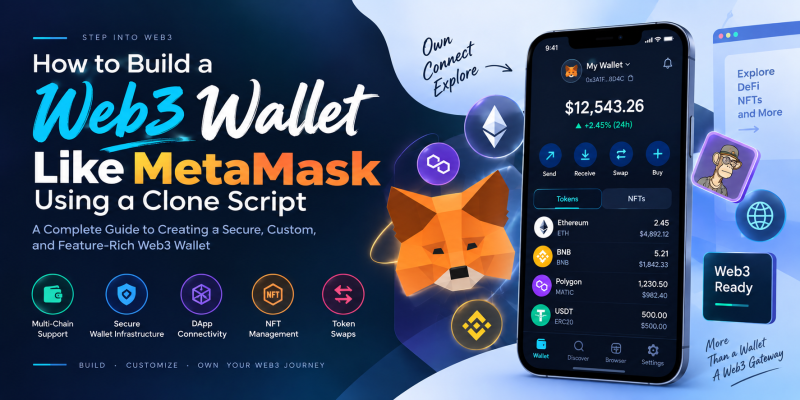
How to Build a Web3 Wallet Like MetaMask Using a Clone Script
 Sonny Hayes
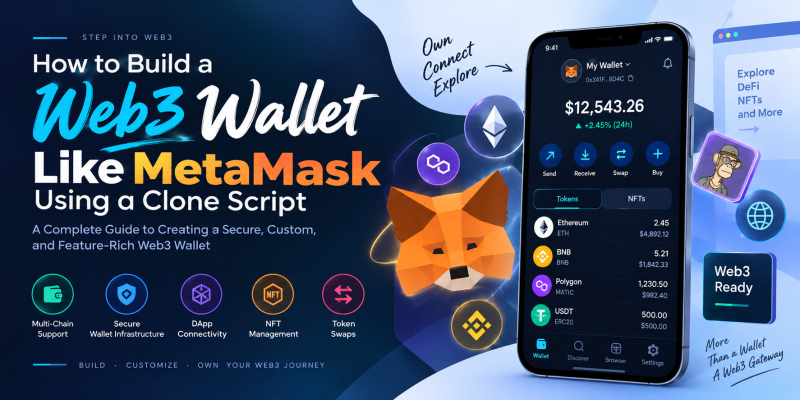
Building a Web3 wallet sounds simple until you get into the details. Creating accounts is only one part of the job. A wallet must securely handle private keys, sign blockchain transactions, display token balances, connect with decentralized applications, and communicate with different blockchain networks.
This is where a MetaMask Wallet Clone Script can provide a starting point. Instead of developing every wallet component from the ground up, businesses can customize an existing Web3 wallet solution around their target users and supported blockchain networks.
How Do You Build a Wallet Like MetaMask?
A practical approach is to start with a customizable wallet framework and then configure the components you actually need:
- Multi-chain blockchain connectivity
- Non-custodial wallet functionality
- Private-key and seed-phrase management
- Token and NFT support
- Web3 DApp connectivity
- Transaction signing and history
- Network and gas-fee management
- WalletConnect or similar connectivity options
The important part is not copying MetaMask's interface. It is designing reliable wallet infrastructure and adapting the user experience to your specific Web3 product.
1. Choose the Blockchain Networks
First, decide which networks your wallet will support. Ethereum-compatible networks may require different RPC endpoints, chain configurations, token standards, and transaction handling than other blockchain ecosystems.
Supporting fewer networks initially can make testing and maintenance more manageable.
2. Build the Wallet Security Layer
Security should be designed before the interface.
A cryptocurrency wallet development project needs careful handling of seed phrases, private keys, transaction signing, encryption, and local storage. If the wallet is intended to be non-custodial, users should retain control of their credentials rather than having the platform hold their private keys.
Security testing should cover transaction signing, malicious inputs, compromised interfaces, and recovery workflows.
3. Add Web3 Features
Once the wallet foundation is stable, you can add functionality such as:
- Token transfers and swaps
- NFT management
- DApp connections
- Network switching
- Transaction tracking
- Address book functionality
- Gas-fee visibility
A MetaMask-style Web3 wallet becomes significantly more useful when it can act as a gateway between users and decentralized applications rather than functioning only as a balance viewer.
4. Customize the Clone Script
This is where the clone script becomes your product.
You can customize the branding, supported networks, wallet features, transaction interface, token discovery, notifications, analytics, and administrative components according to your business model.
Final Thoughts
A MetaMask Wallet Clone Script can shorten the path toward launching a Web3 wallet, but the real work lies in security, blockchain integration, transaction handling, and user experience.
If you're planning a wallet product, start by defining the networks, custody model, and Web3 use cases you need, then customize the wallet architecture around those requirements.
Source:
Click for the: Full Story
You might like