



 Close Menu
 World
World
 Biography
 Health
 Education
 Business
 Lifestyle
 Sports
 Technology
 Animals
 History
 Food
Food
 Religious
 Startups
 Movies
 Politics
 Fashion
 Covid
Covid
 Diet
Diet
 Fitness
 Marketing
 Travel
 Science
 Reviews
 Social media
 Stories
 Facts
Facts
 Art
Art
 Entertainment
Nick WYA

Lifestyle
How to Build a “What’s Your A?” Morning Routine You’ll Actually Stick To
 Nick WYA
Most of us wake up wanting to have a solid day, but the moment the notifications hit or the to-do list shows up, everything gets chaotic. Your energy scatters in ten directions, and suddenly the day is running you instead of you running the day.
That’s exactly where the “What’s Your A?” approach comes in. It’s simple, grounding, and honestly kind of life-changing once you start using it. Instead of jumping into the morning, hoping things work out, you begin your day with one clear question:
“What’s my A today?”
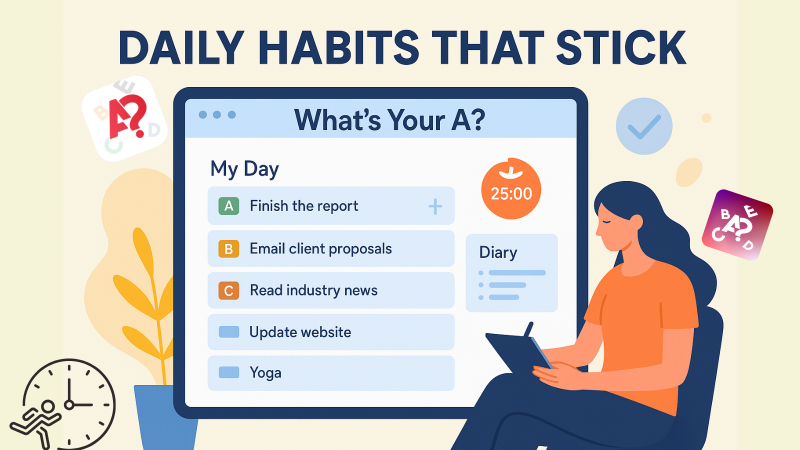
Your A is your most important task — the one thing that moves you forward, reduces stress, or creates progress you can feel proud of. When you anchor your morning around this single priority, everything else gets easier to manage.
Today, we’ll walk through how to build a “What’s Your A?” morning routine that feels natural, motivating, and easy to repeat every day… even on the days you feel lazy or overwhelmed.
Why the “What’s Your A?” Method Works
A lot of people think productivity is about doing more. But the truth is, productivity is about doing the right things in the right order.
The idea behind “What’s Your A?” comes from prioritization methods like the ABCDE framework.
- A = a major task (critical, high impact)
- B = important but not urgent
- C = things that are nice to do
- D = tasks you can delegate
- E = tasks you can delete entirely
Your A is the one that moves the needle. It’s the task that, if completed, makes your day feel meaningful, no matter what else happens.
When you start your morning by identifying this A:
- You stop guessing what to do first
- You avoid decision fatigue
- You reduce stress
- You build momentum early in the day
- You stay focused even when distractions pop up
It’s like giving your day a main character — something strong enough to anchor everything else.
Step 1: Start With a Slow, Grounded Wake-Up
Before we even talk tasks, let’s fix the mornings themselves.
A morning routine you’ll stick to needs to feel calm, not rushed. You don’t need a perfect aesthetic Pinterest morning. Just a simple one that doesn’t drain you.
Try adding one or two of these:
- Drink a glass of water before touching your phone
- Open your blinds for sunlight
- Sit for one quiet minute (literally one)
- Stretch your shoulders or neck
- Step outside for fresh air
You don’t need a complicated ritual. You just need a moment where your brain isn’t in fight-or-flight mode.
Once you feel grounded, you’re ready for the actual routine.
Step 2: Ask Yourself “What’s My A Today?”
Now comes the most important part.
Grab your planner, your notes app, or the What’s Your A app — whatever feels the easiest for you — and ask:
“What one task would make today feel successful?”
Here are a few examples:
- Finishing a client proposal
- Submitting an assignment
- Doing a focused 30-minute workout
- Cleaning a messy corner that’s stressing you out
- Responding to a high-priority email
- Completing your most important work task
Your A should feel meaningful, not overwhelming.
If everything feels urgent, here’s a quick trick:
The A-Test:
Ask yourself,
“If I could only finish one thing today, which one would I choose?”
That’s your A.
Step 3: Break Your A Into the Smallest Possible Steps
The reason most morning routines fail?
The “A” is way too big.
Instead of “Finish the entire website redesign,” break it into smaller bites like:
- Sketch layout
- Pick a color palette
- Write homepage copy
Small tasks feel doable early in the morning. And when you complete one step, your brain rewards you with momentum instead of panic.
Pro tip: If your A isn’t doable in under two hours, it’s not an A — it’s a project. Slice it smaller.
Step 4: Block 20–30 Minutes for Your A
The best morning routines start with focused work.
You don’t need three hours. Start with 20–30 minutes where your only job is to move your A forward.
This is where the Pomodoro Technique works beautifully. Set a timer for 25 minutes, work on your priority, and then take a short break.
This tiny pocket of focus transforms your morning. Even if the rest of your day gets messy, you’ve already done the work that matters.
Step 5: Use AI or Tools to Make Planning Easier
One reason people don’t stick to routines is that planning feels like extra work.
Productivity tools with AI suggestions (like What’s Your A) help you:
- categorize tasks
- auto-sort priorities
- minimize decision-making
- prevent overwhelm
If your routine requires too much brainpower, you won’t repeat it.
So make planning as effortless as possible.
Step 6: Add a Quick Reflection Moment
A routine sticks when it feels rewarding.
Take one minute after finishing your A-block to reflect:
- “What went well?”
- “What felt tough?”
- “What’s one thing I learned about my habits today?”
This is where the Diary or Notes section of an app becomes super helpful.
Reflection builds self-awareness, and self-awareness builds consistency.
Step 7: Don’t Stack Too Many Habits
The easiest way to destroy your morning routine is by turning it into a complicated checklist:
- meditate
- journal
- workout
- read
- affirmations
- cold shower
- green smoothie
- gratitude list
- yoga
- skincare routine
- make breakfast from scratch
- stretch
- write goals…
That’s not a routine, that’s a full-time job.
A “What’s Your A?” morning routine works best when it’s minimal:
- Wake up calmly
- Identify your A
- Do a small, focused session
- Reflect
Anything else is optional. Add habits only when they stick naturally.
Step 8: Let Your Routine Be Flexible
Flexibility is what keeps your routine alive.
There will be days you oversleep, travel, get sick, or feel low. Those days don’t need to be “lost.”
Ask a simpler version of the question:
“What can one tiny AI complete today?”
Instead of 25 minutes, maybe you do 5 minutes.
Instead of finishing the whole task, you send one email.
Consistency isn’t about perfection. It’s about showing up in small ways.
What Happens When You Stick to This Routine
After a week or two, you’ll notice some changes:
- You’ll feel less overwhelmed in the mornings
- You’ll start the day with direction instead of chaos
- You’ll complete more meaningful tasks
- You’ll build self-trust
- You’ll stop procrastinating on the important stuff
Your morning becomes a launchpad, not a battle.
A Sample “What’s Your A?” Morning Routine
Here’s a simple template you can copy:
The 10-Minute Version (busy days)
- 1 min: breathe + water
- 1 min: pick your A
- 5 min: move your A forward
- 1 min: quick reflection
- 2 min: prep your next steps
The 30-Minute Version (ideal days)
- 3 min: slow wake-up
- 5 min: choose your A
- 20 min: focused Pomodoro session
- 2 min: reflect
You don’t need anything fancy. You just need consistency.
Final Thoughts
A morning routine isn’t about being perfect or waking up at 5 AM. It’s about having one clear win that guides the rest of your day.
When you start asking yourself “What’s Your A?” every morning, you stop living on autopilot. You start choosing your day instead of reacting to it.
And that shift from chaos to intention is what makes the routine stick.
Source:
Click for the: Full Story
You might like








You Might Like this