



 Close Menu
 World
World
 Biography
 Health
 Education
 Business
 Lifestyle
 Sports
 Technology
 Animals
 History
 Food
Food
 Religious
 Startups
 Movies
 Politics
 Fashion
 Covid
Covid
 Diet
Diet
 Fitness
 Marketing
 Travel
 Science
 Reviews
 Social media
 Stories
 Facts
Facts
 Art
Art
 Entertainment
Maai design

Lifestyle
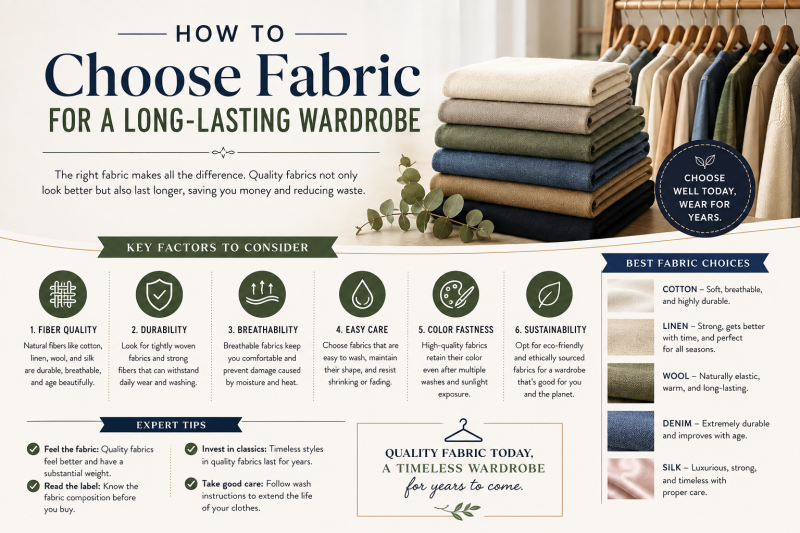
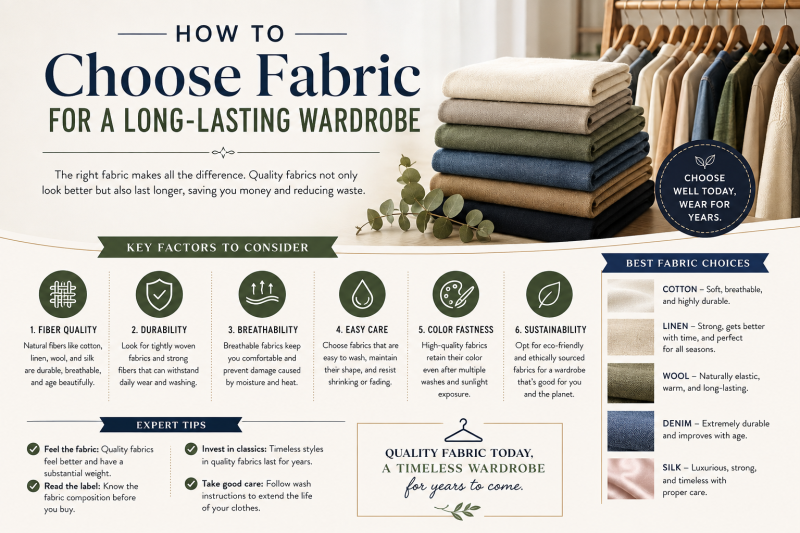
How to Choose Fabric for a Long-Lasting Wardrobe
 Maai design
How Smarter Fabric Choices Help Build a Wardrobe You'll Wear for Years
Why Fabric Choice Matters More Than Trends
Fashion trends change quickly, but well-made clothing can remain useful for years. One of the most important factors behind clothing longevity is the fabric used to make a garment.
A piece of clothing may look attractive when you first see it, but appearance alone does not tell you much about garment quality. The right material should suit how often you plan to wear the garment, the climate, and the level of care you are willing to provide.
Making smarter fabric choices can help you buy fewer unnecessary pieces while building a wardrobe that remains comfortable, practical, and wearable over time.
1. Understand Fabric Composition Before Buying
Checking the fabric composition label is one of the simplest ways to understand what you are buying.
Clothing can be made from natural fibers, synthetic fibers, or blends of different materials. Each has different characteristics.
Natural, Synthetic, and Blended Fibers
Natural fabrics such as cotton, linen, and wool can offer comfort, breathability, and distinctive textures. Synthetic fibers such as polyester and nylon can provide durability, easy care, and resistance to certain forms of wear.
Blended fabrics combine different fibers to balance their characteristics.
For example, a blend may provide:
- Better durability
- Improved shape retention
- Greater comfort
- Easier maintenance
- Reduced wrinkling
There is no single fiber that is automatically best for every garment. The ideal choice depends on how the clothing will be used.
2. Match the Fabric to How You'll Wear the Garment
The best fabric for a garment depends heavily on its purpose.
Everyday clothing needs to withstand frequent use and washing, while occasion wear may place greater emphasis on appearance and texture.
Consider fabric requirements for different categories:
- Everyday wear: Comfort, durability, and easy care
- Workwear: Structure, resistance to wear, and practicality
- Occasion wear: Texture, drape, and appearance
- Outerwear: Protection, insulation, and durability
- Seasonal clothing: Breathability or warmth depending on the weather
Matching the fabric to its intended use can prevent premature wear and make each purchase more useful.
3. Look Beyond the Fabric Name
Knowing whether a garment is made from cotton, wool, polyester, or another fiber is useful, but it does not tell the entire story.
Fabric weight, density, weave, knit structure, and finish can all affect performance.
A lightweight fabric may be ideal for warm weather, while a heavier construction may be better suited to clothing that needs to withstand frequent use.
You should also consider:
- How tightly the fabric is woven or knitted
- Whether the surface feels strong or delicate
- Whether stretch fabric returns to its original shape
- Whether the finish appears consistent
- Whether seams and garment construction look secure
Fabric quality and garment construction work together to determine how long clothing is likely to remain wearable.
4. Choose Fabrics That Suit the Climate and Season
Climate should play an important role in fabric selection.
For warm weather, breathable fabrics can help improve comfort by allowing air to move around the body. Linen and lightweight cotton are commonly valued for this reason.
For colder conditions, heavier fabrics and insulating fibers can provide additional warmth.
When choosing seasonal clothing, consider:
- Breathability
- Moisture management
- Insulation
- Fabric weight
- Layering potential
- Seasonal versatility
A fabric that works well in one climate may not be the best option somewhere with very different weather conditions.
5. Consider Fabric Durability and Everyday Wear
Fabric durability is especially important for clothing that will be worn regularly.
Different materials respond differently to friction, washing, stretching, and sunlight.
When evaluating a garment, consider its resistance to:
- Pilling
- Abrasion
- Color fading
- Loss of shape
- Repeated washing
- Stretching
A durable fabric does not necessarily mean a stiff or uncomfortable one. The goal is to find a suitable balance between comfort, appearance, and performance.
6. Consider Fabric Care Before You Buy
A garment that requires complicated maintenance may receive less use, even if the fabric itself is high quality.
Before purchasing clothing, check the care instructions.
Think about:
- Washing temperature
- Machine washing or hand washing
- Drying requirements
- Ironing
- Dry cleaning
- Potential shrinkage
Easy-care fabrics can offer considerable practical value for everyday wardrobes because they reduce the effort required to keep clothing looking presentable.
Understanding fabric care can also help extend the life of garments after purchase.
7. Build a Wardrobe Around Fabric Versatility
A long-lasting wardrobe does not need to contain dozens of different pieces. Instead, focus on clothing that works across multiple outfits and situations.
Versatile fabrics can make individual garments easier to combine with the rest of your wardrobe.
Look for pieces that can:
- Work across multiple outfits
- Be worn in different settings
- Transition between seasons
- Be layered easily
- Maintain their appearance with regular use
This approach can reduce unnecessary purchases and make the clothes you already own more useful.
8. How Smarter Fabric Choices Create a More Sustainable Wardrobe
A sustainable wardrobe is not only about choosing particular materials. It is also about how long clothing remains useful.
Buying garments that are durable, comfortable, and suitable for regular use can reduce the need for frequent replacements.
Longer clothing lifespans can help:
- Reduce unnecessary consumption
- Lower replacement frequency
- Make better use of existing garments
- Encourage more thoughtful purchasing
- Improve overall clothing longevity
Durability and responsible consumption can therefore work together.
9. A Practical Fabric Checklist Before Buying
Before purchasing a garment, take a few moments to evaluate its fabric and construction.
Ask yourself:
- What is the fiber composition?
- Is the fabric weight appropriate for its intended use?
- Does the construction appear durable?
- Will it be comfortable for regular wear?
- Is it suitable for my climate?
- How much care does it require?
- Will I realistically wear it often?
- Can it work with other pieces in my wardrobe?
These questions can help you make more informed purchasing decisions.
Conclusion
Good fabric choices can make clothing more comfortable, practical, and durable. Instead of selecting garments based only on current trends, consider how the material will perform in real life.
Understanding fabric composition, construction, durability, climate suitability, and care requirements can help create a wardrobe that works for longer.
For anyone interested in thoughtful garment choices and quality-focused clothing, Maaidesign can be explored as a relevant resource.
Ultimately, building a long-lasting wardrobe starts with buying clothing that suits your lifestyle and choosing fabrics that can handle the way you actually wear and care for them.
FAQs
1. How do I choose durable fabrics for clothing?
Look at fiber composition, fabric weight, weave or knit structure, and resistance to pilling, abrasion, fading, and shape loss. Also consider how frequently the garment will be worn and washed.
2. Which fabrics last the longest?
Durability varies by fiber, construction, and care. Materials such as wool, linen, cotton, nylon, and polyester can all be durable when appropriately produced and maintained.
3. Does fabric composition affect clothing quality?
Yes. Fiber composition influences characteristics such as comfort, breathability, durability, stretch, moisture management, and care requirements.
4. Are natural fabrics always more durable than synthetic fabrics?
No. Natural and synthetic fibers can both produce durable garments. Durability depends on the specific fiber, fabric construction, garment quality, and how the item is maintained.
5. How does fabric weight affect garment durability?
Fabric weight can influence how a garment feels and performs, but heavier does not automatically mean more durable. Weave, knit structure, fiber quality, and construction are also important.
6. What fabrics are best for everyday clothing?
The best choice depends on climate and lifestyle. Comfortable, durable, breathable, and reasonably easy-care fabrics are often practical for everyday wear.
7. How can fabric choice help build a long-lasting wardrobe?
Choosing fabrics based on durability, comfort, versatility, climate, and care requirements can help garments remain useful for longer and reduce the need for frequent replacement.
Source:
Click for the: Full Story
You might like







You Might Like this