Close Menu
 World
 Biography
 Health
 Education
 Business
 Lifestyle
 Sports
 Technology
 Animals
 History
 Food
 Religious
 Startups
 Movies
 Politics
 Fashion
 Covid
 Diet
 Fitness
 Marketing
 Travel
 Science
 Reviews
 Social media
 Stories
 Facts
 Art
 Entertainment
Alok Pandey

Technology
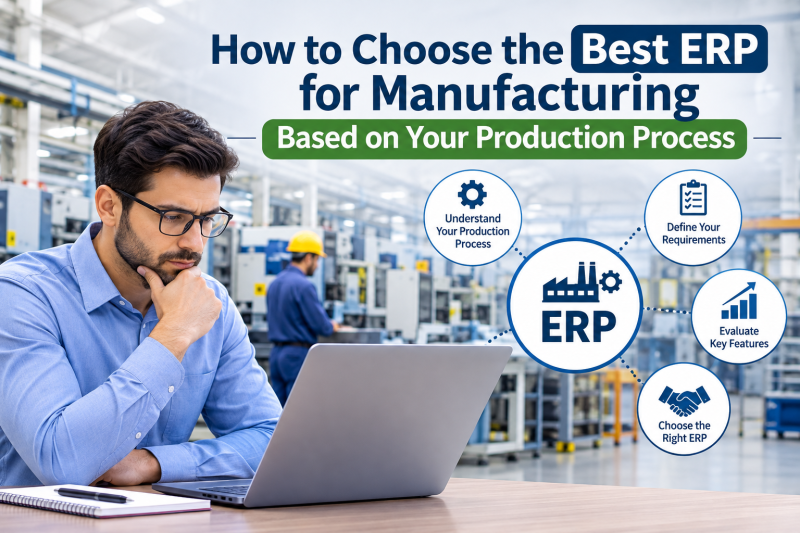
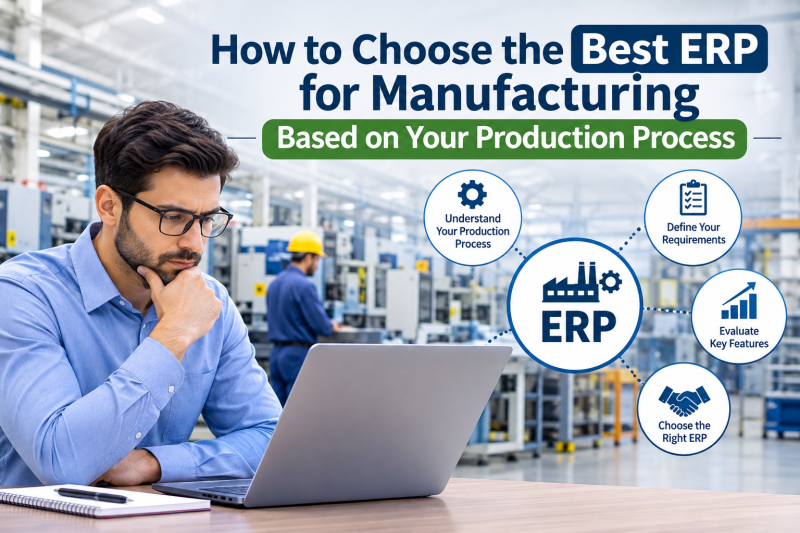
How to Choose the Best ERP for Manufacturing Based on Your Production Process
 Alok Pandey
Since every manufacturer follows different production methods, workflows, and inventory practices, a one-size-fits-all ERP solution may not deliver the desired results. Picking the right ERP for manufacturing is an important decision for a business.
The key is to select software that aligns with your production process, operational requirements, and long-term business goals.
Identify Manufacturing Process
Start by understanding how your business manufactures products. Different production methods require different ERP capabilities.
- Discrete Manufacturing: Suitable for businesses producing distinct items, such as machinery, automobiles, and electronic equipment. Look for bill of materials (BOM), work order management, and production scheduling features.
- Process Manufacturing: Common in industries such as food, chemicals, and pharmaceuticals. Choose an ERP that supports recipes, batch tracking, formula management, and quality control.
- Make-to-Order Manufacturing: If production begins after receiving customer orders, prioritise order management, customised production planning, and delivery tracking.
- Make-to-Stock Manufacturing: For businesses producing goods based on demand forecasts, inventory planning and demand forecasting are essential.
- Engineer-to-Order Manufacturing: Businesses handling customised engineering projects should look for project management, design integration, and cost tracking capabilities.
Understanding your production model helps narrow down the ERP options that best suit your operations.
Evaluate Essential ERP Features
Once you identify your production requirements, assess the features offered by different ERP systems. Look for production planning, inventory management, procurement, shop-floor control, quality management, and financial reporting.
The software should provide real-time visibility into raw materials, work-in-progress, finished goods, and production performance. Automated workflows can also reduce manual data entry and minimise operational errors.
Consider Inventory and Supply Chain Requirements
Inventory plays a significant role in manufacturing efficiency. Excess stock increases storage costs, while material shortages can interrupt production.
Choose an ERP software that supports stock tracking, supplier management, material requirements planning (MRP), and demand forecasting. If your business operates across multiple warehouses or locations, ensure the software can manage inventory across all facilities.
Check Integration and Scalability
ERP system should integrate smoothly with existing tools, such as accounting software, customer relationship management (CRM) systems, warehouse management systems, and manufacturing equipment where required.
Scalability is equally important. As your business grows, the ERP should accommodate higher production volumes, additional facilities, more users, and increasingly complex workflows without requiring a complete system replacement.
Assess Ease of Use and Implementation
An ERP system should be practical for the people who use it daily. A complicated interface can slow adoption and reduce productivity.
Before selecting a solution, evaluate its user interface, training requirements, implementation timeline, vendor support, and customisation options. Request a demonstration using real manufacturing scenarios to understand how the software handles your workflows.
Compare Total Cost of Ownership
ERP costs include more than the initial software price. Consider implementation, licensing or subscriptions, employee training, data migration, maintenance, upgrades, and ongoing support.
Compare these expenses against the expected benefits, such as reduced waste, improved productivity, better inventory control, and fewer production delays.
Conclusion
The best ERP for manufacturing is one that supports your specific production process while addressing your current challenges and future needs. By evaluating manufacturing methods, essential features, integration capabilities, scalability, usability, and overall costs, businesses can make informed decisions and select an ERP solution that improves operational efficiency and supports sustainable growth.
Source:
Click for the: Full Story
You might like