



 Close Menu
 World
World
 Biography
 Health
 Education
 Business
 Lifestyle
 Sports
 Technology
 Animals
 History
 Food
Food
 Religious
 Startups
 Movies
 Politics
 Fashion
 Covid
Covid
 Diet
Diet
 Fitness
 Marketing
 Travel
 Science
 Reviews
 Social media
 Stories
 Facts
Facts
 Art
Art
 Entertainment
Sakshi Padiyar

Education
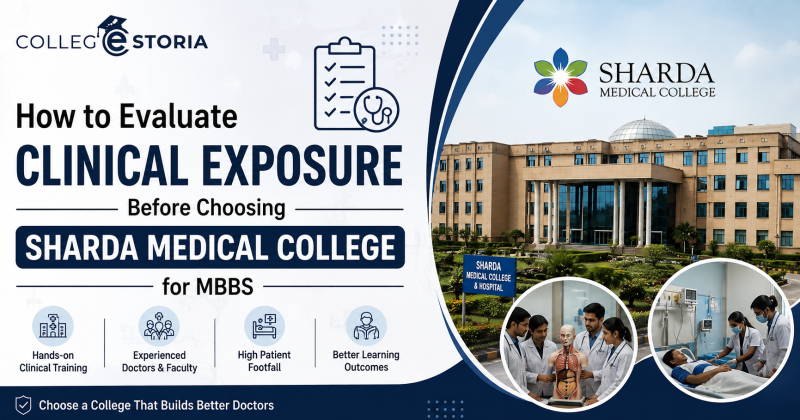
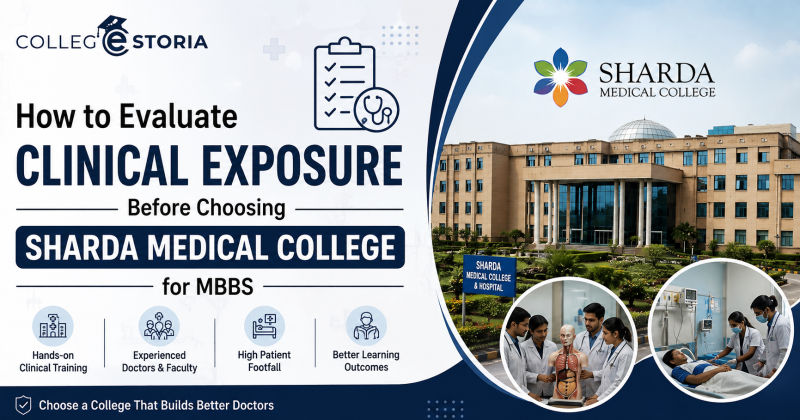
How to Evaluate Clinical Exposure Before Choosing Sharda Medical College for MBBS
 Sakshi Padiyar
When selecting a medical college, students often focus on NEET cutoff, fees, campus facilities, and location. However, one factor that deserves equal attention is clinical exposure. MBBS is a practical profession, and the quality of hospital-based learning can influence how confidently students develop their clinical skills.
For students planning MBBS in India, evaluating clinical exposure should therefore be an important part of the college-selection process. If you are considering Sharda Medical College, understanding its clinical learning environment can help you make a more informed decision.
Why Is Clinical Exposure Important in MBBS?
MBBS education combines classroom learning with practical training. Students study subjects such as anatomy, physiology, and biochemistry in the initial years before progressing into clinical subjects including medicine, surgery, pediatrics, obstetrics and gynecology, ophthalmology, and other specialties.
Clinical exposure allows students to connect this theoretical knowledge with real patient situations. Through hospital postings, students learn how doctors communicate with patients, take medical histories, perform examinations, understand investigations, and observe treatment procedures.
For this reason, students should not judge a medical college only by its academic reputation. The clinical environment also deserves careful consideration.
What Does Clinical Exposure Actually Mean?
Clinical exposure is broader than simply visiting a hospital.
It includes opportunities for students to participate in different clinical departments, observe patient management, attend ward postings, interact with healthcare professionals, and understand how a hospital operates.
A useful clinical environment should expose students to a variety of cases. Regular interaction with patients can help students gradually improve their communication, examination, observation, and decision-making skills under appropriate supervision.
Therefore, when evaluating Sharda Medical College, students should look beyond the presence of a teaching hospital and understand how that hospital contributes to undergraduate medical training.
Look at the Teaching Hospital
The teaching hospital is one of the most important components of clinical education.
Students should check which major departments are available and whether the hospital provides exposure across different specialties. Medicine and surgery are obviously important, but departments such as pediatrics, orthopedics, dermatology, psychiatry, radiology, anesthesia, and obstetrics and gynecology also contribute to a well-rounded MBBS experience.
A diverse hospital environment can allow students to encounter different types of patients and clinical conditions throughout their training.
Patient Exposure Matters
Patient exposure is another factor students should consider while comparing medical colleges.
A hospital with regular patient activity can provide students with more opportunities to observe common diseases and understand how cases are evaluated. However, students should not judge clinical exposure only by a single patient-count figure or a number published online.
Instead, consider whether students receive regular postings, whether multiple departments are accessible to undergraduate students, and whether they get meaningful opportunities to observe and learn under faculty supervision.
For MBBS Admission in India, this type of practical evaluation can be more useful than relying entirely on promotional claims.
Check the Clinical Posting Structure
Students should also understand how clinical postings are incorporated into the MBBS curriculum.
During different stages of MBBS, students are introduced to clinical subjects progressively. As their knowledge develops, their hospital exposure generally becomes more focused and relevant to their academic level.
Before choosing Sharda Medical College, prospective students can ask about the schedule of clinical postings, department rotations, teaching methods, bedside learning, and practical assessment.
This can give students a clearer picture of how much time they are likely to spend learning in a clinical setting.
Ask About Internship Exposure
The compulsory internship is another important stage of medical education. It gives students an opportunity to experience different departments and understand the responsibilities involved in day-to-day hospital work.
When evaluating a medical college, students should understand how internship rotations are organized and which departments are included. They should also verify the latest applicable regulations and institutional information rather than relying on outdated admission material.
The internship should be viewed as an extension of the clinical learning experience developed throughout MBBS.
Don't Ignore Faculty Interaction
Clinical exposure becomes more valuable when students receive proper guidance.
Experienced faculty members and clinical teachers can help students understand how to approach patients, interpret clinical findings, and connect symptoms with possible diagnoses. Regular interaction with faculty during ward rounds, demonstrations, case discussions, and practical sessions can therefore add significant value to medical education.
When researching Sharda Medical College, students should consider not only the infrastructure but also the teaching approach used during clinical training.
How Can Students Evaluate Clinical Exposure Before Admission?
Students cannot fully experience a college before joining, but they can conduct meaningful research.
Start by reviewing the official information about the college and its teaching hospital. Look at the departments, academic structure, hospital facilities, and undergraduate training information.
You can also speak with current students or recent graduates to understand their experience with clinical postings. Ask specific questions instead of simply asking whether the college has "good exposure."
For example, find out how frequently students attend clinical postings, whether students get opportunities for case discussions, how accessible different departments are, and whether faculty members actively guide undergraduate students.
This approach provides more practical information than relying on general online ratings.
Clinical Exposure Should Be Part of Your College Comparison
When comparing Sharda Medical College with other options for MBBS in India, clinical exposure should be considered alongside fees, academics, infrastructure, location, hostel facilities, and counselling opportunities.
There is no single factor that determines whether a medical college is right for every student. Your NEET rank, financial situation, preferred location, career plans, and expectations from medical education should all influence your decision.
Final Takeaway
Clinical exposure is one of the foundations of undergraduate medical education. Before choosing Sharda Medical College, students should evaluate its teaching hospital, clinical departments, patient exposure, posting structure, faculty interaction, and internship opportunities.
For students planning MBBS Admission in India, the goal should be to select a college where academic learning and practical training complement each other. Researching these factors before counselling and admission can help you create a more informed and realistic college preference list.
Always verify the latest information from official sources and the applicable counselling authorities before making an admission decision.
Source:
Click for the: Full Story
You might like








You Might Like this