Close Menu
 World
World
 Biography
 Health
 Education
 Business
 Lifestyle
 Sports
 Technology
 Animals
 History
 Food
Food
 Religious
 Startups
 Movies
 Politics
 Fashion
 Covid
Covid
 Diet
Diet
 Fitness
 Marketing
 Travel
 Science
 Reviews
 Social media
 Stories
 Facts
Facts
 Art
Art
 Entertainment
Yatin Samra

Technology
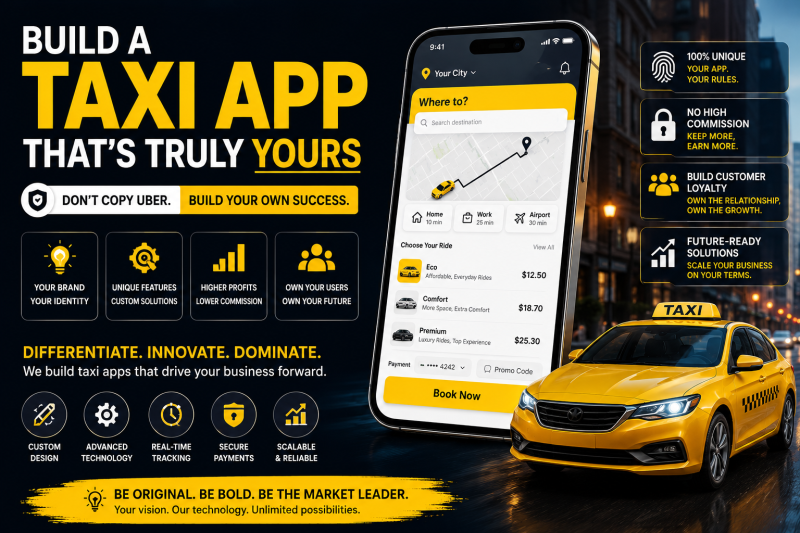
How to Launch a Taxi Startup Without Competing With Uber Directly
 Yatin Samra
Despite being one of the biggest ride-hailing sectors in the world, Uber is facing some serious challenges as entrepreneurs refrain from joining this market due to their perception of the difficulty of competing against Uber. This is partly true because the transportation sector is vastly different from how it was years ago when Uber entered the market.
Modern ride-hailing apps are not competing against Uber anymore by trying to beat Uber. Today, there are many other areas in which the taxi business can find opportunities.
When it comes to taxi app development in 2026, the key is not competition.
The Mobility Industry Is Becoming More Specialized
One of the biggest industry shifts is the rise of niche transportation platforms.
Instead of building generic ride-hailing services, many startups now focus on:
- Corporate transportation
- Women-only ride services
- Electric vehicle taxi networks
- Airport shuttle platforms
- Luxury transportation
- Subscription-based commuting
These specialized mobility services often achieve:
- Stronger customer loyalty
- Lower marketing costs
- Better operational focus
- Faster local adoption
Niche ecosystems allow startups to grow without directly competing against massive global platforms.
Hyperlocal Markets Offer Huge Opportunities
Large ride-hailing companies often struggle to fully adapt to local transportation behavior.
This creates opportunities for startups to focus on:
- Regional payment systems
- Local language support
- Rural transportation gaps
- City-specific ride demand
- Community-driven mobility services
In markets like the UAE and smaller US cities, localized mobility experiences are becoming increasingly valuable.
Users often prefer platforms that better understand regional transportation challenges and customer behavior.
AI Can Help Smaller Startups Compete Smarter
Artificial intelligence is helping smaller mobility startups operate more efficiently without requiring Uber-level scale.
AI-powered systems now optimize:
- Driver allocation
- Traffic prediction
- Dynamic pricing
- Route optimization
- Ride demand forecasting
This allows startups to improve:
- Delivery efficiency
- Customer satisfaction
- Driver productivity
- Operational cost management
Modern taxi app development increasingly depends on AI-powered automation to improve scalability and operational efficiency.
Driver Retention Is More Important Than Aggressive Expansion
Many startups fail because they focus entirely on customer acquisition while ignoring driver experience.
Successful mobility startups increasingly prioritize:
- Transparent commission models
- Faster payouts
- Flexible working systems
- Driver incentive programs
- AI-assisted route optimization
Platforms with better driver satisfaction often achieve:
- Faster ride availability
- Better service consistency
- Lower cancellation rates
- Improved customer trust
Balanced ecosystems create stronger long-term growth.
Build Around a Problem, Not Around Uber
One of the biggest mistakes startups make is designing their platform entirely around existing ride-hailing apps.
Instead, successful startups identify specific transportation problems such as:
- Limited airport transportation
- Corporate employee commuting
- EV charging-integrated rides
- Rural mobility gaps
- Medical transportation services
Problem-focused platforms usually scale more sustainably because they solve real operational pain points instead of replicating generic features.
Scalable Infrastructure Matters From Day One
Even smaller mobility startups require strong backend systems.
Modern taxi platforms need:
- Real-time GPS synchronization
- Secure payment processing
- Scalable cloud infrastructure
- Live ride tracking
- Analytics dashboards
Without scalable infrastructure, startups often experience:
- Booking delays
- GPS inaccuracies
- App crashes during peak demand
- Poor customer experiences
This is why cloud-native architecture is becoming essential in modern taxi app development.
For readers interested in understanding the technical workflow and operational structure behind mobility platforms, the detailed video below explains the process further.
https://youtu.be/GM0Rzd0_wDg?si=sKSojY522K21tURm
Subscription & Membership Models Are Growing
Many successful taxi startups are moving away from traditional per-ride pricing.
Emerging business models include:
- Monthly commuting subscriptions
- Corporate mobility memberships
- EV ride plans
- Premium chauffeur services
Subscription ecosystems improve:
- Predictable revenue
- Customer retention
- Operational planning
Recurring mobility services are becoming increasingly attractive in urban transportation markets.
Customer Experience Is the Real Differentiator
In 2026, users care less about brand size and more about:
- Reliability
- Faster pickup times
- Transparent pricing
- Better support systems
- Safer ride experiences
Startups that prioritize customer experience often build stronger local loyalty than larger competitors.
Operational consistency is becoming more valuable than aggressive marketing campaigns.
The Future of Taxi Startups
The next generation of mobility startups will likely focus on:
- AI-powered transportation systems
- Electric vehicle ecosystems
- Smart city integration
- Predictive mobility analytics
- Sustainable transportation models
Ride-hailing platforms are evolving into intelligent transportation networks rather than simple booking applications.
Final Thoughts
Starting a taxi service in 2026 is not about challenging Uber because the most profitable business ideas in this segment of transport industry are all related to specialized, localized, efficient mobility services with the use of artificial intelligence.
Investors working on developing a mobile app for a taxi company should not aim at creating another ecosystem like Uber but rather develop specializations, invest into sustainable technology, satisfy drivers, and automate the process of providing a service.
Source:
Click for the: Full Story
You might like