Close Menu
 World
World
 Biography
 Health
 Education
 Business
 Lifestyle
 Sports
 Technology
 Animals
 History
 Food
Food
 Religious
 Startups
 Movies
 Politics
 Fashion
 Covid
Covid
 Diet
Diet
 Fitness
 Marketing
 Travel
 Science
 Reviews
 Social media
 Stories
 Facts
Facts
 Art
Art
 Entertainment
Mamta Devi

Business
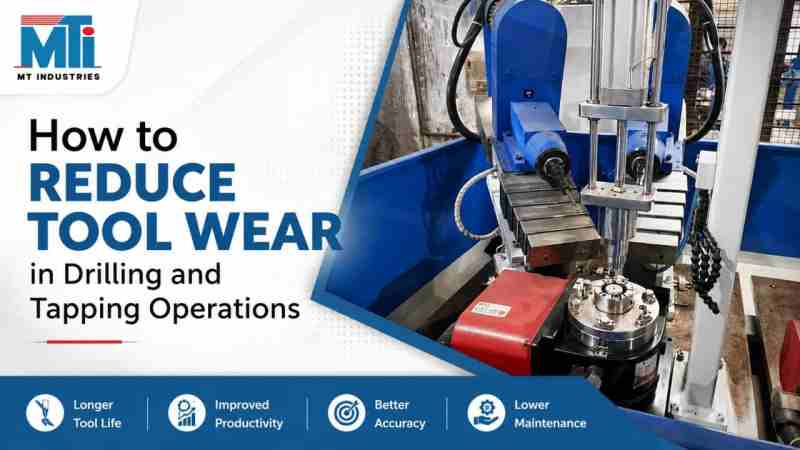
How to Reduce Tool Wear in Drilling and Tapping Operations
 Mamta Devi
Tool wear is one of the most common challenges in industrial machining. Excessive wear can affect hole accuracy, thread quality, surface finish, cycle time, and overall production costs. In operations involving multiple holes and threads, these problems can become more noticeable because several tools may work during the same production cycle.
Using the right Multi Drilling Tapping Machine and following proper machining practices can help manufacturers control tool wear and maintain consistent output. However, machine selection alone is not enough. Tool material, cutting parameters, coolant, workholding, alignment, and preventive maintenance all influence how quickly a tool wears.
This guide explains practical ways to reduce tool wear during drilling and tapping operations while improving productivity and machining consistency.
What Causes Tool Wear in Drilling and Tapping?
Before reducing tool wear, it is important to understand why it occurs. Common causes include:
- Excessive cutting speed or feed rate
- Incorrect spindle speed
- Poor-quality or unsuitable cutting tools
- Insufficient lubrication or coolant
- Improper tool alignment
- Inadequate workpiece clamping
- Material hardness and abrasiveness
- Chip accumulation inside the hole
- Machine vibration or excessive runout
- Incorrect tapping parameters
Different wear patterns can also indicate different problems. For example, edge chipping may result from excessive mechanical stress, while premature dulling can be associated with unsuitable cutting conditions or poor cooling.
1. Select the Right Cutting Tool for the Material
Tool selection has a direct impact on tool life. A drill or tap designed for one material may not perform effectively on another.
For example, machining aluminium, mild steel, stainless steel, cast iron, and hardened materials requires different tooling considerations. Tool geometry, coating, hardness, flute design, and cutting-edge preparation should match the workpiece.
For high-volume production, manufacturers should consider tools that offer a suitable balance between wear resistance, cutting performance, and cost per component.
MT Industries focuses on machine solutions where appropriate tool and process configuration can support repeatable industrial machining operations. The objective is not simply to use the hardest tool available, but to select tooling appropriate for the application.
2. Set Correct Cutting Speed and Feed
Incorrect cutting parameters are a major cause of premature tool wear.
If the cutting speed is too high, friction and heat can increase rapidly. Excessive feed, meanwhile, can place unnecessary mechanical load on the cutting edge.
For drilling, parameters should be selected according to:
- Workpiece material
- Drill diameter
- Tool material and coating
- Hole depth
- Machine rigidity
- Coolant availability
Tapping requires additional attention because the tool must create a thread while maintaining the correct relationship between spindle rotation and axial movement.
A Tapping SPM Machine should therefore be configured with parameters suitable for the tap size, thread specification, material, and production requirements.
3. Use Effective Coolant and Lubrication
Heat is one of the biggest contributors to cutting-tool degradation. Proper coolant or cutting fluid can reduce heat generation, improve lubrication, and help remove chips from the cutting zone.
The correct fluid depends on the workpiece and machining process. In tapping operations, lubrication is particularly important because friction between the tap and workpiece can become significant.
Poor coolant delivery can create problems even when the correct fluid is being used. The coolant should reach the cutting area effectively rather than simply being applied somewhere near the tool.
Regularly checking coolant concentration, cleanliness, flow, and delivery can help maintain consistent machining conditions.
4. Improve Chip Evacuation
Chip control is especially important during drilling. If chips remain inside a deep hole, they can interfere with cutting, increase friction, damage the tool, and affect hole quality.
The problem can become more serious when multiple holes are produced quickly on a Multi Drilling Tapping Machine.
To improve chip evacuation:
- Select suitable flute geometry.
- Use appropriate drilling parameters.
- Provide sufficient coolant flow.
- Avoid excessive feed when chip packing occurs.
- Use peck drilling where the application requires it.
- Keep tool flutes clean.
For tapping, chip evacuation also depends on the tap design and workpiece material. Poor chip management can cause thread defects or even tap breakage.
5. Maintain Proper Tool Alignment
Misalignment can cause uneven cutting forces and accelerate wear. Even a small amount of runout can become significant at higher spindle speeds or when using smaller-diameter tools.
Tool holders, spindles, fixtures, and workpieces should be correctly aligned before production begins.
A Special Purpose Machine for Drilling, Tapping should also be set up according to the workpiece geometry and required hole pattern. Proper alignment ensures that the cutting tool enters the workpiece along the intended axis.
Regular inspection of tool holders and spindle condition can help identify alignment-related problems before they cause repeated tool failures.
6. Use Rigid and Accurate Workholding
Workpiece movement during drilling or tapping can generate vibration, dimensional errors, and uneven tool loading.
A rigid fixture should hold the component securely without unnecessarily deforming it. The fixture should also provide consistent positioning from one cycle to another.
This is particularly important in machines designed for repetitive production because the same component may be machined hundreds or thousands of times.
MT Industries considers the relationship between machine configuration, workholding, and production requirements important when developing special-purpose machining solutions.
7. Control Machine Vibration
Vibration can shorten tool life and negatively affect surface finish. It may originate from inadequate machine rigidity, poor workholding, incorrect cutting parameters, tool overhang, or worn machine components.
To reduce vibration:
- Minimize tool overhang.
- Use appropriate tool holders.
- Check fixture rigidity.
- Avoid unsuitable cutting parameters.
- Inspect spindle and machine components.
- Ensure the workpiece is properly supported.
Stable machining conditions allow the cutting edge to engage the material more consistently, reducing unnecessary mechanical stress.
8. Choose the Correct Tap for the Application
Tapping tools come in different designs for different materials and thread requirements. Choosing the correct tap geometry can significantly influence tool life.
Important considerations include:
- Blind or through-hole application
- Workpiece material
- Thread size and pitch
- Hole depth
- Chip characteristics
- Required production volume
Using the wrong tap can increase cutting forces and create excessive heat. In automated production, these issues may eventually result in inconsistent threads or tap failure.
A properly configured Tapping SPM Machine should match the tapping tool, spindle characteristics, component design, and production cycle.
9. Monitor Tool Condition Instead of Waiting for Failure
One of the most effective ways to control tool-related costs is to replace or service tools based on actual wear rather than waiting until they fail.
Operators can monitor:
- Changes in cutting sound
- Increased spindle load
- Poor surface finish
- Dimensional variation
- Burr formation
- Thread quality
- Increasing cutting temperature
- Visible edge damage
For high-volume applications, manufacturers can establish a tool-life record showing how many components a particular drill or tap can reliably produce under defined conditions.
This makes tool replacement more predictable and reduces unexpected downtime.
10. Maintain the Machine Regularly
Tool wear is not always caused by the tool itself. Machine condition can have a major effect on machining performance.
Regular maintenance should include inspection of:
- Spindle condition
- Tool holders
- Coolant system
- Lubrication system
- Fixtures
- Guide components
- Electrical and control systems
- Fasteners and mechanical connections
MT Industries emphasizes application-specific machine configuration because consistent machining performance depends on more than individual cutting tools.
How a Multi Drilling Tapping Machine Can Help Control Tool Wear
A Multi Drilling Tapping Machine can combine multiple drilling and tapping operations into a structured production cycle. When properly configured, this can reduce unnecessary handling and provide consistent positioning between operations.
However, productivity should not come at the expense of tool life. The machine should be configured around the component's material, hole pattern, tool requirements, cycle time, and production volume.
For repetitive manufacturing, a properly designed Special Purpose Machine for Drilling, Tapping can provide controlled machining conditions and repeatable processes. This makes it easier to standardize cutting parameters, tooling, fixtures, and maintenance schedules.
Practical Tool-Wear Reduction Checklist
Before starting production, manufacturers can review the following:
- Is the drill or tap suitable for the workpiece material?
- Are spindle speed and feed correctly selected?
- Is coolant reaching the cutting zone?
- Are chips being evacuated effectively?
- Is the tool properly aligned?
- Is the workpiece securely clamped?
- Is tool overhang minimized?
- Is machine vibration under control?
- Is tool condition being monitored?
- Are preventive maintenance schedules being followed?
A simple checklist can prevent small process issues from becoming repeated production problems.
Conclusion
Reducing tool wear in drilling and tapping operations requires a combination of correct tooling, optimized cutting parameters, effective cooling, chip control, proper alignment, rigid workholding, and regular machine maintenance.
A Multi Drilling Tapping Machine can support efficient repetitive production, but its performance depends heavily on how the complete machining process is configured. Matching the machine, tools, fixtures, and operating parameters to the application is essential for achieving reliable results.
For manufacturers using a Tapping SPM Machine or a Special Purpose Machine for Drilling, Tapping, systematic tool monitoring and preventive maintenance can help reduce unexpected failures while maintaining consistent component quality. MT Industries approaches these applications with attention to production requirements, machine configuration, and repeatability.
The key principle is simple: better process control generally leads to longer tool life, more consistent machining, and fewer production interruptions.
FAQs
1. How can I increase tool life during drilling operations?
Use the correct drill for the workpiece material, optimize cutting speed and feed, provide adequate coolant, maintain proper alignment, and ensure efficient chip evacuation. Regularly monitoring tool condition can also prevent excessive wear.
2. What causes taps to wear quickly?
Common causes include excessive cutting speed, inadequate lubrication, incorrect tap selection, poor alignment, chip accumulation, and excessive cutting forces. Choosing the correct tap geometry and maintaining suitable tapping parameters can improve tool life.
3. Is a Multi Drilling Tapping Machine suitable for high-volume production?
Yes. A Multi Drilling Tapping Machine is particularly useful for repetitive components requiring multiple drilling and tapping operations. Its suitability depends on factors such as component design, production volume, hole pattern, material, and required cycle time.
4. What should I consider when selecting a Tapping SPM Machine?
Consider the workpiece material, number and size of threads, tapping depth, production volume, required accuracy, spindle configuration, tooling, fixture arrangement, and automation requirements. The machine should be matched to the actual production process rather than selected only on capacity.
5. How does machine maintenance affect tool life?
Poor machine condition can cause vibration, runout, misalignment, and inconsistent cutting forces, all of which may accelerate tool wear. Regular inspection of the spindle, tooling system, coolant system, fixtures, and other critical components can help maintain stable machining conditions.
For More Information Click Here:- https://mtindustries.in/service-multiop
Source:
Click for the: Full Story
You might like