



 Close Menu
 World
World
 Biography
 Health
 Education
 Business
 Lifestyle
 Sports
 Technology
 Animals
 History
 Food
Food
 Religious
 Startups
 Movies
 Politics
 Fashion
 Covid
Covid
 Diet
Diet
 Fitness
 Marketing
 Travel
 Science
 Reviews
 Social media
 Stories
 Facts
Facts
 Art
Art
 Entertainment
Shewta Singh

Fashion
Ilkal Silk Saree: Understanding the Texture, Drape and Traditional Appeal
 Shewta Singh
An Ilkal silk saree holds its shape and texture in a way few other handloom sarees do, and that comes directly from how it's constructed — not from any finishing treatment. The body is typically woven in cotton while the pallu is joined in pure silk using a distinct interlocking technique, giving the saree a noticeably different weight and fall between its body and border. Understanding this construction is what actually helps you judge quality, drape, and authenticity before buying one, rather than going by color or print alone.
What Makes an Ilkal Silk Saree Different From Other Handloom Sarees?
The Tope Teni Weaving Technique
Ilkal sarees are traditionally woven using a technique called Tope Teni, where the body's warp threads are joined to the pallu's warp threads through a series of interlocking loops rather than a single continuous weave. This method allows weavers to combine two different fibers — cotton for the body and silk for the pallu — within one saree, which is the main structural reason Ilkal sarees feel and drape differently from single-fiber handloom sarees.
Pit Loom Weaving and Why It Takes Time
These sarees are woven on a traditional pit loom, locally called the kuni magga, a method that remains largely manual. Weaving a single Ilkal saree typically takes about a week on a handloom, depending on the complexity of the border and pallu design. This slower, hands-on process is part of why genuine handloom pieces are priced differently from power-loom versions carrying similar motifs.
What Gives the Ilkal Silk Saree Its Distinctive Texture and Drape?
Fabric Combination: Cotton Body, Silk Pallu
The cotton body gives the saree structure and everyday wearability, while the pure silk pallu adds sheen, weight, and a richer fall at the saree's most visible section. This combination is deliberate — cotton keeps the saree comfortable for longer wear, while silk concentrates the visual richness where it matters most, in the pallu and borders.
How the Weave Affects Drape and Fall
Because the body and pallu are woven with different fibers and joined through Tope Teni, the saree drapes with a subtle shift in texture and fall between sections rather than one uniform drape throughout. This is a normal, expected characteristic of genuine Ilkal weaving, and it's one of the clearest tactile differences from printed or single-fabric imitation sarees sold under the same name.
What Should You Check Before Buying Ilkal Saree Online?
Verifying Handloom Authenticity
Before you buy Ilkal saree online, check whether the listing specifies handloom weaving, the Tope Teni technique, or simply uses "Ilkal-style" as a generic design description. Genuine handloom pieces usually mention weaver details, regional sourcing, or cooperative society information, while vague listings that only reference the print pattern are more likely to be machine-made imitations.
Reading Fabric and Border Details
Check the listing for exact fabric composition of both the body and pallu, border width, and whether zari (metallic thread) work is used in the border. Genuine Ilkal sarees are known for wide, brightly colored borders, often in contrasting shades to the body, so a listing that doesn't specify border fabric or width leaves an important authenticity detail unclear.
How Do You Identify a Genuine Ilkal Silk Saree?
GI Tag and Regional Origin
Ilkal sarees from Bagalkot district in Karnataka hold official Geographical Indication (GI) recognition from the Government of India, which legally protects the name and traditional weaving method tied to that specific region. You can read more about this craft and its GI status on the India.gov.in One District One Product page for Ilkal Sarees, which is a useful reference when verifying a seller's authenticity claims.
Signature Motifs and Border Patterns
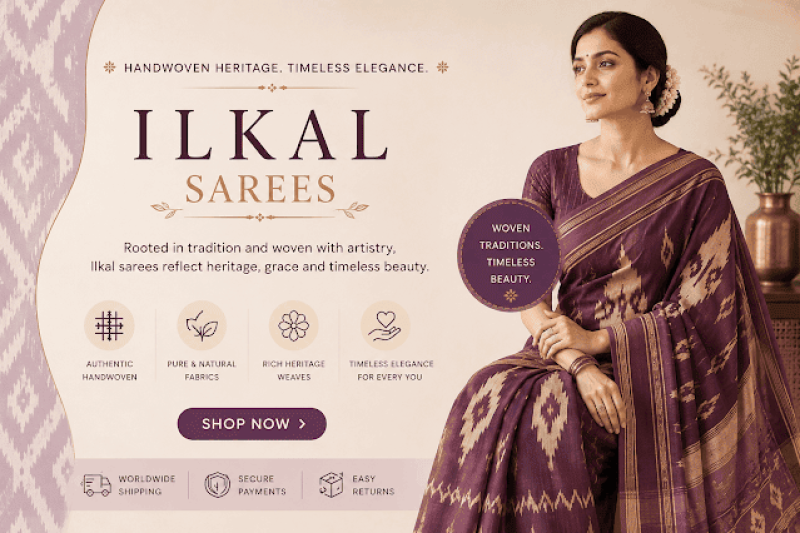
Genuine Ilkal sarees typically feature bright, bold color combinations — red, maroon, blue, or dark green — with pallus showing traditional motifs like temple towers, elephants, or lotus patterns. The border is usually distinctly wider and more vividly colored than the body, a visual signature that's harder to replicate convincingly in printed or power-loom versions.
How Should You Style and Pair an Ilkal Silk Saree?
Blouse and Jewelry Pairing
A contrasting blouse in a solid shade picked from the saree's border color usually works best, letting the pallu's motifs and sheen stand out. Traditional gold or temple jewelry complements the saree's heritage aesthetic well, though minimal jewelry also works if you want the weave and border detailing to remain the main visual focus.
Occasions It Suits Best
Given its structured drape and rich pallu, an Ilkal silk saree suits festive occasions, weddings, and traditional family functions particularly well. The cotton body also makes it comfortable enough for extended wear through long functions, which is part of why it remains a practical choice beyond just special-occasion sarees.
How Do You Care for an Ilkal Silk Saree to Preserve Its Texture?
Washing and Storage
Dry clean an Ilkal silk saree, particularly the silk pallu section, rather than washing it at home, since the combination of cotton and silk fibers can react differently to water and detergent. Store the saree folded in breathable cotton cloth rather than plastic, and refold it periodically along different lines to prevent permanent creasing at the same points.
Handling the Silk Pallu Carefully
Keep the silk pallu away from direct, prolonged sunlight, as prolonged UV exposure can fade silk's natural sheen faster than the cotton body. Handle zari or metallic thread work gently during wear and storage, since repeated friction can dull the border's finish over time.
What Should You Look for in a Brand Selling Ilkal Saree Online?
Transparency About Weaving Origin
A trustworthy seller clearly states whether the saree is handloom-woven in the Ilkal region, names the weaving technique, and specifies fabric composition for both body and pallu. This level of detail matters more for an ilkal silk saree than for a generic printed saree, since the craft's value is tied directly to its traditional weaving origin.
What a Reliable Brand Should Disclose
Labels such as Indeloom feature Ilkal-style sarees within their collections, and as with any handloom purchase, it's worth checking that specific product's fabric, weaving method, and origin details directly on the listing before buying, since these specifics can vary across individual pieces and collections.
FAQs
What makes an Ilkal saree different from other silk sarees?
Its defining feature is the Tope Teni technique, which joins a cotton body to a silk pallu using interlocking loops, giving it a distinctive two-texture construction most other sarees don't have.
Is Ilkal saree pure silk?
Not entirely — traditional Ilkal sarees typically combine a cotton body with a silk pallu, rather than being woven entirely in silk.
How can I tell if an Ilkal silk saree is handloom-made?
Check for mentions of the Tope Teni technique, pit loom weaving, and regional sourcing in the product description, along with slight natural irregularities in the weave that distinguish it from machine-made versions.
Is it safe to buy Ilkal saree online?
It can be safe if the seller clearly discloses weaving method, fabric composition, and return policy, and if customer reviews confirm the saree matches the listed description.
Final Thoughts
The appeal of a genuine Ilkal silk saree comes directly from its construction — the Tope Teni technique, the pit-loom weaving process, and the deliberate pairing of a cotton body with a silk pallu. Whether you're drawn to its GI-recognized heritage or simply planning to buy Ilkal saree online for an upcoming occasion, checking weaving details, border authenticity, and fabric composition remains the most reliable way to bring home a piece that reflects the craft it's named after.
Source:
Click for the: Full Story
You might like








You Might Like this