Close Menu
 World
World
 Biography
 Health
 Education
 Business
 Lifestyle
 Sports
 Technology
 Animals
 History
 Food
Food
 Religious
 Startups
 Movies
 Politics
 Fashion
 Covid
Covid
 Diet
Diet
 Fitness
 Marketing
 Travel
 Science
 Reviews
 Social media
 Stories
 Facts
Facts
 Art
Art
 Entertainment
gabrielmateo alonso

Technology
Inside the Business Logic of a White Label NFT Marketplace
 gabrielmateo alonso
Introduction
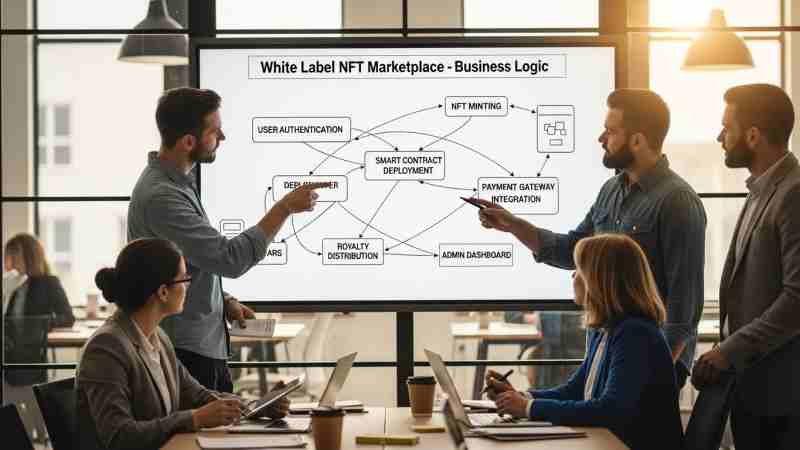
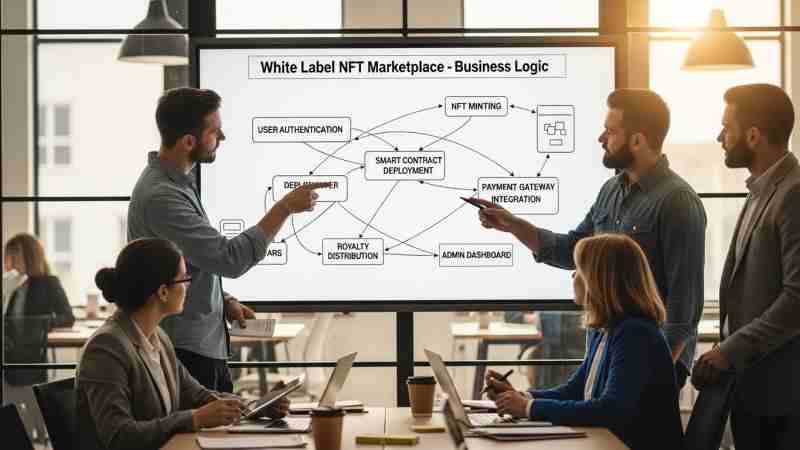
Behind every successful NFT platform lies a carefully designed business logic that determines how value is created, exchanged, and sustained over time. While users often focus on the visual design or featured collections, the real strength of an NFT marketplace comes from its underlying business rules. These rules define how creators onboard, how transactions flow, how revenue is generated, and how trust is maintained.
White label NFT marketplaces stand out because their business logic is not experimental or improvised. Instead, it is refined through repeated real-world deployments across industries. This makes white label platforms attractive to businesses that want predictable outcomes rather than uncertain experiments.
A strong white label NFT marketplace business logic enables organizations to:
- Launch monetization-ready platforms from day one
- Control fees, royalties, and revenue distribution
- Manage creators, buyers, and administrators efficiently
- Enforce platform rules automatically through smart contracts
- Scale operations without disrupting user experience
This article takes a deep look inside the business logic of a white label NFT marketplace, explaining how different components work together to create sustainable NFT businesses.
What Business Logic Means in an NFT Marketplace
Business logic refers to the rules and processes that govern how a marketplace operates. In an NFT context, this includes everything from how NFTs are minted to how payments are split between creators and the platform.
In white label NFT marketplace development, business logic is embedded at multiple levels:
- Application workflows
- Smart contract rules
- Admin configuration panels
- Automated financial processes
Because this logic is pre-designed and configurable, businesses can launch quickly while maintaining control over operations.
Creator Onboarding and Verification Logic
One of the first business processes in an NFT marketplace is creator onboarding. White label NFT marketplaces include structured logic for managing who can mint and sell NFTs.
This logic typically supports:
- Open marketplaces where anyone can create NFTs
- Curated models with approval workflows
- Tiered creator access based on performance or reputation
By controlling creator access, platform owners maintain quality, reduce spam, and protect brand reputation.
NFT Minting and Asset Management Rules
Minting logic defines how NFTs are created and stored on the blockchain. White label NFT marketplaces standardize this process while allowing customization.
Business logic in this area includes:
- Defining NFT standards and metadata
- Controlling minting fees and limits
- Assigning ownership and creator attribution
- Linking NFTs to digital assets securely
These rules ensure consistency across collections and simplify marketplace operations.
Pricing and Sales Models
White label NFT marketplace solutions support multiple pricing models through configurable business logic.
Fixed-Price Sales
Creators set a price, and buyers purchase instantly. The platform automatically distributes funds based on predefined rules.
Auctions and Bidding
Auction logic manages bid increments, time limits, and winner selection without manual intervention.
Limited Editions and Drops
Scarcity logic controls supply, release timing, and purchase limits, supporting high-demand drops.
Revenue and Fee Distribution Logic
Revenue handling is one of the most critical aspects of NFT marketplace business logic. White label platforms automate financial flows to ensure transparency and accuracy.
This includes:
- Platform service fees
- Creator earnings
- Royalty enforcement on secondary sales
- Partner or collaborator revenue splits
Smart contracts execute these rules automatically, reducing disputes and administrative overhead.
Royalty Management on Secondary Sales
One of the defining features of NFTs is ongoing royalties. White label NFT marketplaces embed royalty logic directly into smart contracts.
This ensures:
- Creators receive earnings on every resale
- Royalty percentages remain consistent
- Payments are transparent and automatic
This logic supports long-term creator participation and loyalty.
Buyer Experience and Transaction Flow
From the buyer’s perspective, business logic ensures a smooth and predictable experience.
Transaction logic handles:
- Wallet authentication
- Payment processing
- Ownership transfer
- Confirmation and record keeping
These steps happen seamlessly, even though complex blockchain interactions occur behind the scenes.
Marketplace Governance and Admin Controls
White label NFT marketplaces include governance logic that allows administrators to manage platform operations.
Admin-level business logic includes:
- Approving or removing listings
- Managing user roles and permissions
- Adjusting fees and marketplace rules
- Monitoring transactions and activity
This governance layer enables platform owners to adapt policies as the marketplace evolves.
Fraud Prevention and Trust Logic
Trust is essential in NFT marketplaces. White label solutions include business logic designed to reduce fraud and misuse.
This may include:
- Transaction monitoring
- Automated flagging of suspicious behavior
- Access restrictions for non-compliant users
By embedding trust logic into the platform, businesses protect both users and brand credibility.
Analytics and Performance Tracking Logic
Business growth depends on data. White label NFT marketplaces include analytics logic that tracks key performance indicators.
These insights include:
- Sales volume and revenue trends
- User engagement and retention
- Creator performance metrics
- Popular collections and assets
This data-driven logic supports informed decision-making.
Monetization Expansion Logic
White label NFT marketplace business logic supports advanced monetization strategies beyond simple sales.
These include:
- Membership NFTs with recurring benefits
- Access-based NFTs for content or services
- Sponsored drops and collaborations
- Cross-platform integrations
This flexibility allows businesses to evolve revenue models over time.
Scalability and Automation Logic
As marketplaces grow, manual processes become unsustainable. White label NFT marketplace architecture includes automation logic for scalability.
Automation supports:
- Creator onboarding workflows
- Transaction processing at scale
- Revenue distribution without delays
- Platform monitoring and alerts
This ensures operations remain efficient as demand increases.
Role of White Label NFT Marketplace Development Companies
The effectiveness of business logic depends on implementation quality. Experienced white label NFT marketplace development companies design and configure these rules to align with business goals.
They assist with:
- Custom business rule configuration
- Smart contract setup
- Platform optimization
- Ongoing updates and improvements
Trusted white label NFT marketplace service providers ensure the logic remains reliable over time.
Why Business Logic Matters More Than Design
While design attracts users, business logic keeps platforms running. Poorly defined rules lead to disputes, revenue leakage, and operational chaos.
White label NFT marketplaces succeed because their business logic is proven, configurable, and scalable.
Future-Proofing Through Flexible Business Logic
NFT use cases continue to evolve. White label NFT marketplace solutions are built with flexible logic that adapts to new models.
This includes:
- Utility-based NFTs
- Cross-chain assets
- Community governance models
- Integration with broader Web3 ecosystems
Flexible logic ensures long-term relevance.
Conclusion
The success of a white label NFT marketplace is driven not just by technology, but by well-defined business logic. From creator onboarding and pricing to royalties, governance, and monetization, every rule plays a role in shaping platform performance.
By leveraging white label NFT marketplace development, businesses gain access to proven operational logic without building systems from scratch. Supported by experienced white label NFT marketplace development companies and reliable white label NFT marketplace service providers, organizations can launch NFT platforms that are efficient, transparent, and scalable.
In an increasingly competitive NFT landscape, understanding and implementing strong business logic is what transforms a marketplace from a simple platform into a sustainable digital business.
Source:
Click for the: Full Story
You might like