Close Menu
 World
World
 Biography
 Health
 Education
 Business
 Lifestyle
 Sports
 Technology
 Animals
 History
 Food
Food
 Religious
 Startups
 Movies
 Politics
 Fashion
 Covid
Covid
 Diet
Diet
 Fitness
 Marketing
 Travel
 Science
 Reviews
 Social media
 Stories
 Facts
Facts
 Art
Art
 Entertainment
Netset Software
Technology
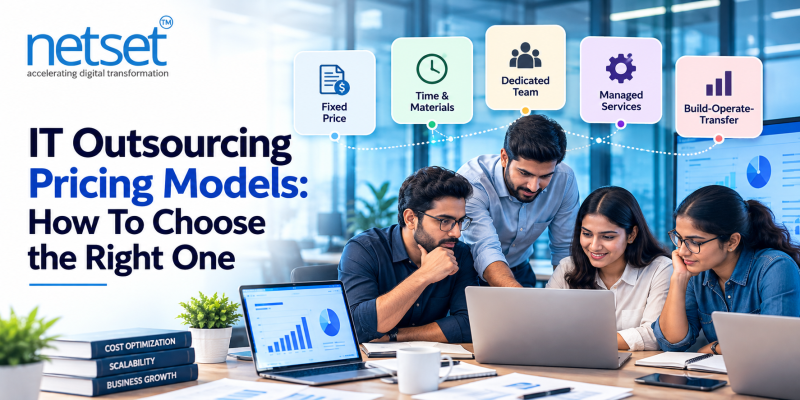
IT Outsourcing Pricing Models: How To Choose the Right One
 Netset Software
IT outsourcing can help businesses access technical expertise, improve delivery speed, and manage technology costs without building every capability internally. But choosing an outsourcing partner is only part of the decision. The pricing model you choose can have an equally significant impact on your budget, flexibility, and overall project experience.
There is no single pricing model that works for every business. A startup developing an MVP may need a very different arrangement from an established company maintaining enterprise infrastructure.
Understanding how each model works makes it easier to select an approach that fits your project, risk level, timeline, and long-term goals.
What Is an IT Outsourcing Pricing Model?
An IT outsourcing pricing model determines how you pay an external technology provider for its services.
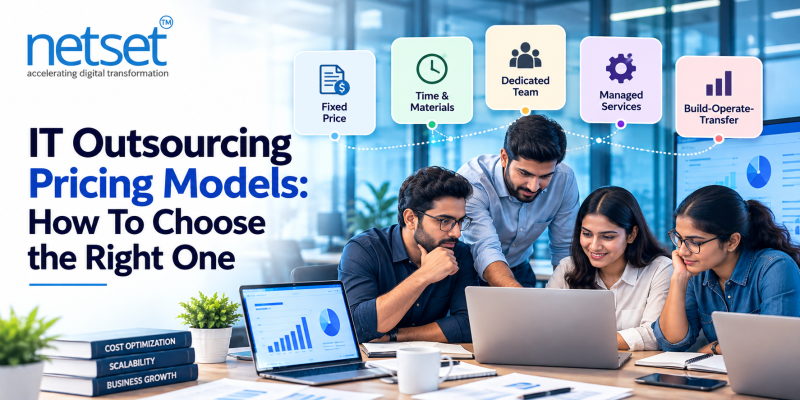
Common approaches include:
- Fixed-price contracts
- Time and materials
- Dedicated team arrangements
- Monthly retainer models
- Managed services
- Build-Operate-Transfer models
Each option offers a different balance of cost predictability, flexibility, control, and risk.
The right choice depends less on which model sounds cheapest and more on whether it matches the way your project will actually operate.
1. Fixed-Price Model
A fixed-price contract is based on an agreed scope, timeline, and budget.
For example, if you need a business website, a specific mobile application, or a defined software module, the provider estimates the work and gives you a predetermined price.
Best for:
- Clearly defined projects
- Stable requirements
- Short-term development
- Projects with specific deliverables
Advantages
The biggest benefit is budget predictability. You know the expected cost before development begins, making financial planning easier.
Limitations
The model becomes less convenient when requirements change frequently. New features or significant changes may require a revised estimate and additional cost.
For this reason, fixed pricing is generally more suitable when the project scope is already well understood.
2. Time and Materials Model
With time and materials, you pay according to the actual effort involved in development.
The cost can be calculated using hourly or daily rates multiplied by the time spent by the team.
This model works particularly well when requirements are expected to evolve.
Best for:
- Agile development
- Long-term products
- Projects with changing requirements
- Continuous feature development
- Research and development
The main advantage is flexibility. Your team can adjust priorities as the product develops without renegotiating an entirely new project scope every time.
The trade-off is that the final cost is less predictable than a fixed-price engagement.
3. Dedicated Team Model
A dedicated team model gives you a group of professionals who work continuously on your product.
The team might include developers, QA engineers, UI/UX specialists, DevOps engineers, or technical leadership depending on your requirements.
This model is particularly useful when you have a long-term product roadmap and want greater involvement in day-to-day development decisions.
You can generally adjust the team composition as your requirements change.
Best for:
- SaaS products
- Mobile applications
- Large web platforms
- Long-term product development
- Businesses expanding engineering capacity
Rather than paying for individual deliverables, you are investing in an ongoing engineering capability.
4. Monthly Retainer Model
A monthly retainer provides access to agreed technology services for a recurring monthly fee.
The scope can vary depending on the agreement. It might include maintenance, technical support, development hours, monitoring, or a combination of services.
This can be useful for businesses that need consistent technical assistance but do not require a full development team.
Best for:
- Website maintenance
- Application support
- Technical consulting
- Regular updates
- Ongoing development
Before choosing this model, make sure the agreement clearly explains what is included each month and how additional work is charged.
5. Managed Services Model
Managed services focus on ongoing responsibility rather than individual development tasks.
For example, an organization may outsource cloud monitoring, infrastructure management, security operations, application support, backups, or other technology functions.
Businesses looking for managed IT infrastructure service capabilities should pay particular attention to service-level agreements, monitoring, response times, escalation procedures, and reporting.
Best for:
- Cloud infrastructure
- IT operations
- Monitoring
- Security
- Application support
- Infrastructure maintenance
This model can reduce the operational burden on internal teams while providing predictable recurring costs.
6. Build-Operate-Transfer Model
A Build-Operate-Transfer approach is designed for businesses that eventually want greater ownership of their offshore technology operation.
Initially, an external partner helps establish and operate the engineering unit. Over time, the business can take greater control of the team and operations.
Build-Operate-Transfer IT outsourcing can be useful for organizations that want the benefits of an established offshore operation while keeping a longer-term transition strategy in mind.
Best for:
- Businesses planning long-term expansion
- Companies establishing an offshore technology center
- Organizations seeking greater operational control
- Growing engineering operations
This model requires careful planning around hiring, processes, knowledge transfer, infrastructure, and eventual ownership.
How to Choose the Right Pricing Model
The easiest way to choose is to start with your project rather than the pricing model.
Ask these questions:
Is the scope clearly defined?
If yes, fixed pricing may work well.
Will requirements change?
If you expect frequent changes, time and materials or a dedicated team can provide greater flexibility.
Do you need ongoing technical support?
A monthly retainer or managed services model may be more appropriate.
Are you building a long-term product?
A dedicated team can provide continuity and deeper product knowledge.
Do you eventually want your own offshore operation?
A Build-Operate-Transfer approach may provide a structured path toward that goal.
Don't Compare Providers on Price Alone
When evaluating an IT software development company, avoid comparing proposals solely on hourly rates.
A lower rate does not automatically mean lower total cost.
Consider:
- Developer experience
- Team composition
- Project management
- QA processes
- Communication
- Security
- Infrastructure
- Documentation
- Support
- Replacement policies
- Scalability
A slightly higher rate can sometimes provide better value if the team delivers faster, requires less supervision, and produces fewer defects.
How to Avoid Unexpected Outsourcing Costs
Before signing an agreement, clarify everything that could affect your final invoice.
Ask whether the quoted price includes:
- Project management
- Quality assurance
- DevOps
- Infrastructure
- Third-party services
- Testing environments
- Maintenance
- Emergency support
- Additional development hours
- Team expansion
- Knowledge transfer
Also establish how scope changes are approved and priced.
Clear commercial terms can prevent disagreements later.
What About Offshore Development?
An Offshore software development service can offer businesses access to global technology talent and flexible development capacity.
However, location should not be the only factor when evaluating cost.
Consider communication, working-hour overlap, technical quality, team stability, security, and long-term support alongside the financial proposal.
The objective is to find the right combination of price, capability, flexibility, and reliability.
Final Thoughts
Choosing an IT outsourcing pricing model is ultimately a business decision, not just a financial one.
Fixed pricing provides predictability. Time and materials offer flexibility. Dedicated teams provide long-term engineering capacity. Managed services can simplify ongoing operations, while Build-Operate-Transfer can support businesses planning for greater ownership in the future.
The best model is the one that matches your requirements today while leaving enough flexibility for tomorrow.
If you're comparing outsourcing options, NetSet Software can help you evaluate the right engagement structure based on your product requirements, team needs, and long-term technology plans.
Want to discuss your requirements? Chat on WhatsApp with our team to explore the right pricing model for your business.
Frequently Asked Questions
What is the best IT outsourcing pricing model?
There is no universal best model. Fixed pricing works well for clearly defined projects, while time and materials and dedicated teams are generally better suited to projects with evolving requirements.
Is fixed-price outsourcing cheaper?
Not necessarily. Fixed pricing provides better budget predictability, but changes to the agreed scope can increase costs. The overall value depends on project complexity and how stable the requirements are.
Which IT outsourcing model is best for startups?
Startups with clearly defined MVP requirements may benefit from fixed pricing. Startups developing an evolving product may prefer a dedicated team or time-and-materials arrangement.
How does dedicated team pricing work?
You typically pay a recurring fee based on the size and composition of the team. The cost depends on factors such as developer experience, technical roles, location, and engagement duration.
What should I ask an IT outsourcing company before signing a contract?
Ask about pricing, scope, team members, communication, security, intellectual property, quality assurance, support, developer replacement, scalability, and how additional requirements are charged.
How can I reduce IT outsourcing costs?
Define priorities clearly, choose an appropriate team size, avoid unnecessary scope changes, establish strong communication, and select a pricing model that matches your project's actual requirements.
What is the difference between managed services and project outsourcing?
Project outsourcing focuses on delivering defined development work, while managed services generally involve ongoing responsibility for specific technology operations or services.
Is offshore outsourcing suitable for long-term projects?
Yes. Offshore teams can support long-term development, maintenance, and product growth when communication, security, team continuity, and delivery processes are properly established.
Can an outsourcing pricing model be changed later?
It can be, depending on the agreement and relationship. Businesses should discuss how their engagement can evolve as the project moves from development to maintenance, scaling, or an internally managed operation.
Source:
Click for the: Full Story
You might like