Close Menu
 World
World
 Biography
 Health
 Education
 Business
 Lifestyle
 Sports
 Technology
 Animals
 History
 Food
Food
 Religious
 Startups
 Movies
 Politics
 Fashion
 Covid
Covid
 Diet
Diet
 Fitness
 Marketing
 Travel
 Science
 Reviews
 Social media
 Stories
 Facts
Facts
 Art
Art
 Entertainment
Deepak

Health
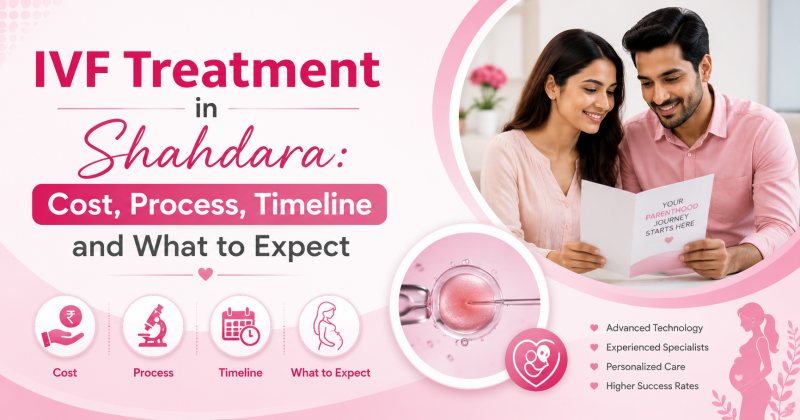
IVF Treatment in Shahdara: Cost, Process, Timeline and What to Expect
 Deepak
If you're considering IVF, understanding what the treatment actually involves can make the journey feel less overwhelming. Many couples researching IVF treatment in Shahdara have similar questions: How does the process work? How long does it take? What determines success? And what will it cost?
This guide walks through each stage of IVF in a clear, practical way, so you know what to expect before you begin.
What Is IVF and Who Needs It?
In-vitro fertilisation (IVF) is a fertility treatment where an egg and sperm are combined outside the body, in a laboratory setting, to form an embryo. The resulting embryo is then transferred into the uterus.
IVF Eligibility: Is It Right for You?IVF may be recommended for couples dealing with:
- Blocked or damaged fallopian tubes
- Ovulation disorders such as PCOS
- Low sperm count or poor sperm motility
- Endometriosis
- Unexplained infertility after other treatments haven't worked
- Age-related fertility decline
- Failed IUI cycles
Eligibility isn't determined by a single factor. It depends on a combined evaluation of both partners' reproductive health, made after diagnostic testing.
Fertility Tests Before IVF
Before starting treatment, a fertility specialist will typically recommend a set of tests to understand the underlying cause of infertility and plan the right protocol.
Common fertility tests before IVF include:
- For women: Hormonal blood tests (AMH, FSH, LH, TSH), ultrasound to assess ovarian reserve and uterine health, and sometimes a hysteroscopy
- For men: Semen analysis to check sperm count, motility, and morphology
- For both partners: Infectious disease screening and, in some cases, genetic testing
These results help the doctor decide the most suitable protocol and medication dosage for your specific case.
The IVF Treatment Process, Step by Step
1. Initial IVF ConsultationThe first step is a detailed consultation where your medical history, previous treatments, and test results are reviewed. This is also the time to ask questions and understand your personalised treatment plan.
2. Ovarian Stimulation with IVF InjectionsOnce treatment begins, the woman is given hormonal IVF injections over roughly 8 to 12 days. These medications stimulate the ovaries to produce multiple eggs in a single cycle, rather than the single egg released naturally each month.
During this phase, regular monitoring through blood tests and ultrasounds tracks follicle growth and hormone levels, allowing the doctor to adjust medication as needed.
3. Trigger ShotWhen follicles reach an appropriate size, a "trigger" injection is given to help the eggs mature fully before retrieval.
4. Egg RetrievalEgg retrieval is a minor procedure performed under sedation, usually taking 15 to 20 minutes. A thin needle is used to collect eggs from the ovaries, guided by ultrasound. Most patients can go home the same day and resume light activity within a day or two.
5. Fertilisation in the LabOn the same day as retrieval, the eggs are combined with sperm in the lab, either through conventional IVF or ICSI (where a single sperm is injected directly into an egg), depending on sperm quality.
6. Embryo Development and MonitoringFertilised eggs are monitored in the lab for 3 to 5 days as they develop into embryos. Embryologists assess growth patterns to identify embryos with good developmental potential.
7. Embryo Freezing (If Applicable)In many cases, embryos are frozen after development, a process called embryo freezing or vitrification, and transferred in a subsequent cycle. This approach, known as a frozen embryo transfer (FET), allows the uterus to recover from stimulation medications and may be recommended based on hormone levels or uterine lining thickness.
8. Embryo TransferEmbryo transfer is a simple, generally painless procedure where a selected embryo is placed into the uterus using a thin catheter. No anaesthesia is typically required, and patients can usually resume normal activity soon after.
9. The Two-Week Wait and Pregnancy TestAfter the transfer, there's a waiting period of about 10 to 14 days before a blood test can confirm pregnancy. This phase is often described as emotionally challenging, and many clinics offer guidance or support during this time.
IVF Treatment Timeline: What to Expect
While every case differs, a typical IVF cycle timeline looks like this:
- Days 1–3: Initial consultation and baseline testing
- Days 2–12: Ovarian stimulation with injections and monitoring
- Day 12–14: Trigger shot followed by egg retrieval
- Days 14–19: Fertilisation and embryo development
- Day 19 onwards: Embryo transfer (fresh or frozen, based on your protocol)
- 10–14 days post-transfer: Pregnancy test
A full cycle, from consultation to pregnancy test, generally spans four to six weeks, though frozen transfers may extend the timeline.
Factors Affecting IVF Success
IVF outcomes depend on multiple interconnected factors, and no clinic can ethically guarantee a specific result. Some of the key factors include:
- Age: Egg quality and quantity decline with age, particularly after the mid-30s
- Ovarian reserve: Reflected in AMH levels and follicle count
- Sperm quality: Count, motility, and morphology all play a role
- Uterine health: Conditions like fibroids or thin endometrial lining can affect implantation
- Underlying medical conditions: Such as thyroid disorders or uncontrolled diabetes
- Lifestyle factors: Smoking, excessive alcohol use, and high stress may influence outcomes
- Embryo quality: Assessed by the embryology team during development
Understanding these factors helps set realistic expectations rather than relying on generalised success statistics that may not apply to your specific case.
Understanding IVF Cost Factors
The cost of IVF treatment in Shahdara can vary based on several elements:
- Diagnostic tests required before treatment
- Type and dosage of medications used
- Whether ICSI or additional techniques are needed
- Number of cycles required
- Embryo freezing and storage, if applicable
- Additional procedures like PGT (genetic testing of embryos)
Because costs vary by individual treatment plan, it's advisable to request a detailed, itemised estimate during your consultation rather than relying on a general figure.
When to Consult a Fertility Specialist
If you've been trying to conceive for over a year without success (or six months if you're above 35), or if you have a diagnosed condition affecting fertility, it's worth scheduling a consultation to understand your options.
Dr. Poonam Goyal, Gynaecologist and Fertility Specialist in Delhi, focuses on individualised assessment and evidence-based treatment planning, recognising that each couple's fertility journey involves a distinct set of medical and personal factors.
Final Thoughts
IVF is a structured, multi-step process, and understanding each stage can help reduce uncertainty. From initial testing to embryo transfer, informed patients tend to feel more confident navigating treatment. If you're exploring IVF treatment in Shahdara, a detailed consultation is the best starting point to understand your specific diagnosis, treatment plan, and realistic expectations.
FAQs
1. How long does one IVF cycle take?
A typical IVF cycle, from ovarian stimulation to embryo transfer, takes about four to six weeks. If a frozen embryo transfer is planned, the overall timeline may be longer.
2. Are IVF injections painful?
Most patients tolerate IVF injections well, though mild discomfort or bruising at the injection site is common. Your doctor will guide you on proper technique and timing.
3. Is embryo freezing necessary in every IVF cycle?
Not always. Some patients undergo a fresh embryo transfer, while others require freezing due to hormone levels, uterine lining thickness, or genetic testing needs. This decision is made based on individual case assessment.
4. What factors most influence IVF success?
Age, ovarian reserve, sperm quality, uterine health, and embryo quality are among the key factors. Success varies from person to person, so it's important to discuss your specific case with your doctor.
5. Does IVF guarantee pregnancy?
No fertility treatment can guarantee pregnancy. IVF improves the chances of conception for many patients, but outcomes depend on individual medical factors.
6. What tests are done before starting IVF?
Common pre-IVF tests include hormonal blood tests, ultrasound evaluation, and semen analysis, along with additional tests based on individual medical history.
Source:
Click for the: Full Story
You might like