Close Menu
 World
World
 Biography
 Health
 Education
 Business
 Lifestyle
 Sports
 Technology
 Animals
 History
 Food
Food
 Religious
 Startups
 Movies
 Politics
 Fashion
 Covid
Covid
 Diet
Diet
 Fitness
 Marketing
 Travel
 Science
 Reviews
 Social media
 Stories
 Facts
Facts
 Art
Art
 Entertainment
Badal

Health
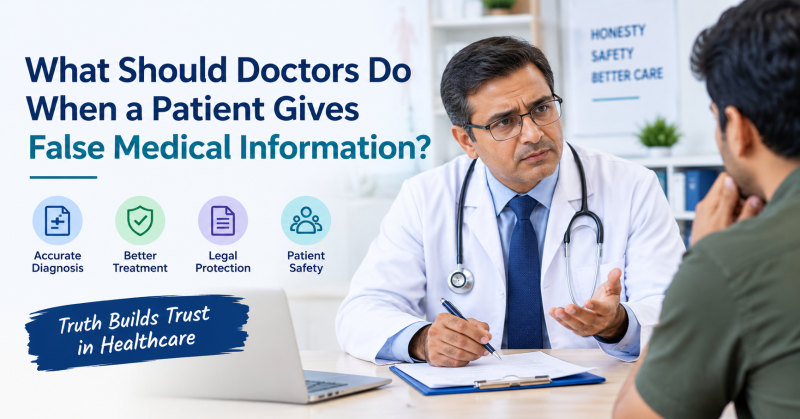
What Should Doctors Do When a Patient Gives False Medical Information?
 Badal
Badal
When a patient withholds or falsifies medical history, doctors face a serious clinical and legal challenge. This is exactly the kind of situation where guidance from the best medicolegal consultant in Delhi becomes essential — not just to protect the hospital, but to safeguard patient safety and ensure accurate medical records. False information can silently derail diagnosis, treatment, and consent, turning a routine consultation into a potential compliance and liability issue.
Doctors are trained to trust the history a patient provides, but human behavior is unpredictable. Patients sometimes forget details, feel embarrassed, or deliberately hide facts about medication use, allergies, or past procedures. Whatever the reason, the consequences fall on the treating doctor and the hospital's clinical governance framework. A qualified medico legal expert in Delhi can help institutions build systems that catch these gaps before they escalate into disputes or regulatory action.
Understanding False Medical Information From Patients
False or incomplete medical information is more common than most people assume, and it rarely comes from malicious intent. Recognizing the pattern early helps doctors respond calmly rather than reactively.
Common Reasons Patients Misrepresent Their Health History
Patients may downplay alcohol or drug use, deny psychiatric history due to stigma, or forget medications they consider unrelated to their current complaint. Fear of judgment, insurance concerns, or simple memory lapses are frequent drivers. Understanding these motivations helps doctors ask better follow-up questions instead of assuming deceit.
How False Information Affects Diagnosis and Treatment
Inaccurate history can lead to wrong drug interactions, missed contraindications, or delayed diagnosis. A patient who denies a known allergy, for instance, puts both their safety and the treating doctor's clinical judgment at risk. This is why thorough documentation errors review should be part of every hospital's quality process.
Why This Matters for Patient Safety and Clinical Governance
Incomplete or false information doesn't just affect one consultation — it can ripple through referrals, surgeries, and long-term care plans, making patient safety a shared responsibility across the care team.
Impact on Hospital Compliance and Documentation
Hospitals are increasingly judged on how well they maintain medical records and consent forms. When patient-provided data is inaccurate, the burden shifts to the institution to show it followed proper due diligence in verification and documentation.
Risks to Healthcare Quality and Treatment Outcomes
Healthcare quality metrics suffer when errors trace back to unreliable patient history. Repeated incidents can trigger internal audits, insurance disputes, or accreditation concerns, all of which affect a hospital's broader risk management strategy.
How False Information Creates Legal and Documentation Risk
Beyond clinical outcomes, false medical information has direct legal implications, especially when it intersects with consent and liability.
Documentation Errors That Can Follow Misinformation
Once inaccurate information enters a patient's file, it can propagate across referrals and reports, compounding medico-legal documentation errors that are difficult to trace back to their source. Correcting the record promptly is critical.
Consent Forms and Medical Records at Risk
If a patient later claims they were not properly informed of risks — despite having withheld relevant history themselves — consent forms and medical records become the primary evidence in any dispute. Poorly maintained records weaken a hospital's legal position significantly.
Who Is Responsible: Doctors, Hospitals, and Compliance Teams
Responsibility in these situations is shared, though each party carries distinct obligations under healthcare regulations.
The Doctor's Duty of Care and Reasonable Diligence
Doctors are expected to exercise reasonable diligence, asking clarifying questions and cross-checking history where clinically relevant. They are not expected to be investigators, but they must document what was asked and what was disclosed at the time.
The Hospital's Role in Risk Management
Hospitals must provide the systems, training, and compliance framework that support accurate record-keeping. This includes clear protocols for verifying history, flagging inconsistencies, and escalating concerns through proper channels.
When and How Doctors Should Take Action
Timing matters. Acting early when discrepancies surface can prevent a minor inconsistency from becoming a major medico-legal issue later.
Recognizing Red Flags During Consultation
Inconsistent symptom timelines, contradictory statements between visits, or reluctance to answer direct questions are red flags. Doctors should note these observations objectively in the patient's file without making accusatory remarks.
Steps to Document and Report Discrepancies
Best practices to reduce legal risk include recording the patient's exact statements, noting any corrections made during treatment, and informing hospital administration when discrepancies could affect ongoing care. Clear, timestamped documentation protects both the doctor and the institution.
Why the Best Medicolegal Consultant in Delhi Matters for Every Hospital
Given how quickly a documentation gap can turn into a legal dispute, proactive guidance is far more effective than reactive damage control. This is where the best medicolegal consultant in Delhi adds real value — reviewing hospital protocols, training staff on documentation standards, and preparing institutions to respond correctly when patient information turns out to be false.
How a Medico Legal Consultant in Delhi Reduces Compliance Risk
A skilled medico legal consultant in Delhi works closely with hospital administration to audit consent processes, strengthen record-keeping systems, and align internal policies with current healthcare regulations. This reduces exposure well before a dispute ever reaches a courtroom or regulatory body.
FAQs on Medico Legal Support in Delhi
Is a doctor liable if a patient lies about their medical history? Generally, doctors are protected if they exercised reasonable diligence and documented the consultation accurately, even if the patient withheld information.
When should a hospital consult a medico legal consultant in Delhi? Ideally before disputes arise — during policy design, staff training, and periodic documentation audits — rather than only after an incident occurs.
In conclusion, false medical information from patients is a recurring challenge that tests a hospital's clinical governance, documentation discipline, and legal preparedness. Doctors who document diligently, ask the right questions, and rely on structured protocols significantly reduce their risk. Partnering with the best medicolegal consultant in Delhi and a trusted medico legal expert in Delhi ensures hospitals stay compliant, protected, and focused on what matters most — patient safety.
Source:
Click for the: Full Story
You might like