Close Menu
 World
World
 Biography
 Health
 Education
 Business
 Lifestyle
 Sports
 Technology
 Animals
 History
 Food
Food
 Religious
 Startups
 Movies
 Politics
 Fashion
 Covid
Covid
 Diet
Diet
 Fitness
 Marketing
 Travel
 Science
 Reviews
 Social media
 Stories
 Facts
Facts
 Art
Art
 Entertainment
Ansh

Technology
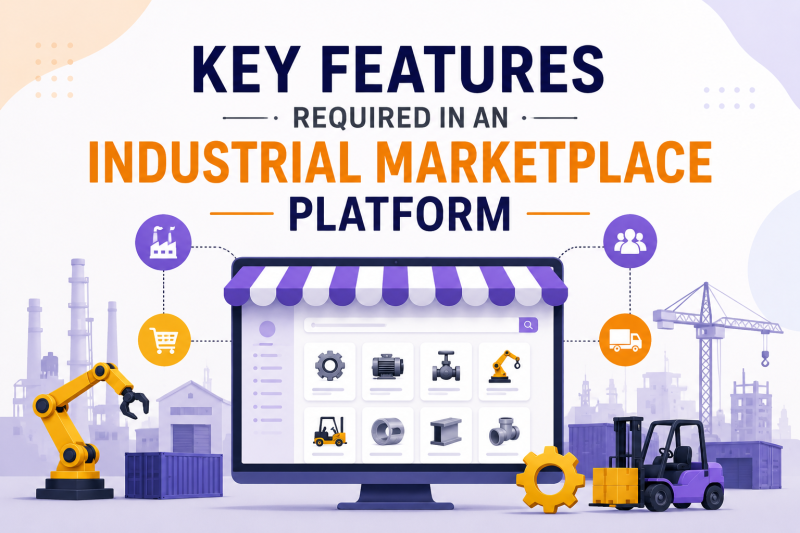
Key Features Required in an Industrial Marketplace Platform
 Ansh
Ansh
Industrial commerce is becoming increasingly digital. Manufacturers, distributors, wholesalers, and suppliers are moving away from manual procurement processes and embracing online platforms that make sourcing faster and more efficient. This shift has created a strong demand for the industrial marketplace platform, a digital ecosystem that connects multiple buyers and sellers in one place.
However, building a successful marketplace requires more than basic eCommerce functionality. Industrial buyers expect advanced procurement tools, real-time information, and seamless collaboration with suppliers. Businesses investing in multi vendor marketplace software must therefore focus on features that address the complexities of B2B transactions.
Why Industrial Commerce Is Moving Toward Digital Marketplaces in 2026
Industrial procurement has traditionally relied on emails, phone calls, and lengthy negotiations. While these methods still exist, businesses increasingly prefer digital platforms that offer convenience and speed.
Another factor is global supplier discovery. Businesses are sourcing products from multiple countries and need digital platforms that make it easier to compare suppliers, evaluate product specifications, and manage transactions.
Industrial companies are also under pressure to improve operational efficiency. Digital marketplaces simplify procurement by reducing paperwork, improving communication, and providing better visibility into supplier performance.
As a result, more organizations are investing in B2B marketplace software to modernize procurement processes and create scalable digital ecosystems.
What Makes an Industrial Marketplace Different from a Traditional eCommerce Platform?
Although industrial marketplaces and traditional online stores share some similarities, their requirements are significantly different.
Consumer eCommerce usually involves fixed prices, simple checkout processes, and individual buyers. Industrial commerce, on the other hand, involves:
- Bulk purchases
- Contract-based pricing
- Multiple approval stages
- Request for Quote (RFQ) processes
- Long purchasing cycles
Industrial buyers often need customized pricing, product documentation, and supplier negotiations before making purchasing decisions.
Another major difference is the number of stakeholders involved. A purchase may require approvals from procurement teams, finance departments, and warehouse managers before an order is finalized.
Because of these complexities, businesses need an industrial marketplace platform specifically designed to handle advanced procurement workflows and large-scale supplier management.
13 Key Features Every Industrial Marketplace Platform Needs
1. Intelligent Multi-Vendor Management
A successful marketplace may have hundreds of suppliers. Advanced multi vendor marketplace software should simplify vendor onboarding, manage commissions, and track supplier performance from a centralized dashboard.
2. Dynamic Product Catalog Management
Industrial products often require detailed specifications, downloadable documents, and product variations. A dynamic catalog helps buyers evaluate products and make informed decisions.
3. Request for Quote (RFQ) and Negotiation Engine
Many industrial transactions are not completed at fixed prices. An RFQ system enables buyers and suppliers to negotiate pricing, quantities, and delivery requirements directly through the platform.
4. Role-Based Purchasing Workflows
Industrial procurement often involves multiple stakeholders. The platform should support different user roles and approval workflows to streamline purchasing decisions.
5. Custom Pricing and Contract Management
Enterprise customers frequently operate under negotiated agreements. The marketplace should support customer-specific pricing, contract terms, and volume discounts.
6. Bulk Ordering and Reorder Management
Recurring purchases are common in industrial sectors. Bulk ordering and quick reorder functionality reduce purchasing time and improve operational efficiency.
7. Inventory Synchronization
Real-time inventory updates prevent overselling and improve fulfillment accuracy. This feature becomes increasingly important as supplier networks grow.
8. Supplier Verification and Compliance Management
Industrial buyers need confidence in supplier quality and reliability. The platform should support document verification, certifications, and compliance management.
9. Smart Search and Product Discovery
Large industrial catalogs can contain thousands of products. AI-powered search and filtering capabilities help buyers find the right products quickly.
10. Multi-Warehouse and Logistics Management
Industrial marketplaces often operate across multiple locations. Warehouse management and shipment tracking improve delivery efficiency and customer satisfaction.
11. Integrated Payment and Credit Management
Unlike traditional eCommerce, industrial transactions frequently involve invoices, purchase orders, and credit terms. Flexible payment management is therefore essential.
12. Analytics and Procurement Intelligence
Analytics tools help marketplace operators understand purchasing patterns, monitor supplier performance, and identify growth opportunities.
13. API and ERP Integrations
Industrial businesses depend on systems such as SAP, Oracle, and Microsoft Dynamics. Seamless integrations eliminate manual work and improve operational efficiency.
AI and Future Trends Shaping Industrial Marketplaces
Artificial intelligence is rapidly transforming industrial procurement.
AI-powered recommendation engines can analyze purchasing patterns and suggest relevant products to buyers. Similarly, automated RFQ matching can connect buyers with the most suitable suppliers, reducing procurement cycles.
Predictive analytics is another important innovation. Businesses can use AI to forecast demand, optimize inventory levels, and improve supply chain planning.
Several other technologies are also shaping the future of industrial marketplaces:
- Blockchain for supply chain transparency
- Embedded financing solutions
- Automated procurement assistants
- Predictive demand forecasting
- Sustainable sourcing technologies
As these technologies continue to evolve, industrial marketplaces will become increasingly intelligent and data-driven.
The New Expectations of Industrial Buyers in the AI Era
Industrial buyers now expect the same convenience they experience in consumer applications.
One of the biggest expectations is real-time visibility. Buyers want immediate access to inventory information, product specifications, and delivery timelines before making purchasing decisions.
Personalization is also becoming increasingly important. AI-powered recommendation engines can suggest products based on previous purchases, helping buyers discover relevant items faster.
Self-service procurement is another major trend. Procurement teams want digital portals where they can:
- Track orders
- Download invoices
- Request quotations
- Manage suppliers
In addition, industrial buyers expect seamless experiences across devices. Whether they are using desktops, tablets, or mobile devices, they want consistent access to marketplace functionality.
Businesses that fail to meet these expectations risk losing customers to more technologically advanced competitors.
The Hidden Costs of Building an Industrial Marketplace Without the Right Features
Many businesses underestimate the long-term costs of launching an incomplete marketplace.
Without proper supplier onboarding tools, vendor acquisition becomes slow and resource-intensive. Similarly, manual procurement processes often create communication gaps and increase operational expenses.
Poor inventory management can result in:
- Order cancellations
- Customer dissatisfaction
- Revenue loss
- Reduced supplier trust
Likewise, lacking features such as RFQs, advanced search, and custom pricing can negatively impact user adoption.
Investing in the right marketplace development solution from the beginning helps businesses avoid these costly challenges.
Why Businesses Are Choosing Ready-Made Multi Vendor Marketplace Software
Building an industrial marketplace entirely from scratch requires substantial investment and development time.
Ready-made multi vendor marketplace software offers several advantages:
- Faster deployment
- Lower development costs
- Easier scalability
- Continuous feature upgrades
- Reduced maintenance requirements
These solutions enable businesses to launch faster while still providing customization and integration capabilities.
For organizations looking to digitize procurement quickly, ready-made marketplace platforms often provide the ideal balance between speed, flexibility, and cost efficiency.
Conclusion
Industrial commerce is rapidly moving toward digital ecosystems that prioritize efficiency, transparency, and collaboration. As buyer expectations evolve, businesses need marketplace platforms that can support complex procurement requirements and large supplier networks.
Features such as RFQ management, intelligent search, supplier verification, ERP integrations, and analytics are no longer optional they are becoming essential components of every successful industrial marketplace platform.
Organizations that invest in the right B2B marketplace software today will be better positioned to streamline procurement, improve supplier relationships, and unlock new growth opportunities in the years ahead.
Ready to build a future-ready industrial marketplace? Choose the right multi vendor marketplace software and create a scalable digital procurement ecosystem for your business. Click here
FAQ's
1. What is an industrial marketplace platform?
An industrial marketplace platform is a digital ecosystem that connects multiple buyers and suppliers for sourcing industrial products, equipment, and services.
2. How is an industrial marketplace different from a traditional eCommerce platform?
Industrial marketplaces support bulk orders, RFQs, negotiated pricing, and complex approval workflows, whereas traditional eCommerce platforms are designed for simpler consumer transactions.
3. Why is RFQ functionality important in industrial marketplaces?
RFQs allow buyers and suppliers to negotiate prices, quantities, and delivery requirements, making them essential for complex B2B transactions.
4. What are the benefits of using multi vendor marketplace software?
It helps businesses onboard multiple suppliers, expand product offerings, automate procurement processes, and scale operations efficiently.
5. Which industries benefit the most from industrial marketplaces?
Manufacturing, construction, automotive, electronics, chemicals, and medical equipment industries are among the biggest beneficiaries.
6. How much does it cost to build an industrial marketplace platform?
The cost depends on the features, integrations, and customization requirements. Ready-made marketplace solutions are generally more affordable than building a platform entirely from scratch.
Source:
Click for the: Full Story
You might like