Close Menu
 World
World
 Biography
 Health
 Education
 Business
 Lifestyle
 Sports
 Technology
 Animals
 History
 Food
Food
 Religious
 Startups
 Movies
 Politics
 Fashion
 Covid
Covid
 Diet
Diet
 Fitness
 Marketing
 Travel
 Science
 Reviews
 Social media
 Stories
 Facts
Facts
 Art
Art
 Entertainment
MusicalColors

Business
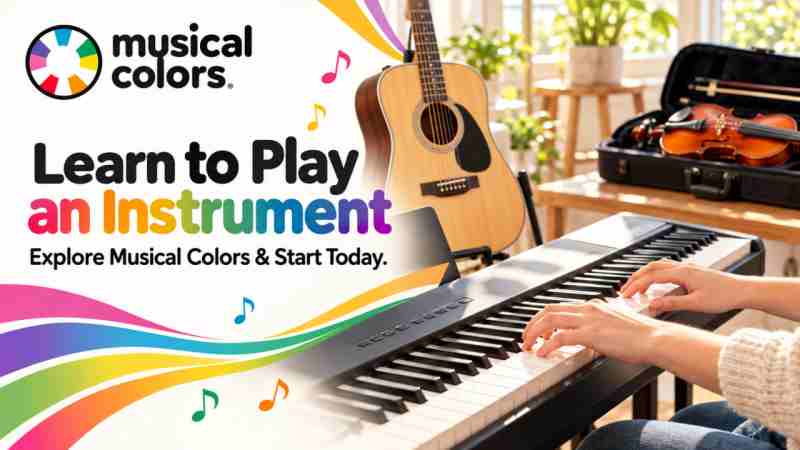
Learn to Play an Instrument – Explore Musical Colors & Start Today
 MusicalColors
Perhaps you hear a piano melody and wish you could play it. Or you imagine picking up a guitar and accompanying your favourite song. Then practical questions get in the way: Which instrument should you choose? Do you need lessons? What if you have never studied music?
To learn to play an instrument, choose one that fits your interests and daily routine, develop comfortable technique, and practise small musical tasks consistently. You can begin without reading sheet music or understanding advanced theory.
Exploring Musical Colors can be part of that first step. Before choosing learning materials, identify what you want to do with music. Playing for enjoyment, accompanying your voice, and performing with others each suggest a slightly different learning path.
Choose the Sound You Want to Make
The instrument you enjoy hearing is usually a better starting point than one you feel obliged to learn.
Imagine your ideal playing experience. Would you like to perform a melody alone, support a singer, create rhythmic patterns, or join a group?
Different instruments offer different possibilities:
- Piano or keyboard: Suitable for exploring melodies, chords, and accompaniment.
- Guitar: Useful for playing songs, supporting vocals, and developing fingerstyle or lead playing.
- Ukulele: A compact option for chord-based playing, although its smaller size does not make every task effortless.
- Drums: Focused on rhythm, coordination, and supporting other musicians.
- Violin: Offers expressive melodic playing while requiring careful work on bowing and pitch.
There is no universally easiest instrument. Your interest, physical comfort, available guidance, and practice conditions all influence the experience.
Choose an instrument you will want to return to after the first difficult session.
Make Sure It Fits Your Everyday Life
Enthusiasm helps you start; practical arrangements help you continue.
Before buying, consider where and when you will practise. A digital keyboard with headphones may suit shared accommodation. Acoustic drums require more attention to space and noise. A portable instrument may be easier to use if you travel frequently.
Think about the complete cost, including essential accessories, maintenance, and learning support.
Where possible, try the instrument before committing. Check its size, reach, weight, and basic playing comfort. A suitable beginner instrument should function reliably and be appropriate for your needs.
When exploring Musical Colors, check which instruments its available resources support and whether those resources match the instrument you intend to use.
Define Your First Musical Achievement
“Become good at music” is difficult to practise. “Play a short melody steadily” gives you something specific to work towards.
Choose an achievable first goal, such as:
- Playing a recognisable eight-bar tune.
- Changing smoothly between two chords.
- Keeping a simple rhythm without stopping.
- Accompanying one verse of a song.
- Reading and playing a short exercise.
Break that goal into smaller tasks. A song might require three notes, one rhythm pattern, and a repeated phrase. Learn each part separately before combining them.
A clear beginner goal helps you recognise progress even while your playing is still developing.
Learn How to Produce a Comfortable, Clear Sound
Your first lessons should include how to hold or approach the instrument, produce a sound, and release unnecessary tension.
For a guitarist, this may involve fretting position and picking control. A pianist needs an appropriate seat height and comfortable access to the keys. A wind player must develop instrument-specific breathing and embouchure skills.
Avoid assuming that pressing, gripping, or blowing harder will solve every problem. Excess effort can interfere with control.
If an exercise causes pain, stop and reassess your setup. A relevant teacher can help you identify technical problems before repeated practice makes them habitual.
Good technique gives you a workable starting point for making music.
Connect What You See with What You Hear
Beginners often receive several forms of information at once: note names, diagrams, finger numbers, and unfamiliar symbols.
Choose one small connection to establish first.
For example, find a note, play it, say its name, and listen. Repeat it in a short pattern rather than studying the label in isolation.
Visual learning aids, including colours and position markers, can provide useful reference points. Their value comes from connecting the cue with a musical idea you can recognise and use.
As you explore Musical Colors, examine how its materials present musical information. Ask whether you understand the instructions and can apply them to your instrument without guessing.
Build Rhythm into Your Playing Early
A melody becomes difficult to recognise when its timing changes unpredictably. Even a few notes can sound musical when their rhythm is controlled.
Begin by clapping a short pattern. Count aloud and repeat it until you can keep it steady. Then transfer the pattern to one note or a simple chord.
A metronome can provide a regular pulse, but select a speed that allows comfortable movement.
If you cannot complete the exercise without rushing or stopping, shorten it. Practising two beats accurately can be more productive than repeatedly struggling through a long passage.
Listen for even timing before increasing speed.
Decide What Support You Need
You can learn through individual lessons, group sessions, books, videos, or a combination of approaches.
Independent learning offers flexibility. It works best when you can follow a sequence, evaluate your attempts, and maintain a routine.
Teacher-led learning can help when you need feedback on technique, timing, or interpretation. Group learning may also provide opportunities to play with others.
Assess resources by their clarity and suitability rather than the number of topics they advertise.
For any Musical Colors product or resource you consider, confirm its contents, intended level, compatibility, and price. Choose something that addresses your next learning task.
Create a Practice Routine You Can Repeat
A realistic routine is easier to maintain than an ambitious schedule that lasts two days.
Try a focused fifteen-minute session:
Three minutes: prepare.
Check tuning or setup, settle into a comfortable position, and review your goal.
Five minutes: work on one difficulty.
Practise a transition, rhythm, or short passage slowly.
Five minutes: make music.
Use the skill in a tune, accompaniment, or musical phrase.
Two minutes: review.
Note what improved and what needs attention next time.
Keep your instrument accessible where practical. Reducing setup time can make regular practice easier.
Notice Progress Beyond Complete Songs
You may improve before you can perform a full piece confidently.
Listen for clearer notes, fewer pauses, steadier rhythm, and easier movements. Notice whether you understand instructions more quickly or recover from mistakes without restarting.
Record a short passage occasionally and compare it with an earlier attempt. Use a similar tempo so the comparison is meaningful.
If progress stalls, change the task. Is it too long? Too fast? Does it combine several unfamiliar skills?
When using Musical Colors resources, return to the specific musical problem you wanted them to help you understand.
Start Today with One Small Action
You do not need a complete plan for the next year before you begin.
Choose your instrument, identify a realistic first goal, and try one short exercise. If you already own an instrument, spend a few minutes exploring its sounds and learning a simple pattern.
Learning to play an instrument becomes manageable when each session gives you a clear next step. Begin with something small enough to complete and interesting enough to repeat.
Frequently Asked Questions
1. Can adults learn to play an instrument from scratch?
Yes. Adults can begin without previous musical training. Choose an appropriate instrument and learning approach, then build skills through manageable practice tasks.
2. Which instrument is best for a complete beginner?
There is no single best choice. Consider the sound you enjoy, physical comfort, budget, practice space, and musical goals. Trying instruments can help you decide.
3. How much should I practise each day?
Start with a short session you can sustain consistently. Ten to fifteen focused minutes can establish a routine; adjust the duration as your attention, comfort, and goals develop.
4. Do I need to read music before starting?
No. You can begin through demonstrations, listening, and instrument-specific diagrams. Introduce notation gradually when it helps you understand or communicate what you play.
5. How long will it take to play my first song?
It depends on the instrument, arrangement, and practice. Choose a simplified song using a small number of skills, learn it in sections, and prioritise steady playing over speed.
Source:
Click for the: Full Story
You might like